

CDN at ELO 2026
Celebrating and participating in the The Electronic Literature Organization’s 2026 Conference.
Published:

ELO 2026 ran fully online from July 15 to 18, hosted by the University of Central Florida under the theme "(Un)Supervised (external link)". Many CDN researchers and affiliates took part.
Professor Joseph Tabbi (external link) won the Marjorie C. Luesebrink Career Achievement Award at this year's ELO conference. Our Professor II Lai-Tze Fan held a speech in his honor, thanking him for his contributions:
"As one nominator put it: Joe did not follow the field; he built the terrain on which it could emerge."
The award recognises a lifetime of work in electronic literature, and few people have shaped the field longer than Tabbi. He founded electronic book review (external link), one of the first literary journals built for the web, and led CDN's Electronic Literature node until his retirement last summer.
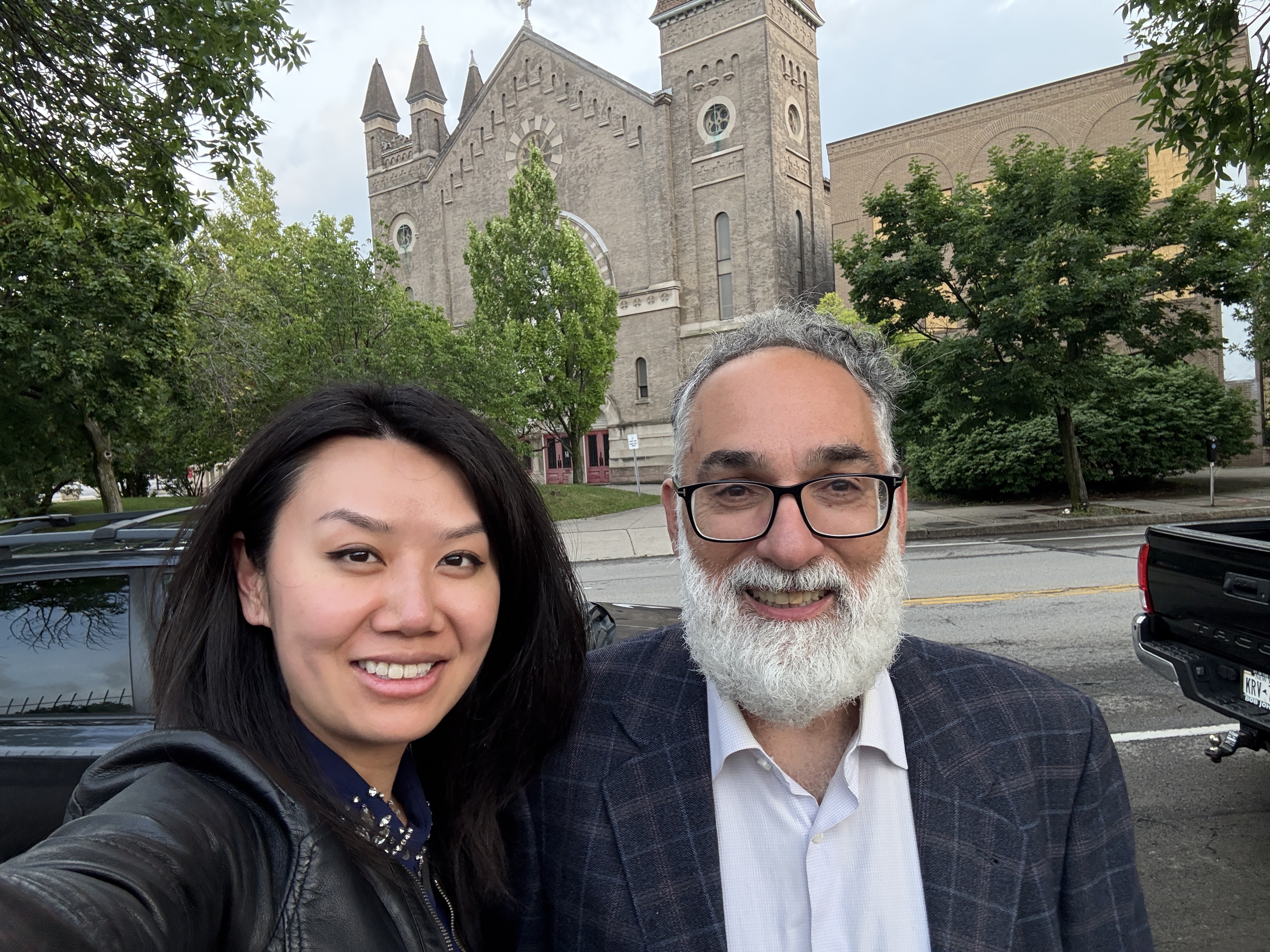
For the other awards, David Wright was given an honorable mention for the Hayles award for his "Six Memos for Writers in the Current Millennium", and Vegard Fotland, Digital Culture master student, was given an honorable mention for the Coover award for their work, "One Lonely World". The awards were hosted by Professor Jason Nelson and Dr Alinta Krauth.
CDN on the programme
Hannah Ackermans, Tegan Pyke and Zahra Rizvi presented "Post-Digital Creativity in Underacknowledged Communities". Robert Arellano and Scott Rettberg looked back three decades in "The First Web Novel at 30: The Collection and the Creative Process." David Wright gave "Digitally Disfiguring the Canon," and Nick Montfort presented "Narrative Nubs: Systematic Sketches of Story Systems." Hannah Ackermans and Colin Robinson joined international colleagues for the CELL Project Roundtable 2026.
Two researchers heading to Bergen this autumn were busy throughout. Mehulkumar Desai, who we expect to host as a CDN guest in the autumn semester, appeared in three sessions. One of them, "Publishing Electronic Literature Research in Metric-Driven Academia: A Roadmap for Electronic Literature Scholars," with Samya Brata Roy, who joined our summer school last year. Yolanda De Gregorio, a returning guest who comes back to Bergen this autumn, presented "Coding the Wild: Digital Poetics, Artificial Intelligence, and More-Than-Human Futures in Mechanical Treehouse."
Our postdoc Zahra Rizvi was named and thanked several times in the publishing workshop, which made for a good moment when we watched it together in the CDN lounge.
In the exhibition
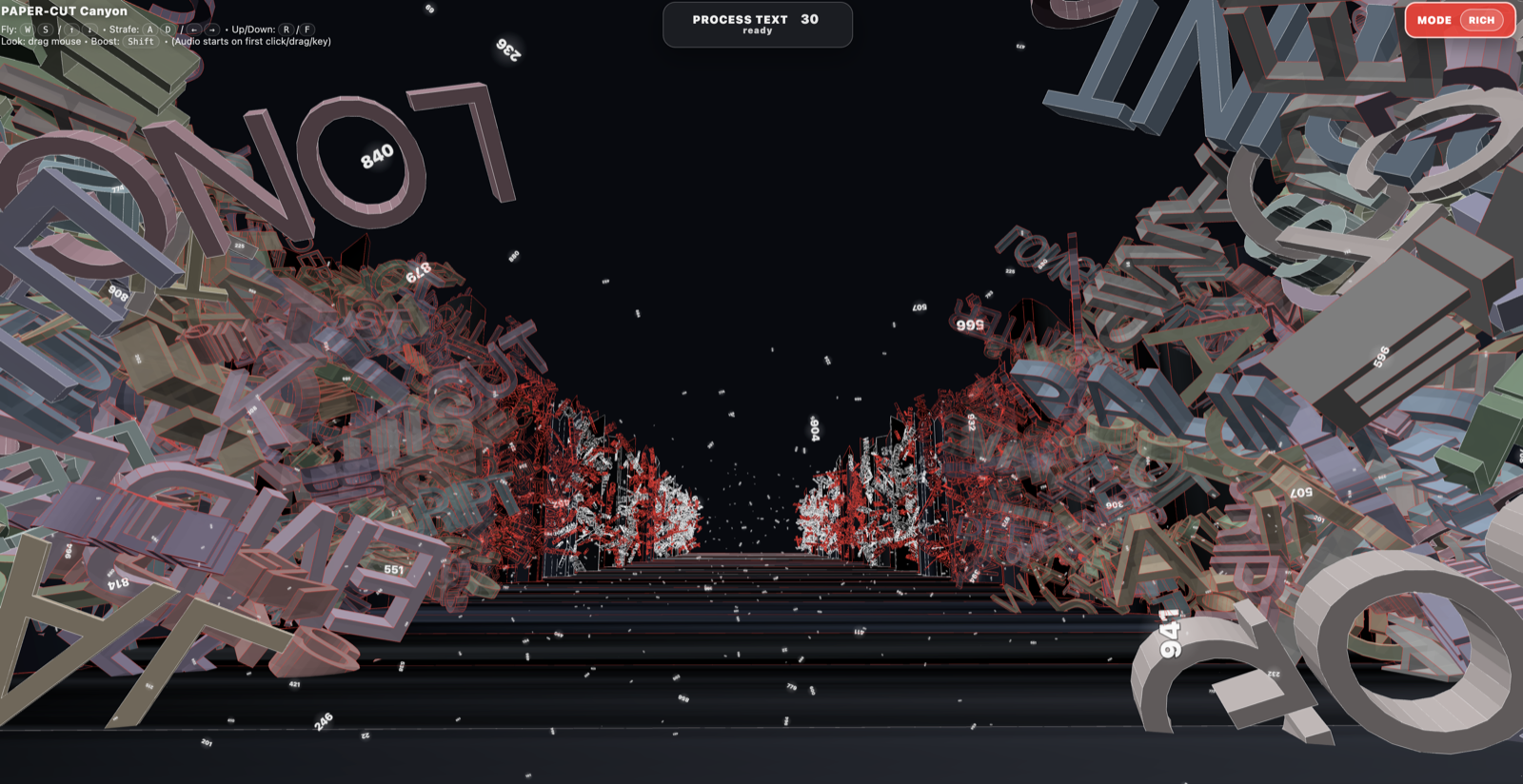
CDN artists brought three works to the conference's online exhibition (external link). Two are by Jason Nelson, who leads CDN's Artistic Research node. In A Paper-Cut Canyon (external link) you travel forward without end through towering walls stacked with 3D words. Far off they are only outlines; as you move closer they harden into solid text. Nelson built it to show how a language model might "see" words — not as grammar or story but as a boundless, unordered heap of options colliding. It has no beginning and no end, because neither does the machine.
His second piece, Diver Quilt Magnet (external link), hands you a machine that generates strange creatures without stopping. Each one arrives named, animated and alive, the only one of its kind. To make a new creature, you have to kill the one you have. It goes extinct, gets a certificate and a line in a growing log, and never returns.
The third work is a collaboration by Roderick Coover with CDN director Scott Rettberg and Caitlin Fisher: The Grand Hotel Bald Cockatoo (external link). It is the third piece in Visitations: The Grand Hotels (of Joseph Cornell), a series that carries Cornell's collages and the late Robert Coover's book of the same name into virtual and augmented reality. This one is built as a physical installation – a giant bird's nest whose walls hold four screens of recombining dream fragments, with a fortune-telling cockatoo for a hotel manager, tucked in a curtained booth at the back, printing each visitor a fortune to take home.
An online conference, informally together
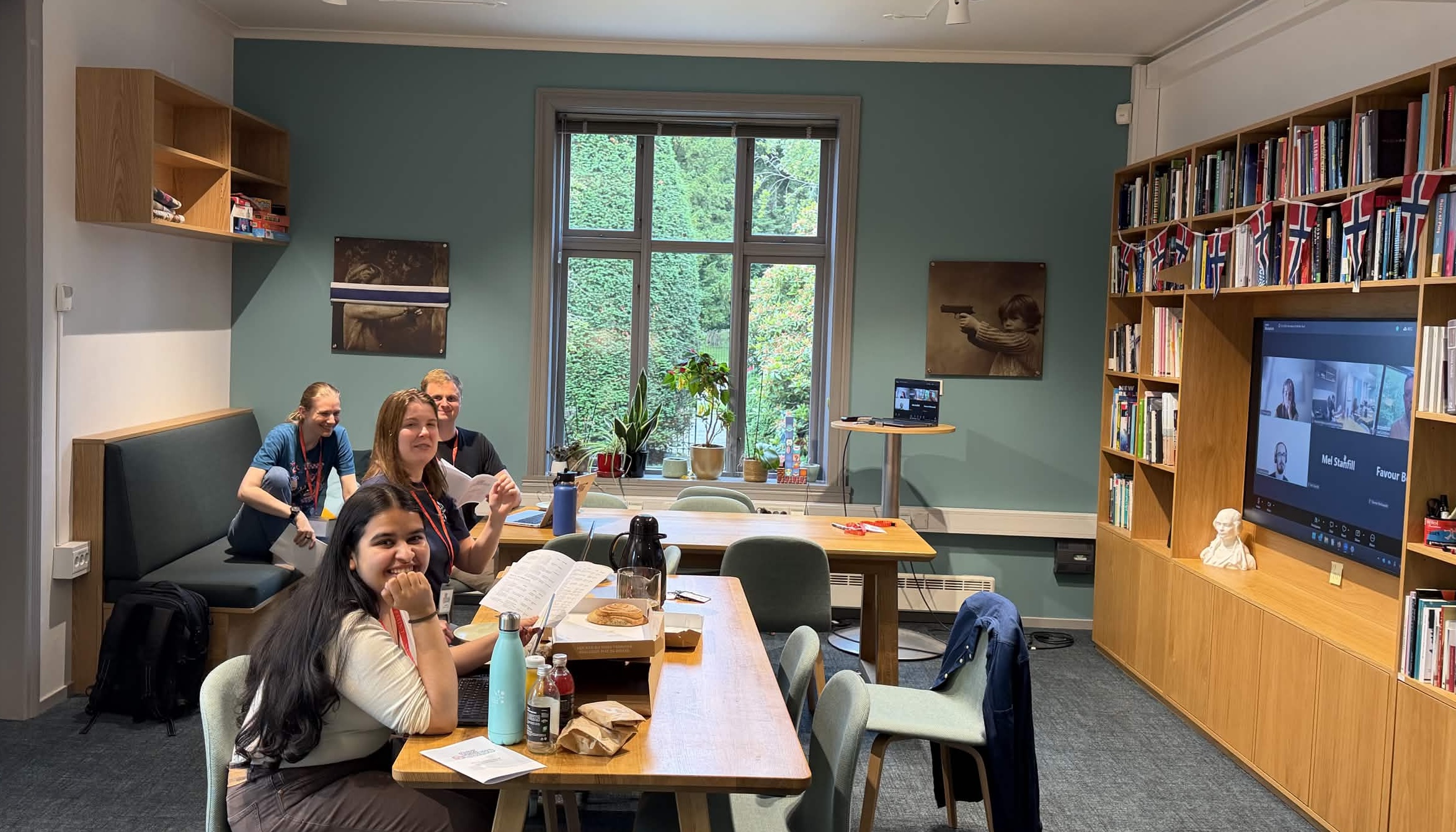
The UiB Electronic Literature research group used the remote conference to try something new. With small operational funds from LLE, the group set up in-person meetings at CDN throughout the conference.
Postdoctoral fellow Hannah Ackermans made name tags and put together a printed programme listing every session in Bergen time. Shared lunches with, as she puts it, "semi-structured conversations about the conference" was an experiment to find a solution to that:
"An online conference has several advantages, but we have also learned the drawbacks of it over the last few years. And the biggest problem is that we don't reflect informally, together, on everything we have learned," says Ackermans. It worked better than expected.
"Every day we talked about the programme, and possible collaborations, and after lunch we connected the computer to the big screen in the lounge to watch some sessions together. It gave us the feeling of being at a physical conference without travelling to the other side of the world," says Ackermans.