

Center for Research on Heart Disease in Women. Bariatric surgery yields less improvement in cardiac function in women
The study, with physician and PhD candidate Lisa Grymyr as first author, provides new insight into the one‑year effects of bariatric surgery on cardiac size and function.
Published: (Updated: )
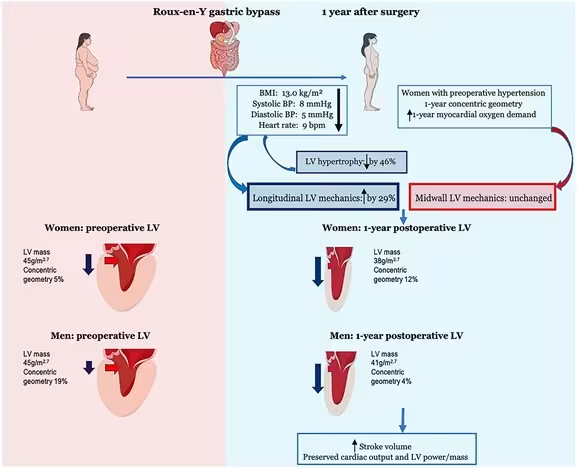
Bariatric surgery leads to significant improvement in cardiac geometry and longitudinal function.
This study from the University of Bergen followed 94 patients with obesity before and one year after treatment with Roux‑en‑Y gastric bypass. The study, with physician and researcher Lisa Grymyr as first author, provides new insight into the one‑year effects of bariatric surgery on cardiac size and function.
The results were recently published in European Heart Journal Open and are based on analyses of data collected in the Fettvest Study (Bariatric Surgery in Western Norway). The research group has previously shown that patients in their 40s with severe obesity have a high prevalence of impaired cardiac function and thickened heart muscle. Bariatric surgery leads to substantial changes in body size, blood pressure, and heart rate. The present study also shows major effects on cardiac mechanics, with 75% of patients achieving normal cardiac geometry and 56% achieving normal cardiac function one year after surgery. However, women achieved less improvement than men. Long‑standing hypertension and persistent myocardial hypertrophy were identified as risk factors for poorer cardiac function one year after surgery.
The findings indicate that women with severe obesity and hypertension should be followed more closely after bariatric surgery.
Read the full study here:
European Heart Journal Open, Volume 1, Issue 2, September 2021, oeab024 (external link)