

3D seafloor models
CDeepSea has been awarded NOK 95,000 from the Research Council of Norway to support new communications activities for a project in collaboration with the University Museum.
Published:
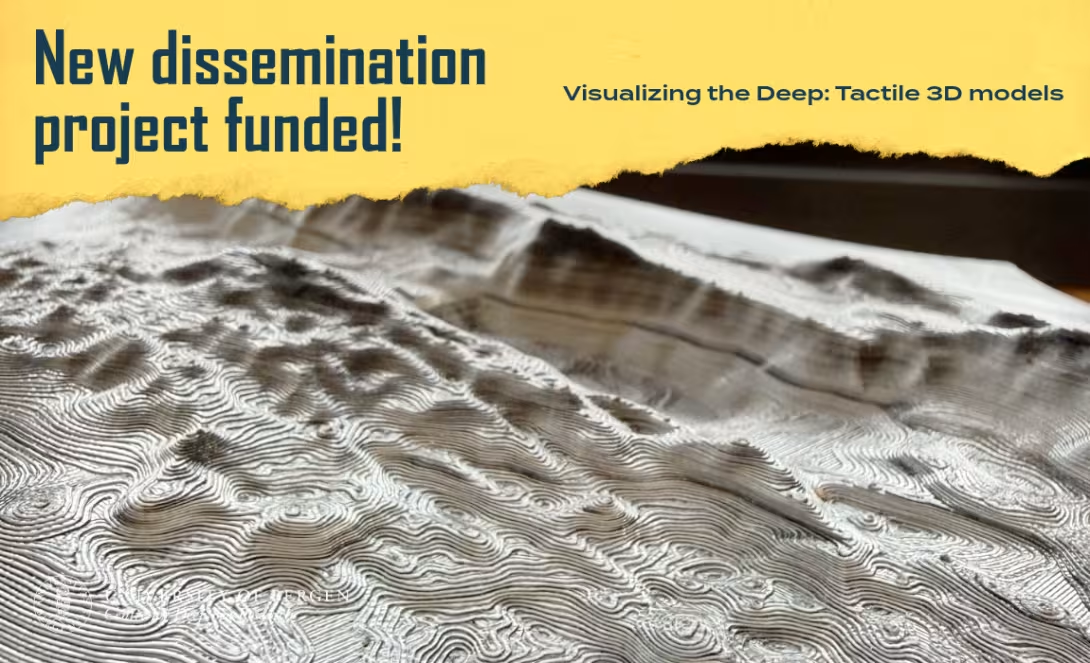
As part of its studies on hydrothermal vent systems in the Norwegian-Greenland Sea, the Centre for Deep Sea Research collects bathymetric data using advanced ROV and AUV technologies. The data provides unprecedented insight into the landscapes of this remote region of the planet. There is a growing need to translate what we know about the deep sea into tangible, engaging experiences that communicate the wonders and relevance of the region to the general public.
At the heart of the project are six tactile 3D models of Arctic seafloor bathymetry (mostly centred on hydrothermal vent field sites along the Arctic mid-ocean ridge) for installation in the University Museum in Bergen. They will complement existing 2D map and video installations in the permanent deep-sea exhibit called Det Ukjente land (external link) (“Unknown Land”). This exhibition reaches around 70,000 visitors per year, including 35,000 school-aged children. By creating tactile multi-sensory models, the aim is to make the deep sea more accessible and engaging for a wider audience, including visually impaired visitors.
The exhibition upgrades are planned to be unveiled in early 2027, together with updated signage, additional outreach materials and other museum display upgrades.
This project supports The Research Council of Norway's goals for public engagement with research, inclusive dissemination, and strategic communication of marine science. It also contributes to Norway’s commitments under Hav21 and the UN Decade of Ocean Science for Sustainable Development.
Grant funding is from The Research Council of Norway (external link). The work is made possible by Centre funding from the Trond Mohn Research Foundation (external link). The map data comes from equipment from NORMAR (external link) and the CDeepSea meta-database. (external link)