

How are children assessed by court-appointed experts?
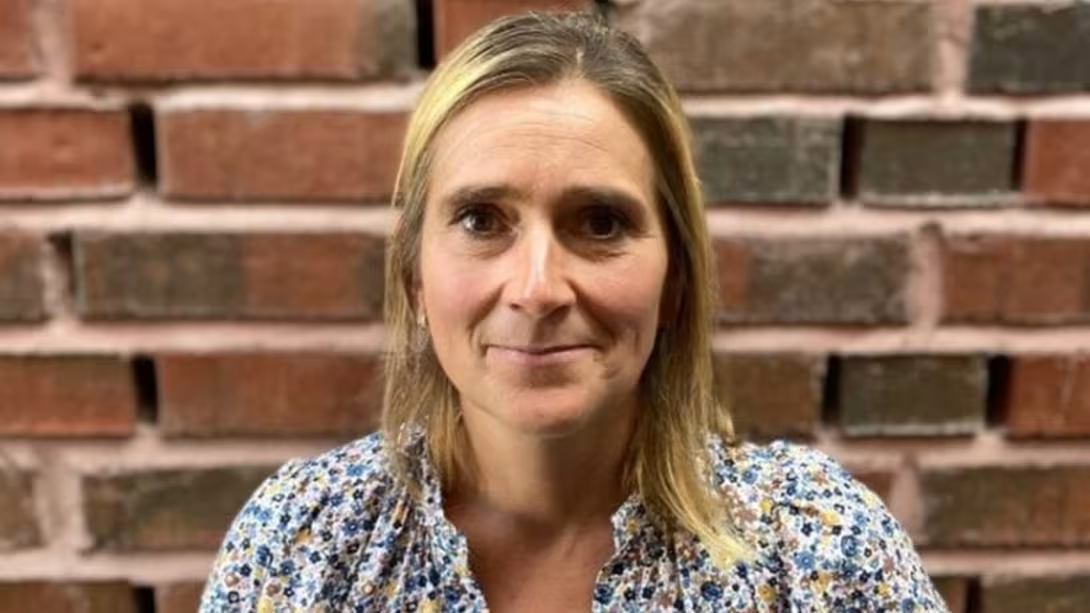
PhD candidate Kari Øverland is researching how expert evaluations of children who have committed serious criminal acts are conducted.
Published: (Updated: )
The Norwegian police report a concerning trend in youth crime, both among children above and below the minimum age of criminal responsibility. In many of the most serious cases that are prosecuted, forensic psychiatric assessments are conducted to evaluate the risk of reoffending and whether the child is to be considered criminally responsible.
Forensic psychiatric reports on children therefore form an important basis for the courts' handling of criminal cases involving minors. However, we know very little about how such expert assessments are carried out and how they are used in court.
CHILDCRIM is the first research project in this field to focus specifically on children. It will explore what it means for legal and forensic psychiatric assessments of criminal responsibility and violence risk when the offender is a child. Among other things, the project will systematically review all forensic psychiatric reports on children from the period 2013–2024.
Child development
Kari Øverland is a specialist in child and adolescent psychology and has worked clinically with children in prison for more than ten years. She has now starter her PhD at the Kompetansesenter for sikkerhets-, fengsels- og rettspsykiatri at Helse Bergen, which is a research partner in the CHILDCRIM project.
The main question in Øverland’s PhD project is how children are assessed by forensic psychiatric experts, and to what extent Norwegian forensic psychiatric reports on children address child development. She will, among other things, look at whether tools used to assess risk in children are actually designed for assessing risk in adults.
“If that is the case, the assessments are unlikely to sufficiently consider factors such as development and the unique potential children have for behavioral change. Put bluntly, we are trying to determine whether children are being assessed as children or as small adults,” Øverland explains.
Use of Preventive Detention
Øverland’s contribution and the knowledge generated from the CHILDCRIM project, may have major implications for the legal protection of children and young people.
“Because children in Norway can be sentenced to preventive detention, the quality of forensic psychiatric assessments is especially important”, Øverland points out.
Preventive detention is an indefinite sentence used when the offender is considered particularly dangerous and at high risk of reoffending. When the court decides whether to impose preventive detention, the decision is partly based on forensic psychiatric assessments of risk.
“I hope that we can develop professional and methodological guidelines for forensic psychiatric reports on children that ensure child development is taken sufficiently into account,” Øverland says.
Project Goals
Øverland recently presented her plans for the project to CHILDCRIM’s reference group at a seminar at the Faculty of Law. All participants agreed that there is a significant need for knowledge and expertise in this field, and that improving the quality of expert work involving children is crucial. This view is shared by project leader, professor Linda Gröning.
“A fundamental premise of the UN Convention on the Rights of the Child is that children are in a state of development and must therefore be treated differently than adults. I hope CHILDCRIM can contribute with knowledge on how society’s need for safety can be safeguarded in way that that also protects the rights of the child,” Gröning says.