

No Reason to Sleep Well: Total Preparedness on the Agenda at Alrek Health Cluster
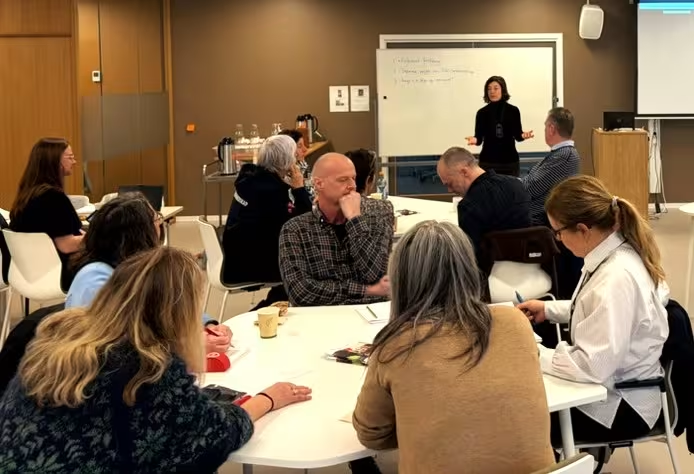
With war, global instability, and lessons learned from the COVID‑19 pandemic, total preparedness has never been more urgent. On March 2, the Pandemic Centre at the University of Bergen and Alrek Health Cluster gathered representatives from more than 15 organisations for a workshop dedicated to strengthening Norway’s capacity to handle future crises.
By: Gøril Vikøren Nøkleby and Berit Angelskår
Published:
Read the original news article here in Norwegian. (external link)
A Wake-Up Call for Norway’s Crisis Readiness
“Now is not the time to sleep well; we have slept long enough,” emphasized Jan Sommerfelt-Pettersen, special adviser at Haukeland University Hospital and former admiral in the Norwegian Navy Medical Service. Drawing on his long experience from the Armed Forces, NATO, and national health security, he underscored the need for rebuilding and reinforcing Norway’s total defence approach. Countries like Norway, he argued, depend on strong civil–military collaboration to withstand an increasingly uncertain security landscape.
Bringing Together Key Actors in Preparedness
The workshop convened experts from public health, research, civil society, local government, and healthcare services. The aim was clear: to enhance understanding of each actor’s role in crisis management and to lower the threshold for collaboration. Participants explored ongoing initiatives, available expertise, and opportunities to join forces in response to upcoming national research calls related to preparedness. [alrekhelseklynge.no] (external link)
Professor Esperanza Díaz, head of the Pandemic Centre, emphasized how crucial it is for sectors that rarely meet outside crises to build relationships in advance. Trust, knowledge-sharing, and familiarity, she noted, are foundational for fast and effective action when a crisis hits.
From Data and Leadership to Local Communities
Across group discussions and short presentations, several themes emerged:
- Collaborative leadership and co-creation: Researchers highlighted the value of involving users and stakeholders in joint decision-making and planning.
- Data and registries: Contributors discussed the need for clearer frameworks for sharing critical data between sectors during emergencies.
- Strengthening local communities: Civil society organisations, sports associations, and volunteer groups were acknowledged as key pillars in community-level readiness, offering essential capacity during crises.
Building a Culture of Cooperation
The workshop succeeded in creating new connections across sectors that do not traditionally work together in calm periods. Participants agreed that crisis preparedness cannot be built in isolation — it requires shared insight, shared responsibility, and sustained collaboration.
As the first event in a wider initiative on multidisciplinary preparedness, the workshop marks an important step in building a more coordinated and resilient total preparedness system for Norway. More activities and opportunities for collaboration will follow in the months to come.