

Leakage During Hydropower Tunnel Construction: A Possible Trigger Mechanism for the Earthquake Swarm at Sørfjorden, Norway
Earthquake swarms are often linked to variations in subsurface fluid pressures, driven by natural processes or anthropogenic activity. Here, we investigate whether an earthquake swarm in Nordland, a region in northern Norway, was possibly related to the construction of a hydropower tunnel.
Published:
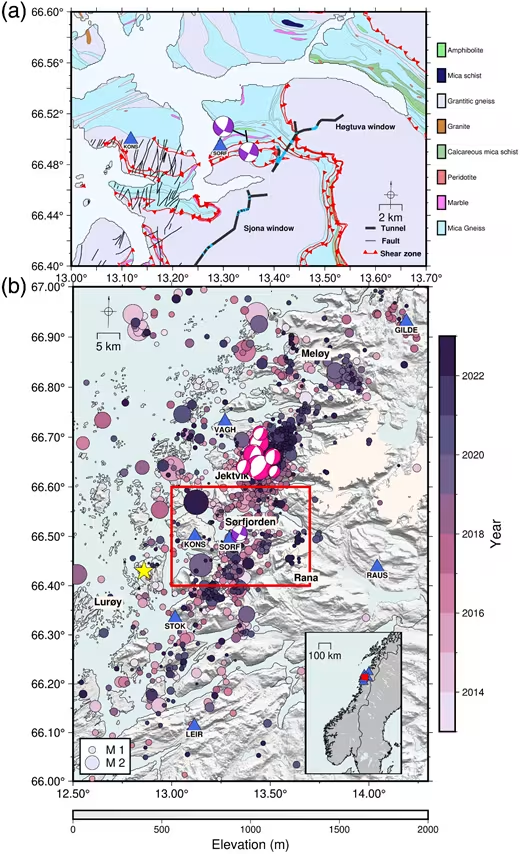
Using Interferometric Synthetic Aperture Radar, we observe subsidence following the tunnel’s construction, which can be explained by significant water leakage encountered during the work. Three years later, an earthquake swarm occurred about 3 km from the tunnel, in an area without previous swarm activity. We build a catalog of the swarm and through analysis of its spatio‐temporal distribution propose that changes in pore pressure and stress, potentially linked to the leakage, may have played a role in triggering the swarm. Fault valving or pumping are possible mechanisms to explain the cascading nature of the earthquakes in the swarm.
Read the paper here (external link)