

GAP research group welcomes new EU air quality legislation
On 14 October 2024, the EU Council formally adopted the revised Ambient Air Quality Directive (AAQD). This pivotal legislation introduces stricter limits on major air pollutants such as particulate matter (PM2.5, PM10), nitrogen dioxide (NO2), and ozone (O3), aligning it more with the World Health Organization (WHO)'s 2021 air quality guidelines (AQGs).
By: Shanshan Xu
Published:
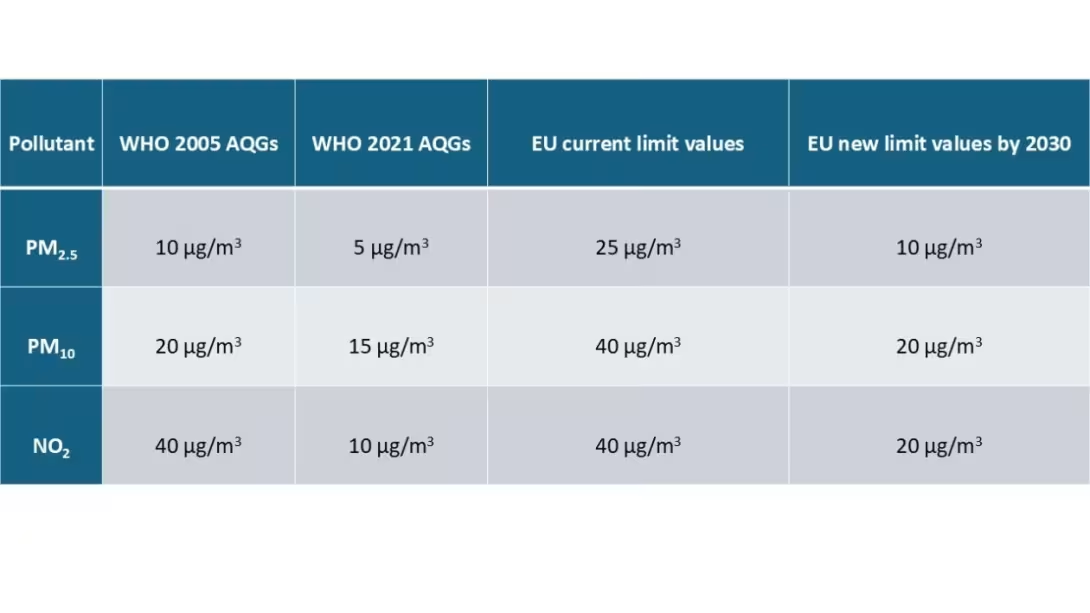
Air pollution poses a severe global public health threat, with nearly 99% of the world’s population breathing air that surpasses WHO limits, leading to increased mortality and morbidity. The new EU air quality standards (external link) promise substantial reductions in air pollution levels, addressing urgent public health challenges and aiming to protect vulnerable populations including children, the elderly, and those with respiratory conditions like chronic obstructive pulmonary disease (COPD).
The GAP research group has consistently shown that long-term exposure to low-level of air pollution significantly increases all-cause mortality (external link) and risks associated with respiratory conditions (external link). Lifelong exposure to air pollution—from childhood and adolescence to adulthood—has been linked to a higher risk of asthma attacks, rhinitis, and reduced lung function in adulthood (external link). Additionally, parental exposure to air pollution may increase asthma and allergy risks in offspring (external link), while exposure during pregnancy is associated with lower birth weights and other adverse outcomes (external link).
The GAP research group welcomes these changes, which echo our findings that cleaner air can significantly improve public health. This legislation marks a significant stride towards cleaner air and a healthier future for all.