

Glacier changes at Svartisheibreen, Nordland, since the last ice age
My master's project aims at reconstructing how the Svartisheibreen glacier has changed since the last ice age.
Published:
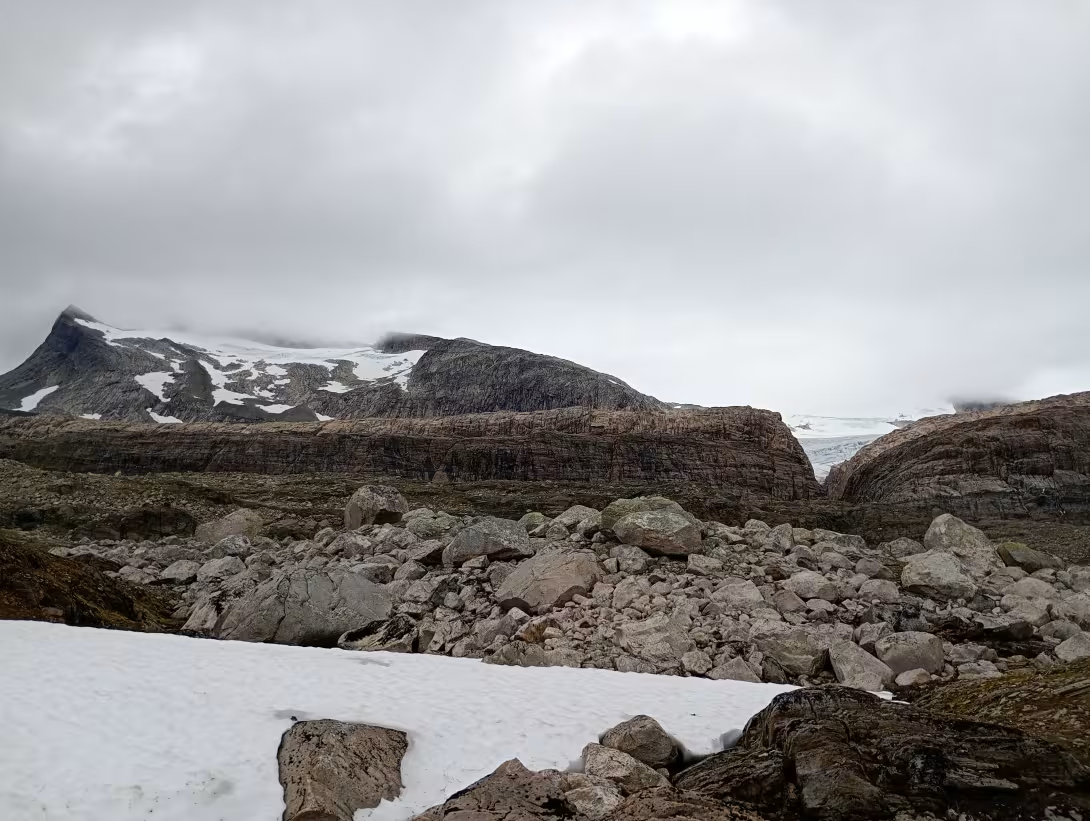
Understanding the climate of the past is important when dealing with the modern human-caused climate emergency. Because glaciers respond to climatic change, glacier reconstructions offer important proxy data of past climate change. My master's project aims at reconstructing how the Svartisheibreen glacier has changed since the last ice age. Svartisheibreen is situated at the southern end of the Vestre Svartisen ice field, which is the second largest glacier on the Norwegian mainland.

Fieldwork
Fieldwork was performed in the beautiful surroundings of Melfjorden, spanning from the sea to the modern glacier foreland some 600-700 m above sea level. Landforms and deposits were mapped, including spectacular moraine ridges indicating former glacier margins. Rock fragments from the moraines were gathered to analyse their content of cosmogenic beryllium-10. This allows the age of the landforms to be estimated based on how long the rocks have been exposed to cosmic radiation. Additionally, sediment cores were retrieved from a lake. These have been analysed in the lab for evidence of past glacial meltwater input to the lake.

Studying geography in Bergen
Studying geography in Bergen has been an amazing experience, in large part since we are able to delve into a wide array of relevant and interesting topics across the domains of humanity and the natural environment.
