cKMC
This trial randomized 8 402 low birth weight babies in India to evaluate the impact of community-initiated Kangaroo Mother Care on survival.
About the research project
CISMAC’s community‑initiated Kangaroo Mother Care trial: Impact on policy, scale‑up, and research
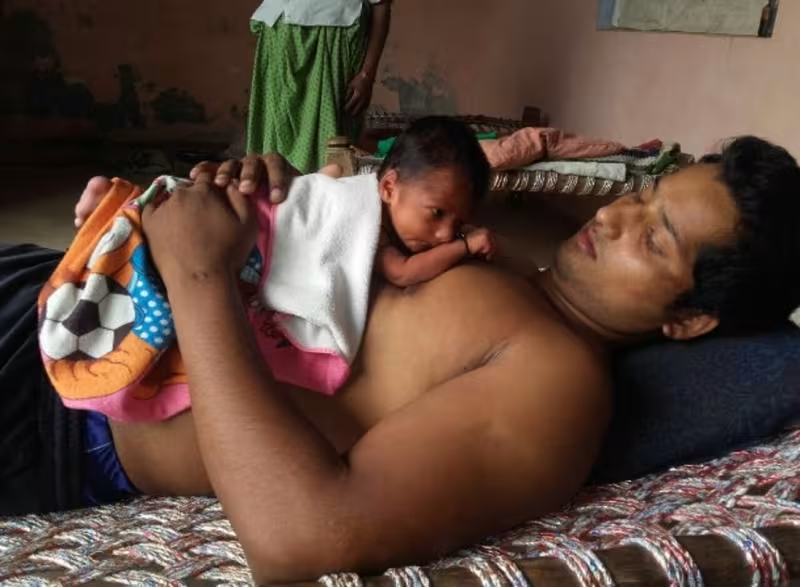
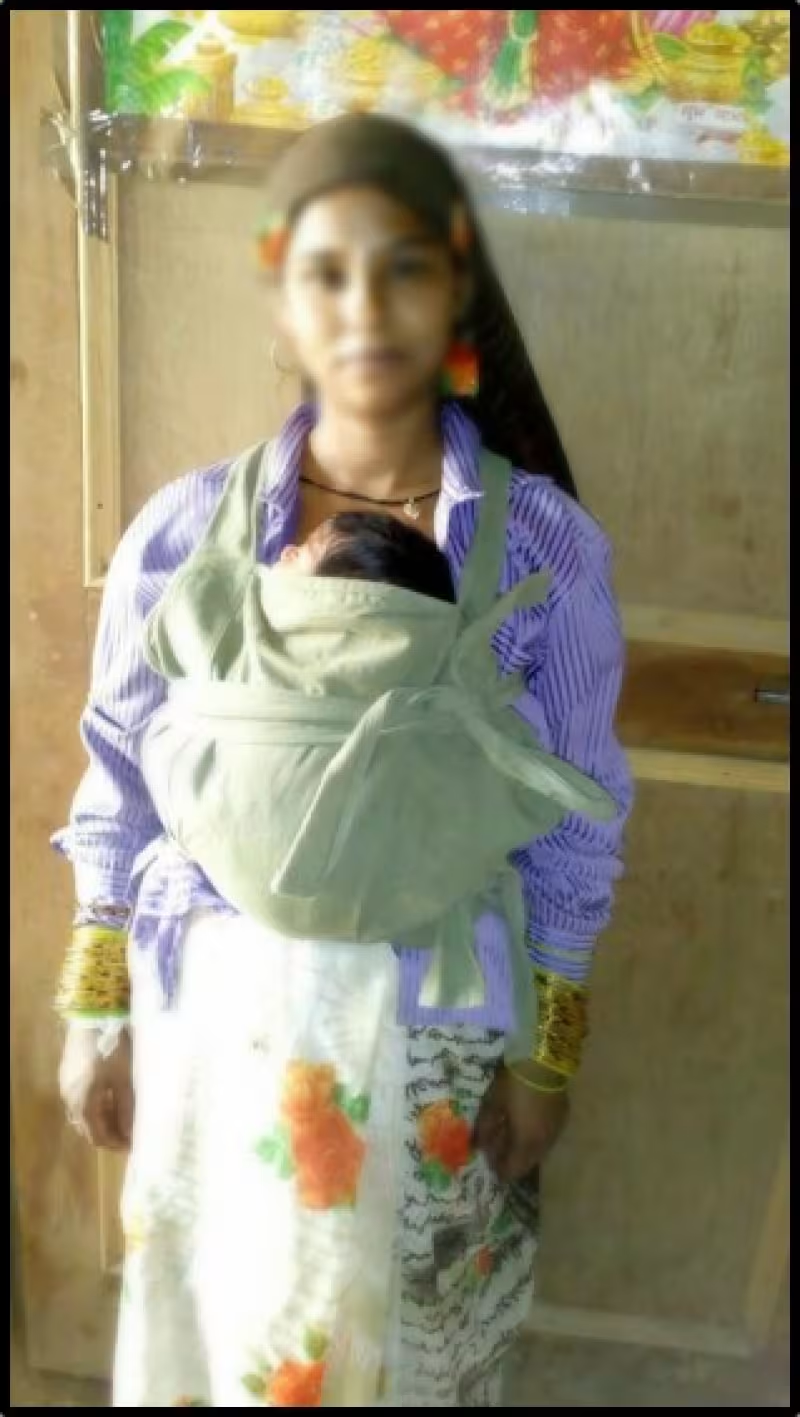
The findings of our randomized controlled trial (RCT) of community‑initiated Kangaroo Mother Care were published in The Lancet in 2019 (1). The study addressed key WHO research priorities for newborn care (2). Its findings closed an important evidence gap on whether promotion of and support to families for kangaroo mother care initiated at home (ciKMC) can substantially improve survival of stable low birth weight (LBW) infants, i.e. infants who weigh less than 2.5 kg at birth but otherwise well. The intervention was the provision of structured home‑based promotion of and support for skin‑to‑skin contact and exclusive breastfeeding. The idea and initiative for the trial were developed in concert by its sponsor, Society for Applied Studies (SAS; https://sas.org.in (external link)), the WHO and researchers at the Centre for International Health, University of Bergen. It was undertaken in close interaction with the State government of Haryana to facilitate uptake of the intervention in family and health programs if ciKMC was found to increase infant survival chances.
Key study findings, catalysing high‑quality research, responding to WHO research priorities and contributing to policy and guideline development
Before initiating the trial, the research team first developed the intervention package and pilot tested it for feasibility and acceptability among mothers of low-birth-weight babies (3). The trial team followed almost 100,000 North Indian pregnant women in door-to-door surveys and weighed their 62,260 babies within 72 hours of being born at home or discharged early from a birth facility. They enrolled 8402 LBW infants, followed them for 6 months to evaluate the impact and safety of ciKMC and found that it reduced mortality by 30% until 28 days and 25% by 180 days of life. The absolute risk reduction by 180 days (~1.25 percentage points) corresponds to ~80 LBW infants needing ciKMC to save one life (1). In addition, the promotion and support of KMC reduced the risk of possible serious bacterial infection (PSBI), which carries a high neonatal case fatality. Further, the intervention also reduced the incidence of pneumonia and diarrhea (major killers of infants in LMICs) and promoted adequate health care seeking.
WHO’s 2022 guideline, “Recommendations for care of the preterm or low‑birth‑weight infant” (3) incorporated new evidence (including ours on community-initiated KMC (1) as well as immediate KMC for unstable or not‑yet‑stabilised small babies (4) and recommends starting KMC as soon as possible after birth, even in unstable babies who require respiratory support, irrespective of where the baby is born. Building on this, WHO’s 2023 global position paper and implementation vision designates KMC as a foundational component of care for small or sick newborns across facilities and communities (5).
Contribution to shape the current scale‑up approach globally and in India
Evidence from our ciKMC trial helped shift KMC from a facility‑based intervention for stable babies to a continuum‑of‑care approach. WHO’s 2023 position and implementation paper calls for organisational redesign to achieve early and continuous KMC (6). The Immediate KMC trial and WHO’s position (emphasizing “no separation” and early initiation) catalysed operational shifts—introducing Mother-Newborn Care Units in health facilities, restructuring Special Newborn Care Units/Neonatal Intensive Care Units to support round-the-clock skin-to-skin caregiving from birth. These efforts and the implementation research mentioned below mark India as one of the leading countries operationalising early and continuous KMC at scale, with lessons that continue to shape the global agenda on implementation pathways, measurement systems, and integration within routine reproductive, maternal, newborn, and child health programs (7).
Sub-studies and follow-up studies of the ciKMC trial which contributes additional scientific and program-relevant information
Several sub-studies undertaken by two CISMAC PhD candidates who successfully defended their PhD theses (https://trepo.tuni.fi/handle/10024/151868 (external link); https://bora.uib.no/bora-xmlui/handle/11250/3198659 (external link)), documented psychologic benefits of (8) and examined biological mechanisms by which KMC may improve infant health and enhance survival (9,10), and documented equity aspects (11) and economic benefits, both on the individual family (12) as well as on the societal (13) level.
The WHO coordinated a multi-site mixed methods implementation research project which contributed to develop an adaptable strategy to scale up KMC in health facilities and its continuation after discharge. After using formative research to identify key barriers and solutions, the resulting implementation model achieved high population coverage, with KMC initiation reaching approximately 3 of 4 infants in the Ethiopian and 9 of 10 in Indian sites. At discharge from the birth facilities, KMC was provided to 2 of 3 Ethiopian and to 3 of 5 Indian infants. This study shows how, using context-adapted models, implementation research can contribute to high KMC coverage. The study was supported by government leadership, health workers' conviction that KMC is now the standard of care, women's and families' acceptance of KMC, and changes in infrastructure, policy, skills and practice (14).
The implementation research project in India initially aimed to scale up KMC in a single district in Haryana, with a population of 1.5 million. However, the remarkable impact it achieved inspired government partners to extend the intervention to 17 additional districts within just two years. This rapid expansion was made possible through the committed and proactive leadership of the government (15).

Summary of the overall impact of the ciKMC trial and its spin-off studies
As CISMAC’s first and largest trial, the ciKMC study supplied definitive, program‑relevant evidence that community and early post‑discharge initiation of KMC saves lives, prevents serious illness and promotes adequate care seeking, and can be delivered at scale through primary health‑care platforms. Closely working with the WHO, our study, along with other WHO-led studies, catalysed further research on unstable LBW infants and immediate KMC— and subsequent implementation research by CISMAC’s Indian partner, SAS, and the state government of Haryana, collectively advanced the goal of universal and timely KMC for all LBW infants, both in India and in other LMICs. The evidence generated by the ciKMC trial, its sub-studies and follow-up studies underpins WHO’s current policy stance and LMIC scale‑up strategies for newborn care and improved infant health and survival.
References
1. Mazumder S, Taneja S, Dube B, Bhatia K, Ghosh R, Shekhar M, Sinha B, Bahl R, Martines J, Bhan MK, Sommerfelt H, Bhandari N. Effect of community-initiated kangaroo mother care on survival of infants with low birthweight: a randomised controlled trial. Lancet. 2019;394:1724-36. doi:10.1016/S0140-6736(19)32223-8. Available from: https://www.thelancet.com/action/showPdf?pii=S0140-6736%2819%2932223-8 (external link)
2. World Health Organization. Newborn health research priorities beyond 2015. Geneva: WHO; 2014. (Top priority included evaluating impact and safety of community‑initiated KMC). Available from: https://cdn.who.int/media/docs/default-source/mca-documents/nbh/newborn-health-research-priorities-beyond-2015.pdf (external link)
AAA. Mazumder S, Upadhyay RP, Hill Z, Taneja S, Dube B, Kaur J, Shekhar M, Ghosh R, Bisht S, Martines JC, Bahl R, Sommerfelt H, Bhandari N. Kangaroo mother care: using formative research to design an acceptable community intervention. BMC Public Health 2018; 18: 307.
3. World Health Organization. WHO recommendations for care of the preterm or low‑birth‑weight infant. Geneva: WHO; 2022. Available from: https://www.who.int/news/item/15-11-2022-who-advises-immediate-skin-to-skin-care-for-survival-of-small-and-preterm-babies (external link)
4. WHO Immediate KMC Study Group. Immediate “Kangaroo Mother Care” and survival of infants with low birth weight. N Engl J Med. 2021;384:2028–2038. doi:10.1056/NEJMoa2026486. Available from: https://www.nejm.org/doi/10.1056/NEJMoa2026486 (external link)
5. World Health Organization. Kangaroo mother care: a transformative innovation in newborn care – Global position paper and implementation vision. Geneva: WHO; 2023. Available from: https://www.who.int/publications/i/item/9789240072657 (external link) and https://iris.who.int/bitstream/handle/10665/367626/9789240072657-eng.pdf?sequence=1 (external link)
6. Darmstadt GL, Bhutta ZA, Cousens S, Adam T, Walker N, de Bernis L, Kumar V, Valdez JF, Gülmezoglu AM, Daelmans B, Mangham-Jefferies L, Tunçalp Ö, Lincetto O, Gogia S, Sinha S, Tinker A, Lawn JE. WHO Global Position Paper and Implementation Strategy on kangaroo mother care call for fundamental reorganisation of maternal–infant care. Lancet. 2023;40:1841-3. doi:10.1016/S0140-6736(23)01000-0. Available from: https://www.thelancet.com/journals/lancet/article/PIIS0140-6736(23)01000-0/abstract (external link)
7. Facility Based Newborn care; Ministry of Health & Family Welfare Government of India 2023 Training Module For Doctors & Nurses; page 28. Available in the at the National Health Mission (https://nhm.gov.in/index4.php?lang=1&level=0&linkid=518&lid=822 (external link)) in the zipped archive for the “FBNC Training” with the direct link https://nhm.gov.in/images/pdf/programmes/CH-Programmes/FBNC/FBNC%20Training.zip (external link).
8. Sinha B, Sommerfelt H, Ashorn P, Mazumder S, Taneja S, More D, Bahl R, Bhandari N. Effect of community-initiated kangaroo mother care on postpartum depressive symptoms and stress among mothers of low-birth-weight infants. JAMA Netw Open. 2021;4:e216040. doi:10.1001/jamanetworkopen.2021.6040. Available from: https://jamanetwork.com/journals/jamanetworkopen/fullarticle/2779045 (external link)
9. Sinha B, Sommerfelt H, Ashorn P, Mazumder S, Taneja S, Bahl R, Bhandari N. Effect of community-initiated kangaroo mother care on breastfeeding performance in low-birthweight infants: a randomized clinical trial. Matern Child Nutr. 2022;18:e13419. doi:10.1111/mcn.13419. Available from: https://doi.org/10.1111/mcn.13419 (external link)
10. Sinha B, Mazumder S, Thakur A, Devi S, More D, Ashorn P, Sommerfelt H, Kurpad A, Bhandari N. Effect of kangaroo mother care in low-birth-weight infants on human milk intake: a randomized controlled trial. Am J Clin Nutr. 2025;121:1168-1177. doi:10.1016/j.ajcnut.2025.02.006. Available from: https://doi.org/10.1016/j.ajcnut.2025.02.006 (external link)
11. Choudhary TS, Mazumder S, Haaland ØA, Taneja S, Bahl R, Martines J, Bhan MK, Johansson KA, Sommerfelt H, Bhandari N, Norheim OF. Health equity impact of community-initiated kangaroo mother care: a randomized controlled trial. Int J Equity Health. 2021;20:263. doi:10.1186/s12939-021-01605-y. Available from: https://pmc.ncbi.nlm.nih.gov/articles/PMC8709992/pdf/12939_2021_Article_1605.pdf (external link)
12. Choudhary TS, Mazumder S, Haaland ØA, Taneja S, Bahl R, Martines J, Bhan MK, Norheim OF, Sommerfelt H, Bhandari N, Johansson KA. Effect of kangaroo mother care initiated in community settings on financial risk protection of low-income households: a randomised controlled trial in Haryana, India. BMJ Glob Health. 2022;7:e010000. doi:10.1136/bmjgh-2022-010000. Available from: https://gh.bmj.com/content/bmjgh/7/11/e010000.full.pdf (external link)
13. Choudhary TS, Mazumder S, Haaland ØA, Taneja S, Sommerfelt H, Norheim OF, Bhandari N, Johansson KA. Lives saved and financial risk protection from scaling-up kangaroo mother care in India: an extended cost-effectiveness analysis. Submitted August 2025.
14. Mony PK, Tadele H, Gobezayehu AG, Chan GJ, Kumar A, Mazumder S, Beyene SA, Jayanna K, Kassa DH, Mohammed HA, Estifanos AS, Kumar P, Jadaun AS, Abay TH, Washington M, W/Gebriel F, Alamineh L, Fikre A, Kumar A, Trikha S, Gebregizabher FA, Kar A, Bilal SM, Belew ML, Debere MK, Krishna R, Dalpath SK, Amare SY, Mohan HL, Brune T, Sibley LM, Tariku A, Sahu A, Kumar T, Hadush MY, Gowda PD, Aziz K, Duguma D, Singh PK, Darmstadt GL, Agarwal R, Gebremariam DS, Martines J, Portela A, Jaiswal HV, Bahl R, Rao S, Tadesse BT, Cranmer JN, Hailemariam D, Kumar V, Bhandari N, Medhanyie AA. Scaling up Kangaroo Mother Care in Ethiopia and India: a multi-site implementation research study. BMJ Glob Health. 2021;6:e005905. doi:10.1136/bmjgh-2021-005905. Available at: bmjgh-2021-005905.pdf (external link)
15. Jadaun AS, Dalpath SK, Trikha S, Upadhyay RP, Bhandari N, Punia JS, Rawal M, Martines JC, Bahl R, Agarwal R, Mazumder S. Government-led initiative increased the effective use of Kangaroo Mother Care in a region of North India. Acta Paediatr. 2023 Aug;112 Suppl 473:6–14. doi:10.1111/apa.16376. Epub 2022 Jun 5. Available at: https://onlinelibrary.wiley.com/doi/epdf/10.1111/apa.16376 (external link)
Principal Investigators:
Sarmila Mazumder, Society for Applied Studies, India
Sunita Taneja, Society for Applied Studies, India
Co-Principal Investigator:
Halvor Sommerfelt, University of Bergen, and Norwegian Institute of Public Health, Norway