

KidImmune, a study of autoimmunity in pediatric cancer patients
The KidImmune project at Bergen University’s Department for clinical science has identified a number of autoantibodies, antibodies directed to the body’s own proteins, that are significantly more frequent in serum from children with cancer of various kinds.

About the research project
The discoveries were made using “human proteome arrays”, glass plates with small duplicate spots with one of most proteins produced by humans (altogether 23 000 on the arrays). By depositing the diluted serum samples on the array, we can afterwards detect which spots have bound antibodies in the samples.
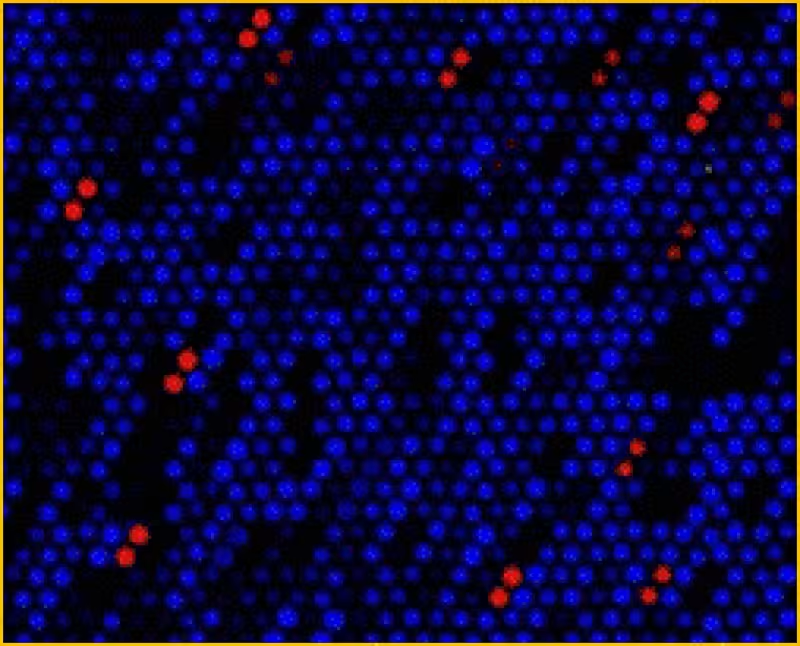
The image shows a small part of one array with red spots positive for human antibodies while the amount of protein in each spot appears as blue. We have initially analyzed 175 samples from cancer patients at diagnosis and 92 healthy controls, spanning ages from 1 month to 90 years.
Thanks to a generous grant from the Trond Mohn Research Foundation (TMF) (external link)we can now extend the analysis of selected antibodies in much larger cohorts, which is crucial to determine if they are connected to cancer and have diagnostic or predictive value and can inform us about mechanisms of childhood cancer.
In the initial phase the project has received crucial support from the Pediatric Cancer Society (external link) and the Norwegian Cancer Society (external link), as well as from the University of Bergen and The Research Council of Norway (external link).
People
Project manager
Ola Myklebost Project leader
Project members
Ansastassia Serguienko Member


