

PopLatin: Priests’ Books and the Popularisation of the Contemplative Life in England, 1300–1550
In the Middle Ages, contemplation was regarded as the pinnacle of religious experience – an intimate connection with divine love meant for the truly devoted. But how did everyday people tap into this kind of spirituality? The PopLatin project will examine how contemplative teachings spread through the Latin textbooks that priests used to educate their congregations. These texts broke down complex teachings, making them accessible to the average person and challenging the notion that Latin was solely for the elite. PopLatin provides a fresh perspective on medieval lay spirituality and illustrates how Latin served as a language of popularisation for advanced theology long before the Reformation.
About the research project
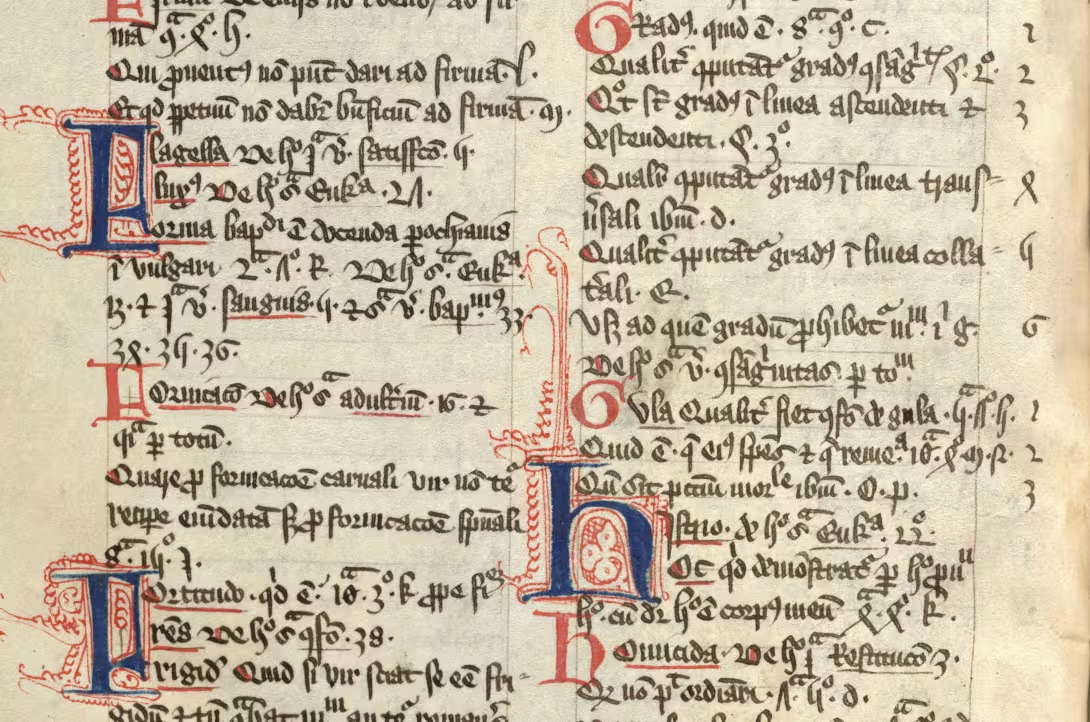
PopLatin aims to write a new history of lay contemplative spirituality in the Middle Ages. Medieval people understood ‘contemplation’ as the highest religious experience: a revelation of divine love that could only occur, rarely, for those most committed to God. PopLatin offers a novel account of medieval contemplative spirituality by focusing on sources that scholars have largely overlooked: namely, the Latin textbooks that medieval priests used to teach their congregations. Latin priests’ books popularised famous medieval writers by transforming their teachings into more accessible forms, which priests then used to instruct their parishioners orally. The premise of PopLatin is that these neglected sources offer a new history of lay contemplative spirituality in the Middle Ages. By showing, counter-intuitively, that Latin was a language of popularisation through texts like these, PopLatin offers a radically revised view of what literature and beliefs ordinary laypeople could access during the centuries before the European Reformation.
These objectives will be achieved through: literary analysis of four case studies, to establish how these Latin texts popularised the contemplative teachings of medieval authorities; analysis of material evidence, to show how priests communicated the teachings in their books to laypeople; survey of Latin priests’ literature, assisted by AI, to contextualise my research in wider trends; and literary analysis of the influence of Latin priests’ books on writers more famous today, to establish their importance for cultural history.
People
Project manager
Timothy Luke Glover Principal investigator, Marie Skłodowska-Curie Actions postdoctoral fellow
Supervisor
Laura Saetveit Miles Supervisor
Contact
Timothy Luke Glover
Principal investigator, Marie Skłodowska-Curie Actions postdoctoral fellow
- Emails
- timothy.glover@uib.no
