– Findings from my project have the potential to enhance aquaculture production
– Findings from my project have the potential to enhance aquaculture production, increase the sustainability of marine food production and consumption, improve management of marine habitats and help in reducing invasive species, says SEAS fellow Zoran Šargač.
By: Nils Olav Severas
Published: (Updated: )
Parasites… Nobody really likes them (well, except me), but they are an important part of the living world.
What attracted you to being a researcher and then to the SEAS programme?
I've always been interested in how people affect the environment, and I like looking for solutions that benefit society while preserving the environment. The SEAS programme offers a fantastic chance to accomplish just that! It allows me to explore the scientific areas that most interest me, but also gives me the training, resources, and connections I need to put my research findings into practice and support marine sustainability in business and political decision-making.
Can you give a description in general terms of your SEAS project?
Parasites… Nobody really likes them (well, except me), but they are an important part of the living world. My project focuses on marine parasites and the various ways in which they impact marine life. I am investigating how and why parasites attack specific fish or crab species to help reduce parasitic infections and financial losses in fisheries and aquaculture. My project's objectives are to increase our understanding of parasites, improve aquaculture, and find new ways to use parasites as a tool in the future to solve environmental problems.
Are you seeing any results that might also give you a way forward in your future research?
My study shows that parasites select their host species in different ways, depending on region and environment they are in. That will serve as foundation to investigate mechanisms leading to parasites’ different preferences and then apply it in the aquaculture and fisheries sectors.
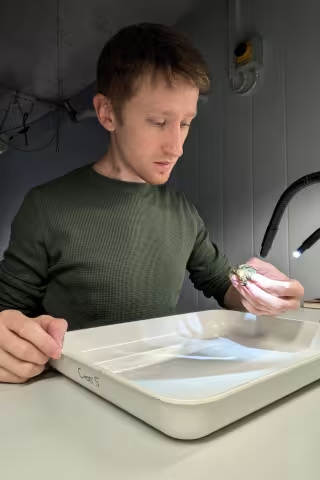
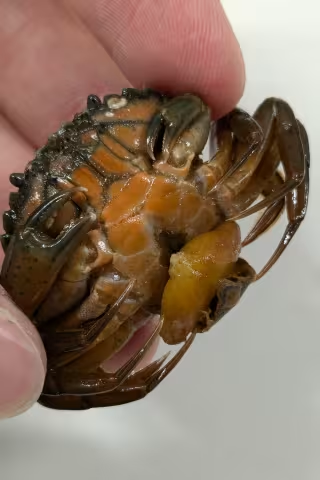
Photos below: Taking a closer look - Zoran inspects a common shore crab (Carcinus maenas) infected with the parasite (Sacculina carcini) in their abdomen (the yellow-brown mass).
What kind of field work have you had during the SEAS programme and how would you describe the experience?
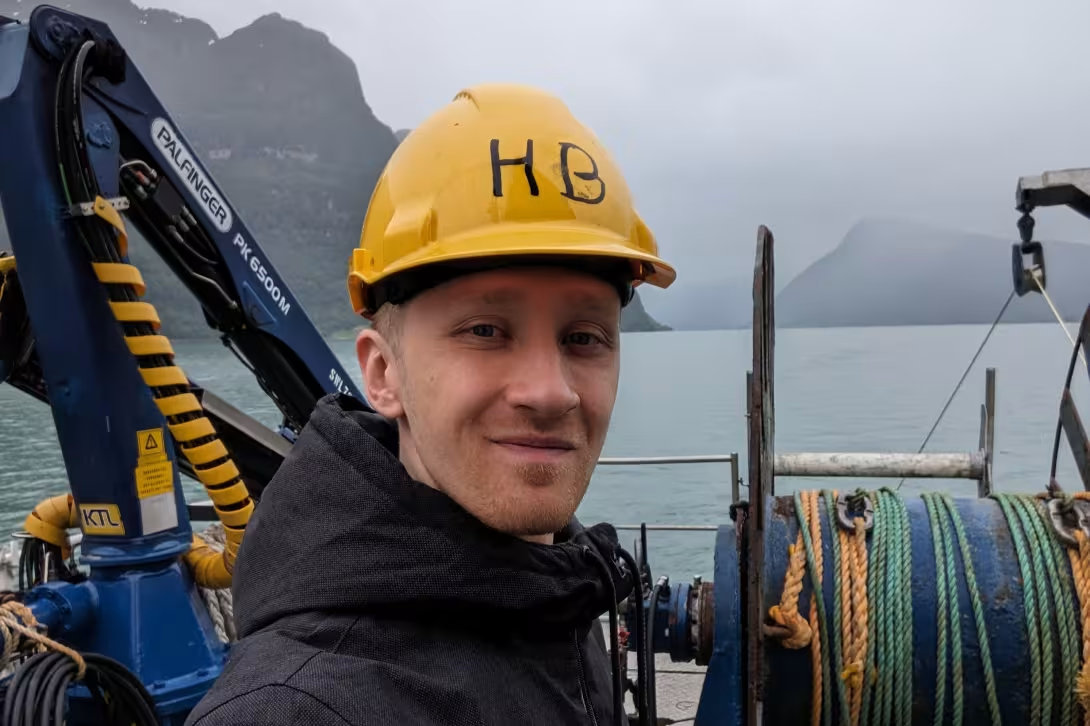
I collect animals manually on the shore or I have field work on the research vessels. During my last field work, I was on a ship where I went to the Sognefjord (the biggest fjord in Norway!) to collect deep-sea sharks that had parasites on them. It was an amazing experience to be able to collect organisms and work alongside other experts, but also to enjoy amazing Norwegian nature along the way.
What have been the pros and cons of the SEAS programme in terms of resources, in terms of community, or in terms of cooperation with industry and society at large?
In SEAS, I feel like I am a part of a small community consisting of amazing SEAS fellows, other researchers and administration team who are always there for me. This programme provides resources to boost our skills and training to improve our projects and develop career paths depending on our individual needs. It also provides a platform to meet with different industrial and public sector partners, share our findings, and apply it on a broader scale.
What has been your experience of being located in Bergen?
I mean, look at the Bergen’s natural and cultural beauty! How could you not love being here? The work-life balance is great, and I really enjoy the Scandinavian lifestyle. And, because I love rain and snow, I think the weather is actually really nice here. 😊
In what ways have you found the interdisciplinary aspects of the SEAS project to be a contribution to your project?
Because we form a unique interdisciplinary group of postdocs all working together towards marine sustainability goals, we can discuss scientific topics from different angles. That gives us fresh interdisciplinary ideas and new perspectives to improve our research.
In what ways does your project connect to the UN sustainability goals, or otherwise connect to the topic of marine sustainability?
My project is connected to UN sustainability goals 12 (responsible consumption and production), 13 (climate change), and 14 (life below water). Findings from my project have the potential to enhance aquaculture production, increase the sustainability of marine food production and consumption, improve management of marine habitats and help in reducing invasive species.
How do you spend your free time?
As many Norwegians, I am a true nature addict and love to go hiking. You can often see me exploring the city’s hidden gems, having a coffee on a random bench with a view over the sea (which is here almost everywhere!) or watching the birds around me trying to persuade me to give them food. I also like to go to a sauna, travel, learn languages, or read a book.
Where do you see yourself in 5 – 10 years?
In the future, I would love to stay in Scandinavia and continue working on the relevant environmental issues, preferably in industry or public sector, and contributing towards better and more sustainable future. But you never know where life leads you!
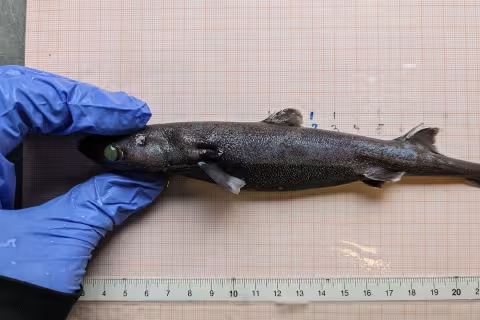
Deep-sea velvet belly lantern shark (Etmopterus spinax) with two parasites (Anelasma squalicola) above the pectoral fin
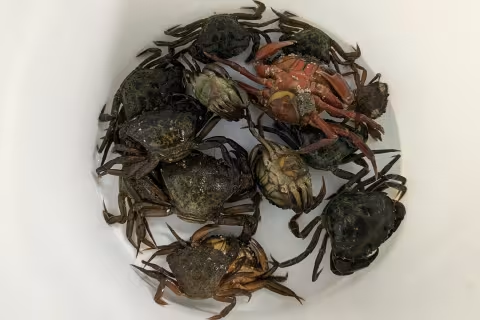
Bucket full of common shore crabs (Carcinus maenas)
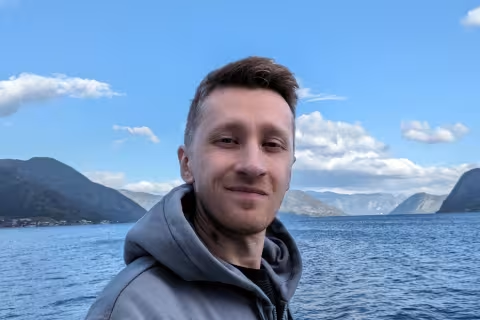
A break in the weather on the Sognefjord during Zoran's research cruise
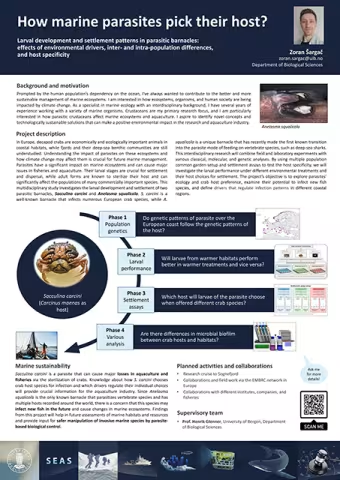
Zoran's poster at the 2023 annual meeting, introducing his project