

Formalising collaboration on PhD education
The research and higher education institutions in Bergen have officially formalised their collaboration on PhD education by signing a joint agreement for the Bergen Summer Research School (BSRS).
Published: (Updated: )

(First published: 21 February 2024)
Each year, BSRS addresses some of the world’s most pressing global challenges and brings together more than 100 PhD candidates and researchers from across the globe. Although the collaboration dates back to 2008, this marks the first time it has been formally anchored.
Since its inception sixteen years ago, over 1,300 PhD candidates have spent two weeks working alongside some of Bergen’s leading research groups at the University of Bergen (UiB), Western Norway University of Applied Sciences, NHH Norwegian School of Economics, the Chr. Michelsen Institute, and NORCE.
“Here, participants gain new ideas and expand their networks across disciplines and borders. Today, many of them are leaders in research institutions and public administration in countries we need closer cooperation with,” says Professor Simon Øverland, head of UiB’s strategic initiative on Global Challenges.
More relevant than ever
BSRS not only strengthens education and recruitment of young researchers—it also fosters international research collaboration. In addition to the PhD candidates, the summer school gathers around thirty lecturers, primarily local researchers, but also their international colleagues.
“This is a unique international arena where our own PhD fellows meet peers and researchers from around the world. Over the ten days of the summer school, they build academic relationships that last long after they return home. This is what meaningful North–South collaboration looks like,” says Professor Øverland.
UiB Rector Margareth Hagen expressed concern about the future of international academic collaboration, citing rising tuition fees that make it harder for international students to come to Bergen, as well as growing global security tensions.
“International engagement is no longer something we can take for granted—at least not in the way we’ve been used to. Bergen holds a special global role, and it’s vital that we maintain and strengthen these relationships,” Hagen says.
She emphasises the importance of making better use of the international networks built over many years, especially in the Global South.
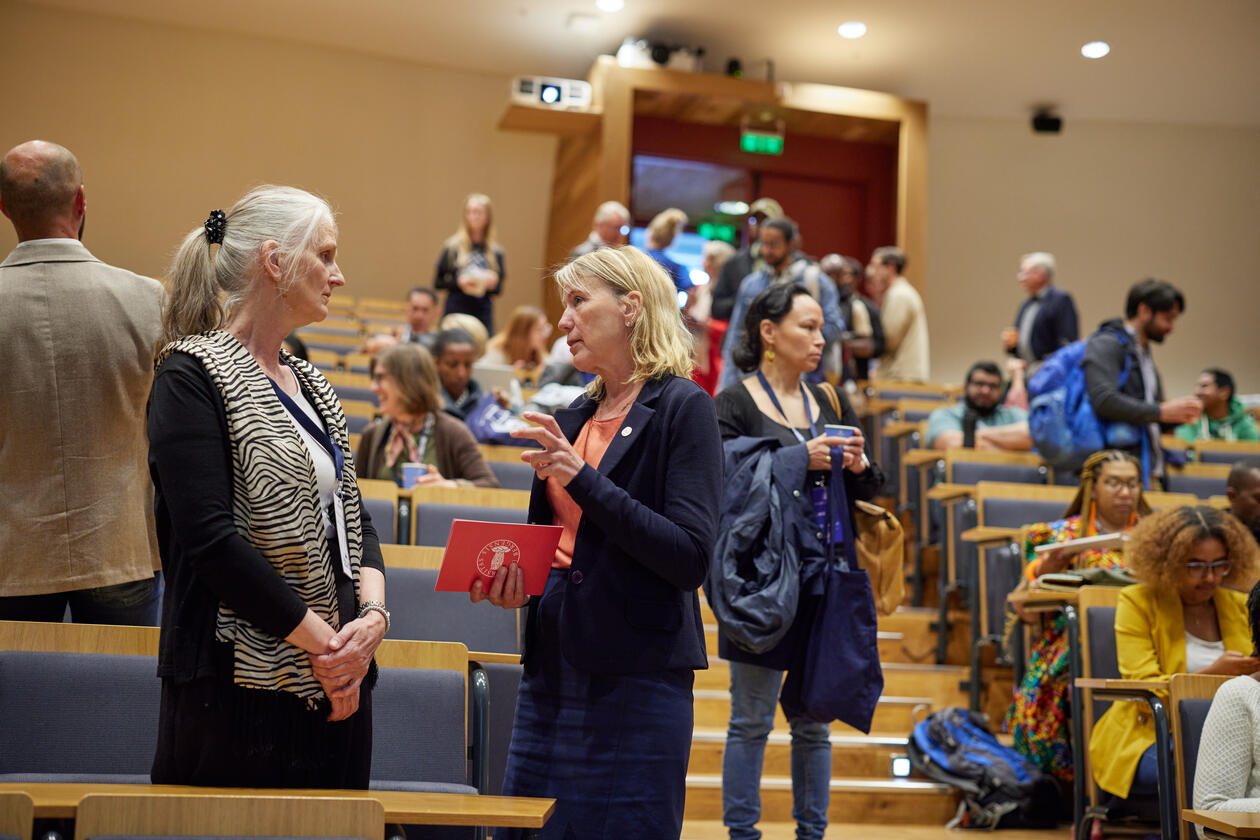
Bergen Summer Research School
- Annual international interdisciplinary research school
- Open to applicants from all academic disciplines
- 5–7 parallel courses offered
- Takes place in Bergen during the first half of June
- Approximately 100 participants from 25–40 different countries
- Application deadline: 1 February each year
A city of knowledge
The idea of an international, interdisciplinary summer research school was first introduced in 2006 by Professor Kjersti Fløttum, then Vice-Rector for International Affairs at the University of Bergen.
The goal was to put Bergen on the map as a city of knowledge and to position Norway as a global contributor in developing research-based solutions to major global challenges.
The initiative was met with strong support from other research and higher education institutions in Bergen, and was backed by the Research Council of Norway, Sparebanken Vest, the City of Bergen, and the Bergen Chamber of Commerce.
Originally launched as a four-year project, the Bergen Summer Research School has since become a permanent annual programme, with dedicated funding from UiB and a secretariat responsible for its planning and implementation.