

Plants
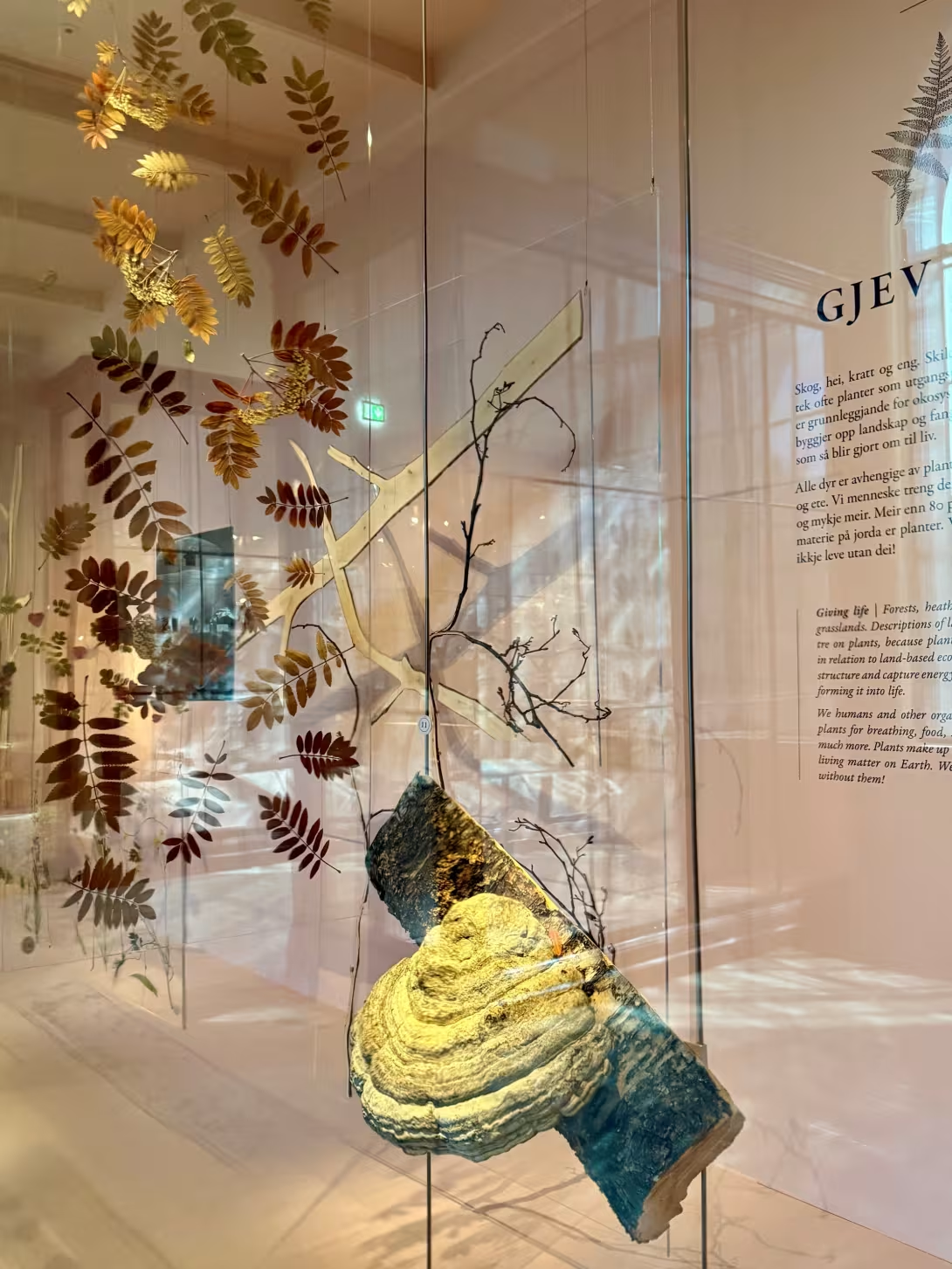
The Plants exhibition offers insight into the diversity and history of the plant world. You will learn how plants conquered land, what strategies they developed to survive, and why all life on Earth depends on them.
What can you see in the exhibition?
In the plant exhibition, you can see:
- The story of plants' 'move ashore', from freshwater algae to land plants
- The strategies plants developed to survive on land
- The interplay between plants, insects and birds
- Why plants are the foundation of all life on land
Cure your own plant blindness
Have you ever noticed how easy it is not to think about plants? Plants are everywhere, yet, or perhaps precisely because of that, it is as though we don't really see them.
Some of the blame for this plant blindness can perhaps be laid on the Greek philosopher Aristotle. Almost 2,400 years ago, he ranked all things into four categories, with humans at the top, animals in second place, and plants in third, barely a nose ahead of non-living things.
The foundation of all life on land
Had Aristotle known what we know today, the list might have looked rather different. Plants are absolutely fundamental to ecosystems on land. They capture energy from the sun and turn it into living matter.
All animals depend on plants. Without them, we would have neither anything to eat nor anything to breathe, since plants produce most of the oxygen in the air. Today, plants are estimated to make up more than four-fifths of all living matter on Earth.
From freshwater to land
The exhibition offers insight into the diversity and history of the plant world. Research tells us that land plants originated in freshwater, not in the sea, and that they descend from freshwater algae.
When plants came ashore, they faced new challenges. Air did not offer the same support as water, spores could not swim through the air, and the risk of drying out was constant. In addition, plants faced threats from fungi that had already settled on land tens of millions of years earlier. In the exhibition, you will learn what strategies plants developed to meet these challenges, and how they interact with other organisms such as insects and birds.
