

The EBV-MS Team Presents Groundbreaking Research at ISNI 2025 in Japan
The 17th International Congress of Neuroimmunology (ISNI) took place from 5–8 October 2025 in Japan, bringing together leading scientists, clinicians, and researchers from around the world to exchange the latest discoveries in the field of neuroimmunology. ISNI serves as a vital platform for advancing our understanding of the complex interactions between the immune system and the nervous system — and this year, the EBV-MS consortium proudly joined the conversation. Sharing our findings on a global stage like ISNI is crucial to foster collaboration, inspire new research directions, and accelerate progress toward better prevention and treatment of multiple sclerosis (MS). This time, our journey led us to Japan — a hub of scientific innovation and cultural heritage — where our team presented new insights into the link between the Epstein-Barr Virus (EBV) and MS.
Published: (Oppdatert: )
Exploring the Epigenetic Landscape of MS
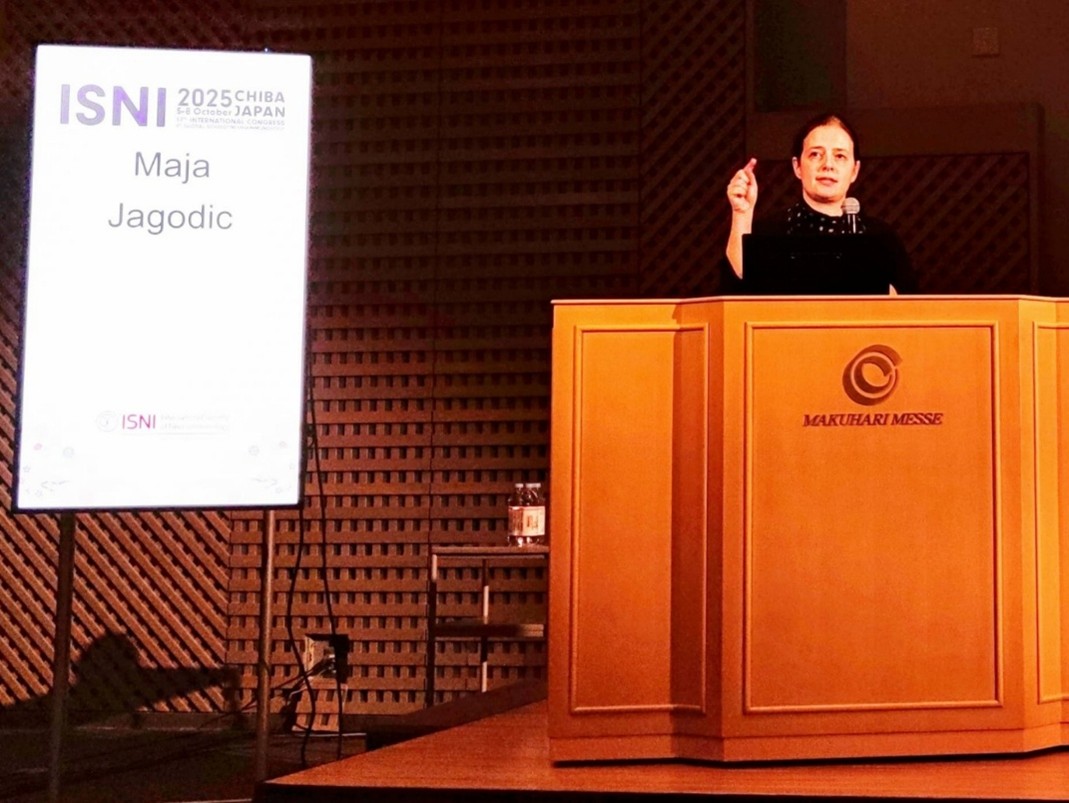
Dr. Maja Jagodic, Professor of Neuroinflammation and research group leader at the Karolinska Institutet, delivered a thought-provoking presentation in the session on Regulatory Gene & Environmental Factors in MS.
In her talk, “Epigenome as a mediator of risk factors in Multiple Sclerosis,” Dr. Jagodic discussed how her team leverages cell type-specific epigenetic landscapes to better understand how genetic and environmental risk factors, including EBV infection, influence B cell phenotypes in people with MS. This research underscores the critical role of the epigenome as a dynamic interface where environmental triggers and genetic predispositions converge to shape disease development and progression.Figure 1. Dr. Maja Jagodic giving her presentation on epigenome.
Uncovering Disease Signatures through Multi-Omics Profiling
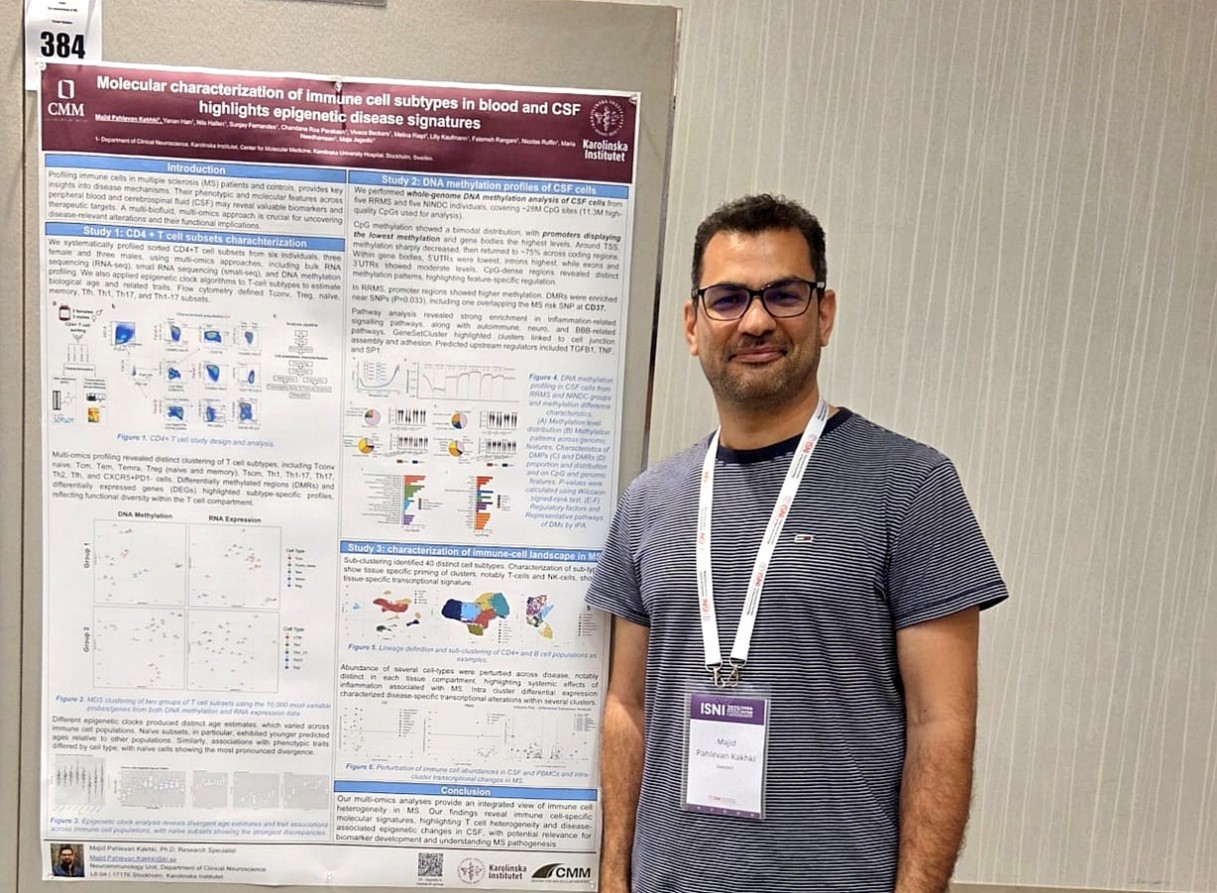
Dr. Majid Pahlevan Kakhki, Research Specialist at the Karolinska Institutet, presented a poster titled “Molecular characterization of immune cell subtypes in blood and CSF highlights epigenetic disease signatures.”
His work applied multi-omics profiling to immune cells from both blood and cerebrospinal fluid (CSF), revealing T cell heterogeneity and disease-associated epigenetic changes specific to MS. These findings shed light on the molecular underpinnings of MS pathogenesis and open the door to identifying novel biomarkers that could guide diagnosis and treatment monitoring.
Investigating B-Cell Dynamics and EBV Activity Post-Treatment
Early-career researcher Chiara Starvaggi Cucuzza, PhD candidate at Karolinska Institutet, presented her poster exploring how B-cell depleting therapies (BCDT) continue to be effective even when treatment intervals are extended and B cells begin to repopulate.
Her study revealed that repopulating B cells exhibit a reduced expression of genes associated with EBV’s lytic stage, suggesting a lower EBV activity following therapy. This downregulation was particularly evident in switched memory B cells, a subtype known to harbor chronic EBV infection, and was linked to decreased T-cell reactivity to EBV antigens. These observations point to the intriguing possibility that sustained efficacy of BCDT may, in part, stem from prolonged suppression of EBV replication, offering new insights into how these treatments achieve long-term disease control.