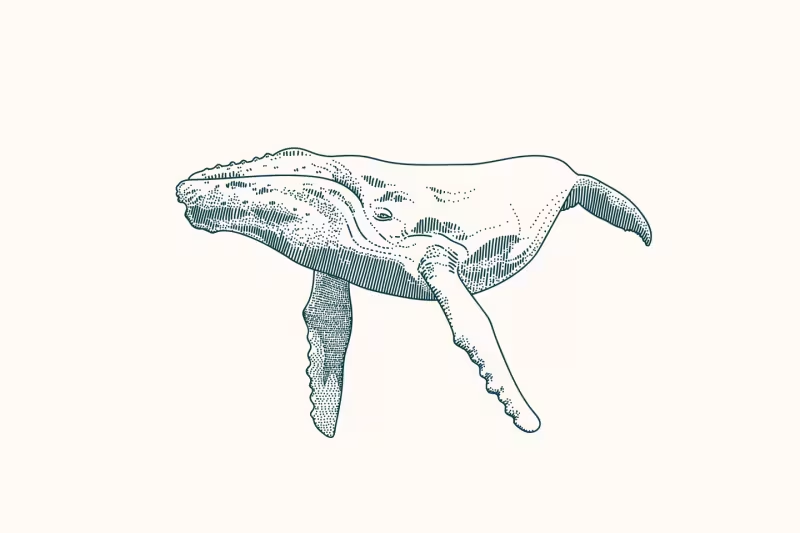
The whale hall
Suspended from the ceiling of the Whale Hall is one of the world's largest collections of whale skeletons. Among them is a 24-metre-long blue whale skeleton. Several of the skeletons have hung here for almost 150 years and tell the story of both the whales and the museum.

What can you see in the exhibition?
In the Whale Hall, you can see:
- The blue whale: a 24-metre skeleton of the world's largest mammal
- The North Atlantic right whale: the skeleton of a now virtually extinct species
- The grey whale: a species no longer found in the Atlantic
- The whale skeletons in the ceiling: some have hung there for almost 150 years

The world's finest collection of whale skeletons?
Suspended from the ceiling is one of the world's largest collections of mounted whale skeletons, and the largest collection of skeletons from whale species that live or have lived in the North Atlantic. In addition to the blue whale, the world's largest mammal, you will see skeletons of the bowhead whale, which is extinct, and the grey whale, which no longer lives in the Atlantic.
What is it like to clean and maintain a 24-metre blue whale skeleton that hangs from the ceiling and cannot be taken down? Our conservators can tell you.
Oceans, whales and human impact
The Whale Hall offers insight into the evolution and adaptation of whales, and into how populations have been affected by several centuries of exploitation. You will get to know marine ecosystems, from the open ocean to the shoreline, and the interplay between the sea's largest and smallest organisms.
Finally, the exhibition is a story about the interplay between human activity and the marine ecosystem. How do we avoid this story ending in tragedy?
Almost 150 years under the ceiling
The whale skeletons also tell the museum's own history. As early as 1834, Wilhelm Frimann Koren Christie, founder of what was then known as Bergen Museum, began collecting whale skeletons. The collection became important to the internationally leading marine research community that grew up at Bergen Museum and later the University of Bergen.
Towards the end of the 1800s, Norwegian whaling gave the museum good access to whale skeletons and whale foetuses. These were valuable currency in the museum world, and were used in exchanges to acquire, among other things, a giraffe, a gorilla and an orangutan.