

He reshaped our understanding of what it means to be human
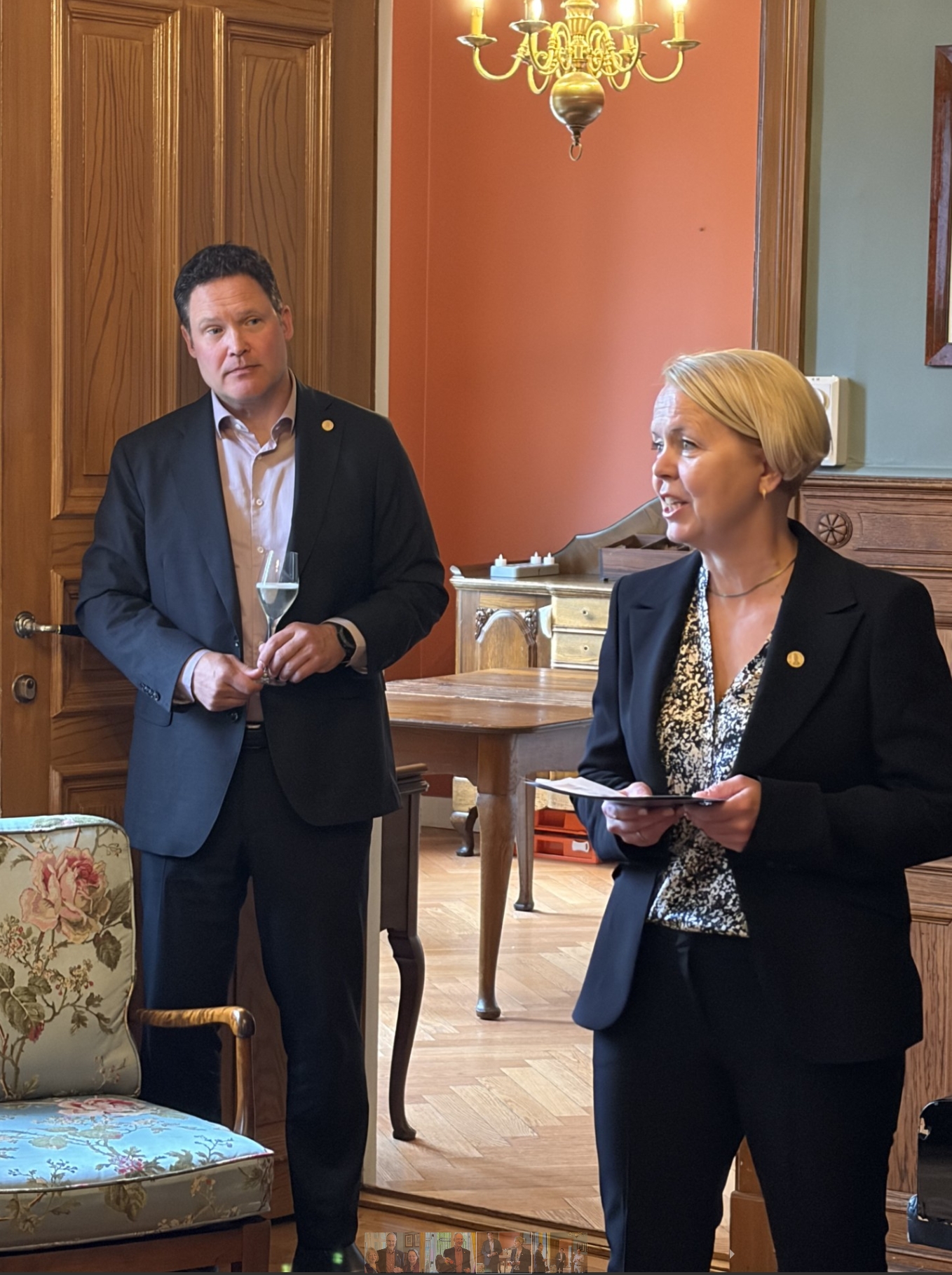
“You have not only dreamt big – you have gone big,” said Dean Camilla Brautaset as colleagues and friends gathered to celebrate Christopher Henshilwood’s stellar career. Over the past 35 years, UiB’s world-leading archaeologist has reshaped our understanding of how and when we became modern humans.
By: Janne-Beate Buanes Duke
Published: (Updated: )

A long list of speakers took part as Christopher Henshilwood marked his final formal day at work. The Norwegian Research Council (external link) also paid tribute, joining others in congratulating him. Together, their speeches painted a rich picture of the world-leading archaeologist who chose Bergen as his second home and workplace.
Groundbreaking research with a lasting impact
Dean Camilla Brautaset expressed a deep sense of pride, admiration and, above all, gratitude for his contributions to UiB and the faculty, highlighting his role as one of the first recipients of an ERC Advanced Grant at the faculty, and later as the driving force behind SapienCE becoming a Centre of Excellence in 2017.
“This has resulted not only in groundbreaking research that has shaped the international research frontier, but also in an exceptional ability to communicate these findings to both peers and wider audiences, through publications in journals such as Science and Nature, as well as museum exhibitions in Bergen and South Africa.”
Henshilwood is also a Professor of Archaeology at the University of the Witwatersrand (external link), where he held a 15-year Research Chair from 2008-2024.
Challenging how we define what it means to be human
What has characterised Henshilwood’s scientific career is his ability and courage to challenge the way we think about what it means to be a modern human. Early in his career, he began questioning established assumptions about when, where and why modern human behaviour first emerged, positions that also met with resistance and criticism.
After all, was it plausible that humans had lived in Africa for more than two million years without developing language or art, only for these capacities to arise when they reached Europe around 40,000 years ago?
Questions like these later became part of the hypothesis that laid the foundation for SapienCE’s interdisciplinary research on early modern humans, combining archaeology, climate science, psychology and digital modelling. The overall aim has been to piece together the puzzle of how and when we became behaviourally modern humans.
A new framework for understanding human evolution
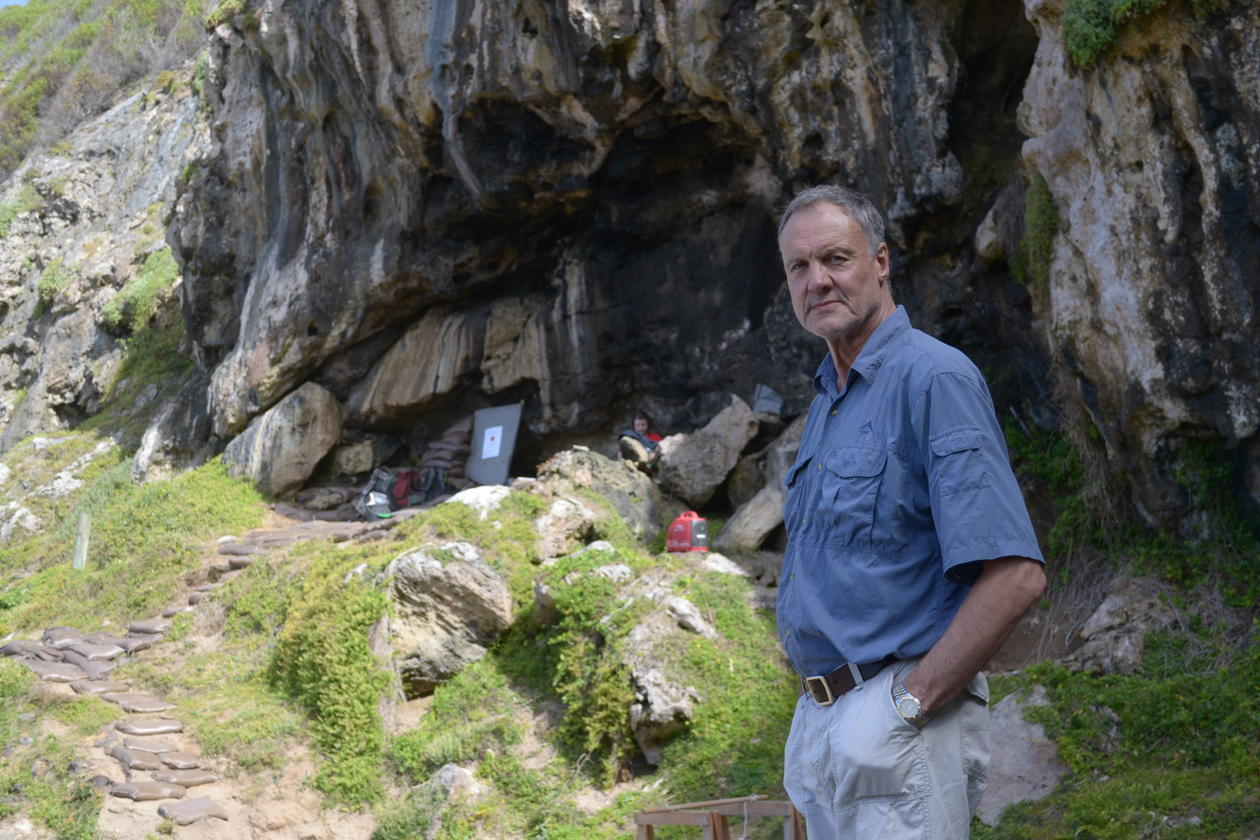
Centred on key Middle Stone Age (120-50 ka) sites in South Africa, Blombos Cave, Klasies River and Klipdrift Shelter, the project has explored how environmental shifts, social interaction and technological innovation shaped human adaptability, linking these findings to a broader understanding of what makes us human.
Through key publications based on groundbreaking discoveries in South Africa, and by applying new analytical and dating methods, Henshilwood has not only challenged a Eurocentric understanding of human evolution—he has also helped establish an entirely new framework for understanding how early modern human behaviour evolved and spread across the globe.
Leadership and legacy
With Henshilwood stepping down, SapienCE is now led by director Karen van Niekerk, with Simon Armitage as deputy director. Armitage emphasises how Henshilwood has shaped the centre into a world-leading research environment.
“Chris’s dual ability to identify the most interesting questions in African archaeology, and then to assemble the best people to answer them, has been key to his success,” he said, adding that under Henshilwood’s leadership, SapienCE has developed into a world-leading research centre, defined by ambitious international projects, strong teams and global impact.
“Through SapienCE, Chris has built an excellent team of researchers and given interdisciplinary research around archaeological questions huge momentum at UiB. Newer colleagues have introduced an ethos of innovation, while long-standing research collaborations provide the deep, site-specific knowledge necessary to interpret archaeological findings. It is particularly fitting that Chris passes leadership of SapienCE to Karen van Niekerk, his colleague for nearly three decades,” Armitage said.
Acknowledging a shared journey
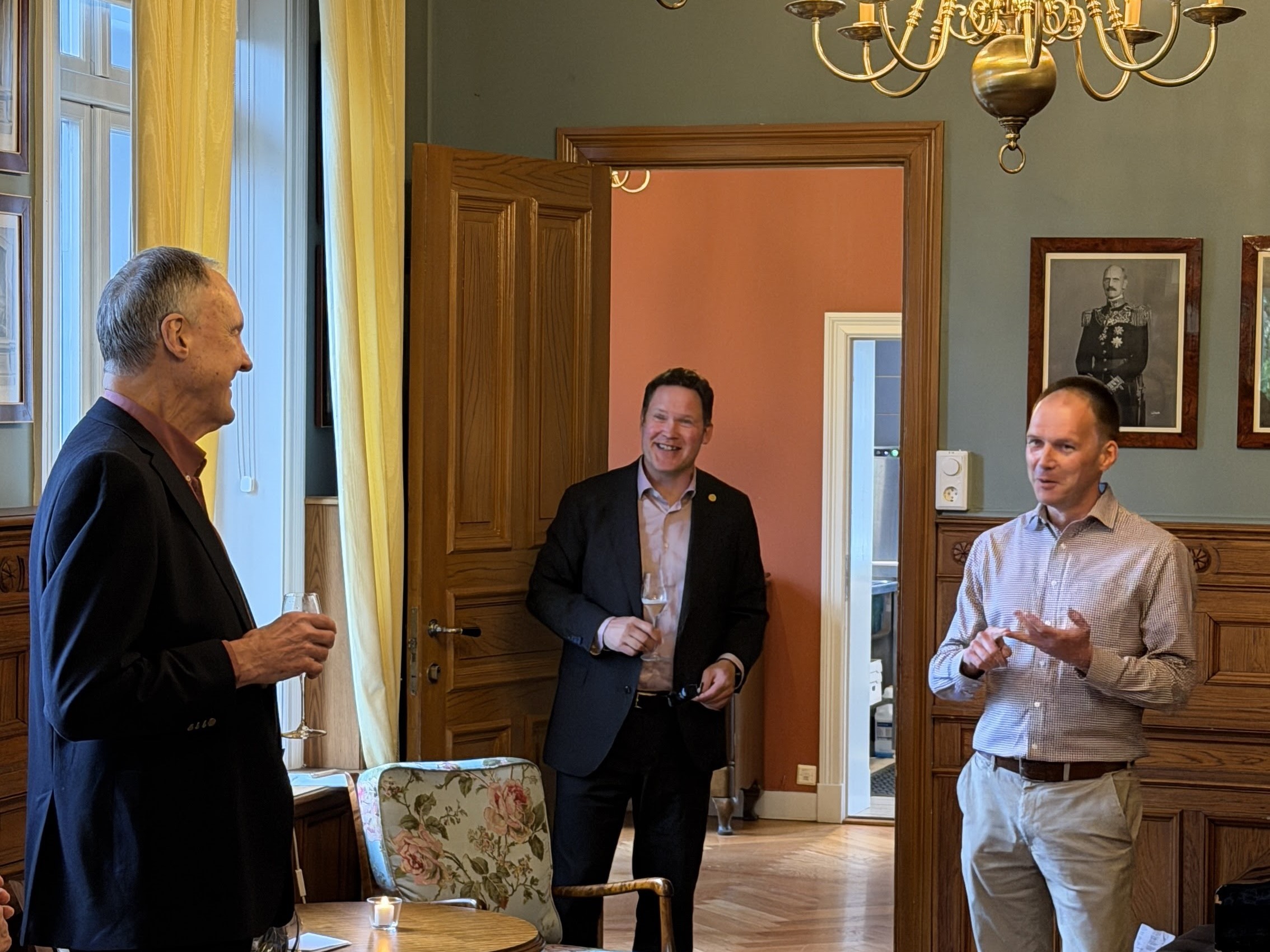
Henshilwood used the occasion to thank those who have supported him along the way - particularly the team behind SapienCE, both in Bergen and Cape Town.
“Achievements in my career reflect the dedication and support of the many colleagues, students and collaborators I have worked with over the years. Archaeology is fundamentally a team endeavour, and I have been fortunate to share this journey with outstanding people in Bergen, Cape Town and Johannesburg,” he said, adding:
“I am especially grateful to Karen van Niekerk, whose partnership and friendship over nearly three decades have been central to our success. Under her leadership, SapienCE is in capable hands.”
Although now formally retired, Henshilwood will continue his involvement in research and collaboration. He will remain closely engaged with SapienCE as the centre approaches its final year, culminating in a capstone conference in Bergen.
Continuing the journey beyond retirement
“While I have retired from my formal positions, I remain actively engaged in research. I look forward to continuing my involvement with SapienCE as it approaches its final phase, pursuing ongoing work at our archaeological sites in the southern Cape, and completing a book project,” he said, looking ahead:
“I am also developing research on overlooked marine and terrestrial food resources, such as seaweeds, fungi and other archaeologically elusive foods, to better understand the diets of early humans. There are still many important questions about our early human past that remain to be explored,” he concluded.