

Migrants: Essential workers, uncertain lives
New research by postdoctoral fellow Ann Cathrin Corrales-Øverlid shows how gaps between labour, migration and welfare policies can make migrants more vulnerable to exploitation.
By: Åshild Nylund
Published: (Updated: )

Precarious work as a structural problem
Migrants are often overrepresented in what is known as “precarious work" – employment characterised by insecure contracts, unpredictable income and limited rights. This is linked to factors such as insecure residence status, limited access to welfare services and structural conditions in the labour market.
Postdoctoral fellow Ann Cathrin Corrales-Øverlid at the Department of Social Anthropology at the University of Bergen has made this the core of her research.
“I want to understand what makes migrants exploitable, but also what acually protects them and where they find social protection, she says.
Systems working against each other
Corrales-Øverlid challenges a widespread tendency in politics – and to some extent in research – to treat labour, migration and welfare as separate fields. Her findings show that exposure to exploitation rarely arises within a single system; it emerges at the intersection between them.
"Exposure to exploitation often arises in the overlap between systems. That is why we need to see them in relation to one another,” she explains.
One concrete example is that many welfare schemes require stable, long-term employment to qualify for rights and benefits, while labor contracts available to migrants are often temporary, zero-hour, or on-call. For migrants caught in this intersection, the result is both insecurity and increased exposure to exploitation.
"With one hand, policymakers seek to improve work conditions through labour market regulations, while with the other they tighten requirements for legal and permanent residency, making people more exposed to exploitation", explains Corrales-Øverlid.
From informal businesses in Peru to platform-mediated gig work in Norway
The research is based on fieldwork conducted in several countries, including Peru, the United States, Egypt, and Norway.
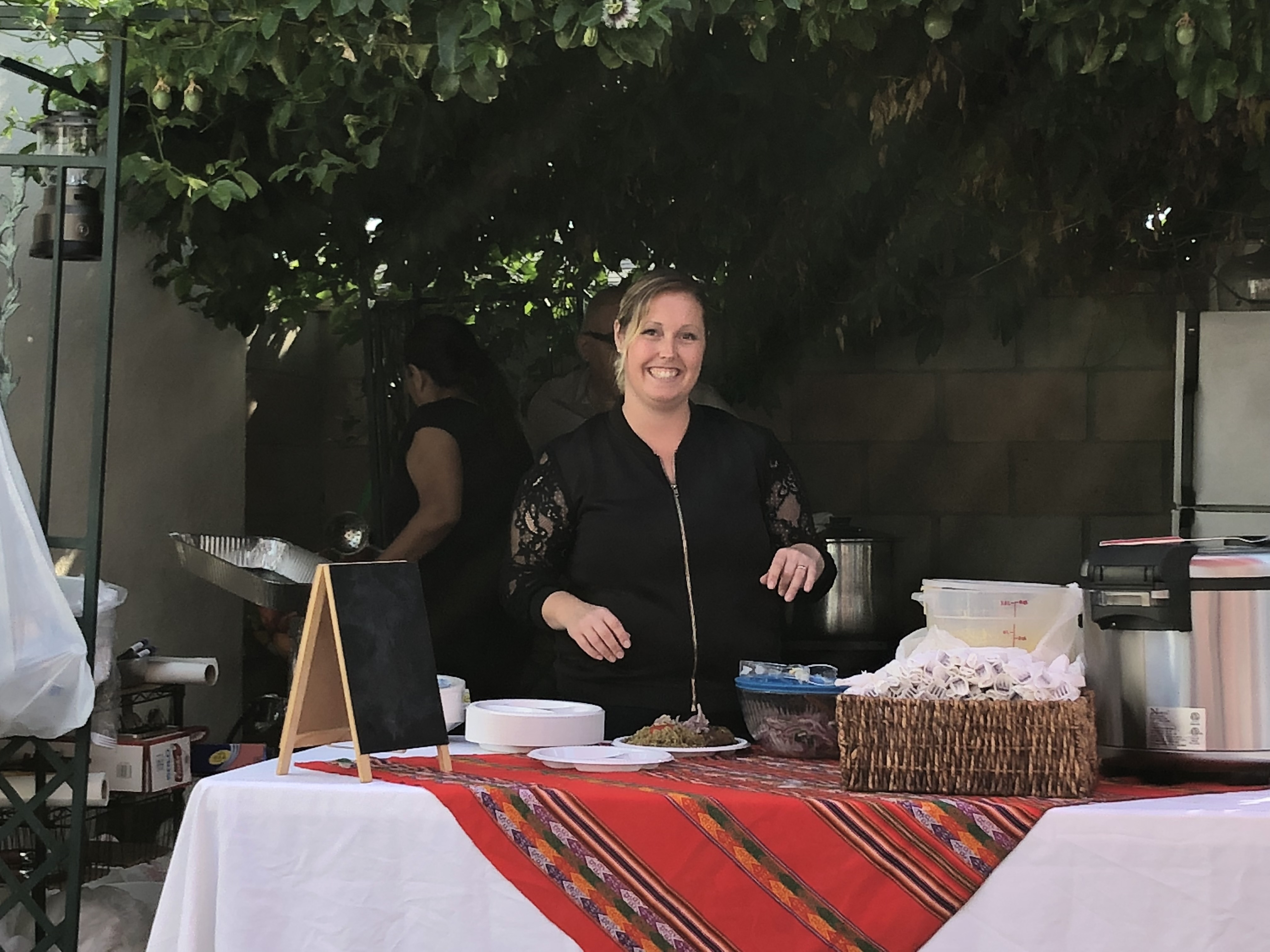
In Peru, Corrales-Øverlid followed women working in the informal economy without regulated employment conditions. In the United States, she studied women from Peru running their own businesses, many of whom were undocumented migrants.
She recently conducted fieldwork in Egypt, where she followed Sudanese women who had fled to Cairo because of the ongoing war and had started their own businesses there.
In Norway, she investigates sectors such as construction and cleaning, as well as the growing platform economy – food delivery, cleaning services and similar work mediated through apps.
“By comparing different institutional contexts, we can better understand what actually creates protection, and what creates exposure to exploitation,” she says.
Where do people turn when the system falls short?
Corrales-Øverlid shifts the focus from institutions to people themselves. Instead of asking which systems exist, she asks where people go when they need help.
“Most people encounter a safe and regulated working life in Norway. At the same time, we see that some sectors at the margins of the labour market are characterised by insecure conditions and severe exploitation, and migrants are often overrepresented in these sectors,” says Corrales-Øverlid.
She points to challenges such as wage theft, unpaid overtime and lack of access to rights such as sick pay and holiday pay.
Many migrants seek or are referred to support outside the traditional support structures of the welfare state and labour market. Non-profit organisations such as Caritas, The Salvation Army and Church City Mission often play an important role.
“In practice, these organisations take over functions we usually associate with trade unions or public institutions,” she says.
A paradox across countries
Corrales-Øverlid also describes a paradox that her research highlights:
“In the United States, I have met undocumented migrants living under extremely difficult conditions, with strict migration control and limited public welfare protection. Yet many still manage to create relatively stable lives through work in the informal economy and through social networks.”
“At the same time, we see that migrants with legal residence and work permits in Norway – a country known for offering safe working conditions – can end up in highly precarious situations and without access to rights that the rest of the population takes for granted.”
This issue continues to drive her research forward.
“I am interested in understanding how both formal and informal protection mechanisms work, and how migrants navigate them in order to create decent lives through work,” she concludes.
Further reading
- The project Tackling Precarious and Informal Work in the Nordic Countries (PrecaNord) (external link), led by Lena Näre (Helsinki University) as part of Future Challenges in the Nordics Research Programme (external link).
- Gindeel, R. & Corrales-Øverlid, A. C. (2025). Entrepreneurship as Resilience: Sudanese Women, Displacement, and the Remaking of Home in Exile (external link). In African Arguments: Debating Ideas. 5. juni 2025.
Sources
Corrales-Øverlid, A. C. (2024). «Alle vet at Norge er best»: Kampen mot prekære og utnyttende arbeidsforhold i det norske arbeidslivet og velferdssamfunnet. Norsk antropologisk tidsskrift, 35(3–4), 217–235. https://doi.org/10.18261/nat.35.3-4.7 (external link) (in Norwegian)
Corrales-Øverlid, A. C. (2023). Food as a social weapon: Peruvian immigrant entrepreneurs claiming home, belonging, and distinction in Southern California. Ethnic and Racial Studies, 46(15), 3338–3359. https://doi.org/10.1080/01419870.2023.2193244 (external link)
Bendixsen, S. K. N., & Corrales-Øverlid, A. C. (2024). Velferdsstatens nådeløse optimisme. Norsk antropologisk tidsskrift, 35(3–4), 129–148. https://doi.org/10.18261/nat.35.3-4.2 (external link) (in Norwegian)