

This marine animal is making researchers rethink the origin of the brain
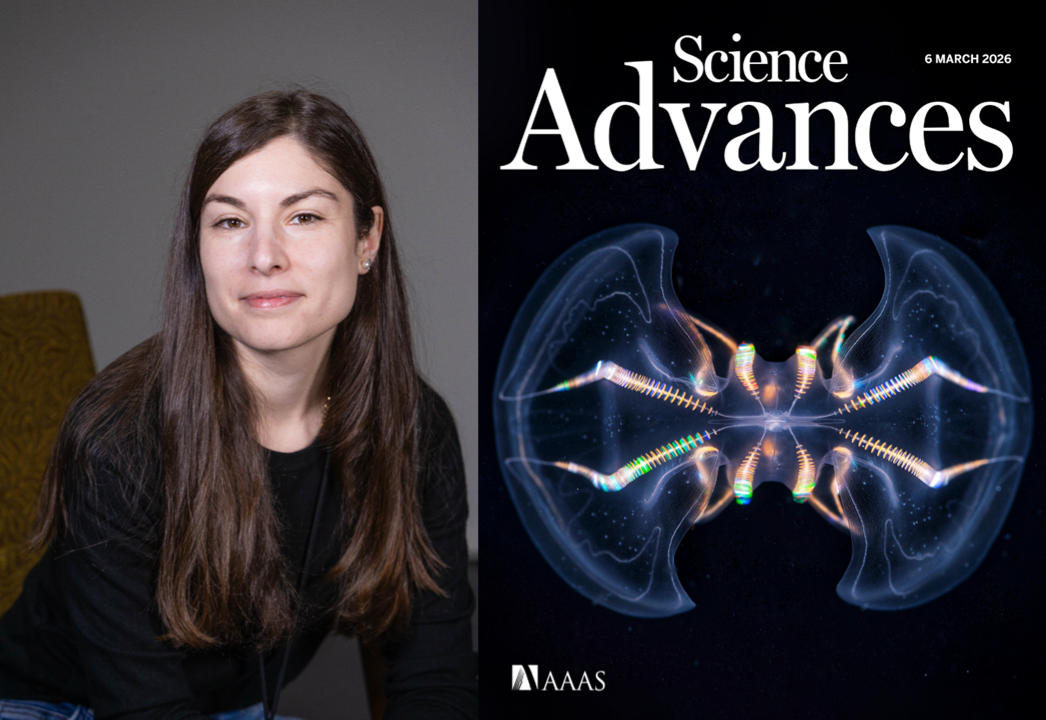
A new study from the Michael Sars Centre at the University of Bergen (UiB) shows that ancient ctenophores – or comb jellies – have a surprisingly advanced sensory organ that can be compared to an elementary brain.
By: Linn Therese Nicolaysen Hauan and Marion Lebouvier
Published:

New 3D images of the ctenophore’s sensory organ suggest that a form of brain may have emerged much earlier in Earth’s history than previously believed.
A super organ
Ctenophores are gelatinous animals that appeared in the oceans around 550 million years ago. These delicate creatures possess a specialized sensory structure called the aboral organ (AO). The organ helps them detect gravity, pressure, and light.
“We show that the AO is a complex and functionally unique sensory system” says researcher Pawel Burkhardt, group leader at the Michael Sars Centre (UiB) and corresponding author of the study.
“Our study profoundly enhances our understanding of the evolution of behavioral coordination in animals”.

“It is so unique”
To investigate how the aboral organ is built, the researchers used an advanced microscope to create detailed 3D models. The images revealed 17 different cell types, 11 of which were previously unknown.
This large diversity of cells shows that the organ can detect several types of signals.
“I was immediately surprised by the diversity of cells in the aboral organ. It is an incredibly exciting discovery,” says Anna Ferraioli, postdoctoral researcher at the Michael Sars Centre and lead author of the study.
“AO has a striking complexity when compared to similar structures in other animal groups such as cnidarians and bilaterians. It is so unique,” she says.
Shares some similarities with modern brains
The findings show that the aboral organ is tightly connected to the ctenophore’s nervous system. The network of nerve cells and AO cells can communicate both through fast electrical signals and slower chemical signals.
Together, the ctenophore uses a mixed system that combines several modes of signal transmission.
“AO is definitely not like our brain, but it can be described as the organ ctenophores use as a brain. AO likely detects light and pressure, and helps the animals navigate in the water,” says Ferraioli.
The brain may have several evolutionary roots
A key question in the evolutionary debate centers on which animal was the first to develop nerve cells on Earth. Researchers continue to disagree on this. However, the study gives new support to the idea that nervous systems may have evolved more than once, as the researchers also examined the ctenophore’s genes. They found that many of the genes that shape other animals’ bodies are also present in ctenophores, but their expression patterns are very different.
This may mean that the aboral organ is not related to the brain in other animals, but instead evolved independently - on its own evolutionary path.
In other words, the brain may have multiple evolutionary roots rather than a single origin.
“Evolution seems to have invented centralized nervous systems more than once,” says Burkhardt.
More research is needed to understand the aboral organ even better.
“The next step is to uncover the roles of the newly identified cell types and examine more closely how AO influences the behavior of the ctenophore,” says Ferraioli.
Reference:
Ferraioli, A., Digel, L., Sturm, D., Colgren, J., Le Goff, C., Jan, A., Soto-Angel, J. J., Naumann, B., Kittelmann, M., & Burkhardt, P. (2026). The 3D architecture of the ctenophore aboral organ and the evolution of complex integrative centers in animals. Science Advances, 12(10), eaea8399. https://doi.org/10.1126/sciadv.aea8399 (external link)