

BCEPS Event: "US and European Aid Cuts — Do They Matter for Global Health?"
BCEPS organised an event at the University of Bergen's Museum as part of the Museum's 200-year anniversary. Our event featured a range of speakers and was entitled "US and European Aid Cuts — Do They Matter for Global Health?"
By: Jana Wilbricht
Published:
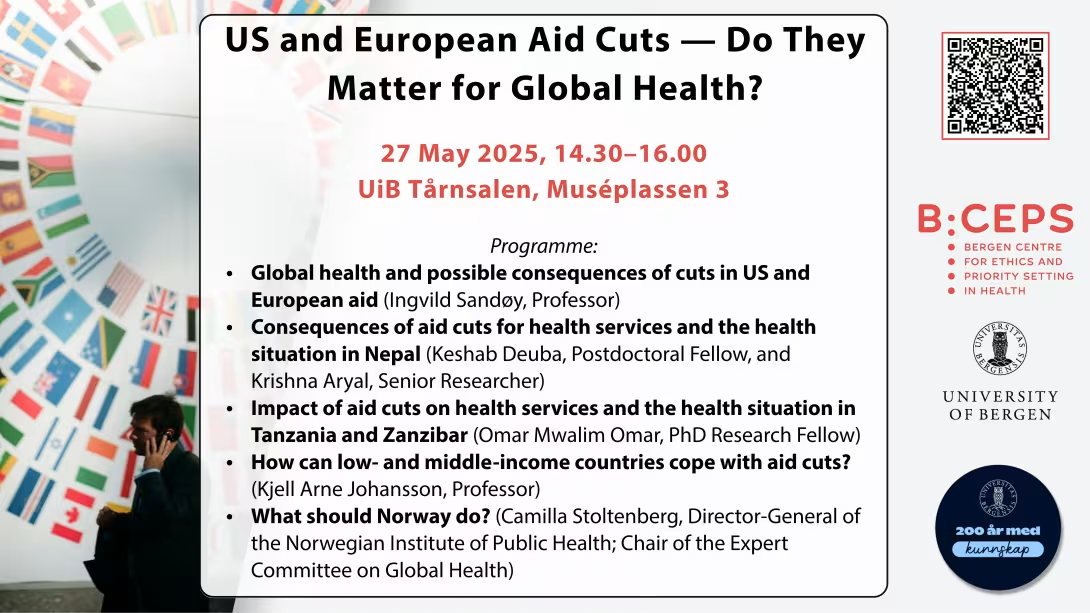
There have been major improvements in global health over the past 25 years, including significant reductions in child mortality. These improvements are partly due to aid from rich countries to health programs in low- and middle-income countries. Now, the US has drastically cut its aid and several European countries have also announced cuts. What are the consequences of these cuts for low- and middle-income countries? Do we risk major relapses in child health, an increase in infectious diseases, and reduced life expectancy?
Researchers from the Bergen Centre for Ethics and Priority Setting in Health at the University of Bergen support several low- and middle-income countries in their health prioritisation work and shared insights and considerations at this event.
Camilla Stoltenberg, who in the fall of 2024 chaired the expert committee that advised on Norway's efforts for global health, also presented and joined a panel discussion and Q&A session with the other presenters.


Programme
Global health and possible consequences of cuts in US and European aid
Ingvild Sandøy (10-15 min)
Consequences of aid cuts for health services and the health situation in Nepal
Keshab Deuba and Krishna Aryal (10 min)
Impact of aid cuts on health services and the health situation in Tanzania and Zanzibar
Omar Mwalim Omar (10 min)
How can low- and middle-income countries cope with aid cuts?
Kjell Arne Johansson (10 min)
What should Norway do?
Camilla Stoltenberg, Chair of the Expert Committee on Global Health (10 min)
Questions from the floor and discussion (30 min)
Chair: Andrea Melberg