

Successful 5-Day Workshop on "Health Economics for Policy" in Nepal
In collaboration with the Ministry of Health and Population Nepal, BCEPS hosted the first 5-day workshop as part of the "Health Economics for Policy" fellowship for Nepali policymakers and officials.
By: Jana Wilbricht
Published:
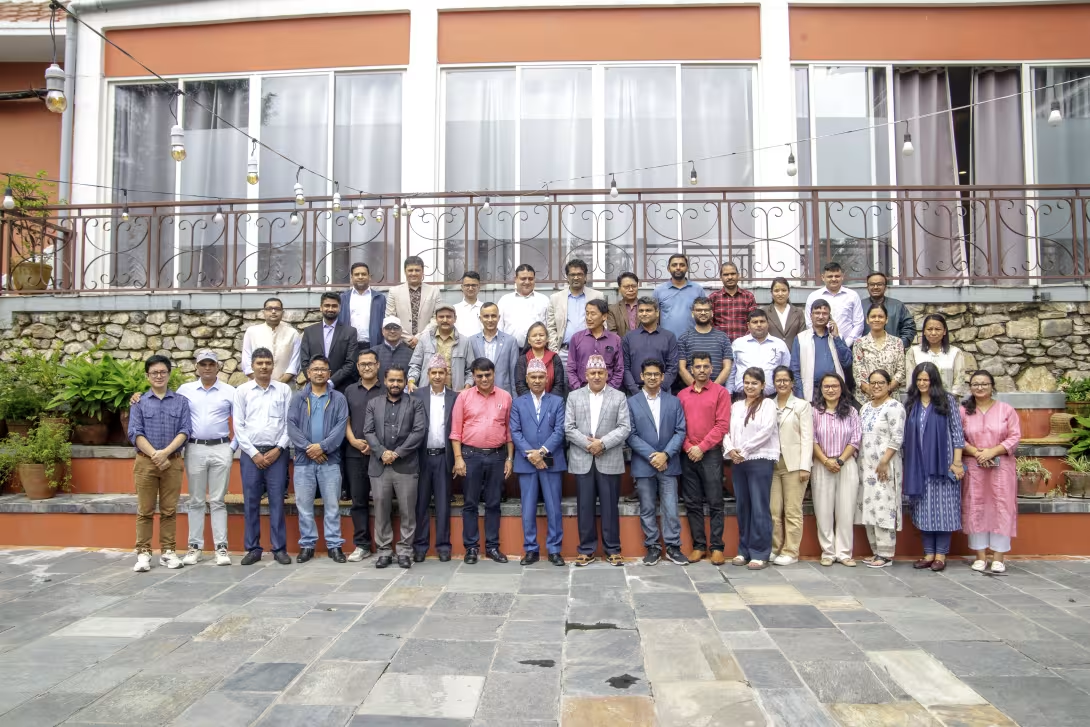
This week, a five-day intensive workshop on health economics was hosted in Nepal, attended by 30 federal and provincial health officials from across the country.
Several BCEPS Nepal Team members and affiliated researchers are taught sections of the workshop.
The training is part of Nepal's first-ever 9-month “Health Economics for Policy” fellowship, designed to give decision-makers practical skills in cost analysis, economic evaluation, health financing, and priority setting to strengthen health policies and move closer to universal health coverage.
This workshop and the fellowship program are organized by the Ministry of Health and Population (MoHP) Nepal under the technical leadership of BCEPS and in partnership with Kathmandu University, the Nepal Health Economics Association, and the World Health Organization (WHO) Nepal. The initiative is funded by Norad, the Norwegian Agency for Development Cooperation, through their support for BCEPS' work in Nepal.
During the 5-day workshop, participants learn about:
Day 1️⃣: Concepts of health economics and their application in health policy
Day 2️⃣: Relevance of demand and supply in healthcare markets
Day 3️⃣: Application of health economics in healthcare decision-making
Day 4️⃣: Costing of healthcare interventions
Day 5️⃣: Economic evaluation in healthcare

Speakers at the opening event emphasized that aligning health priorities with available resources is key to achieving Universal Health Coverage in Nepal, and that the fellowship helps bridge the gap between research and policy.

Himalaya Times news article
The workshop was featured in the Himalaya Times. You can read the article here (external link).