

Annabel Eide Ohldieck defended her thesis 23.01.26
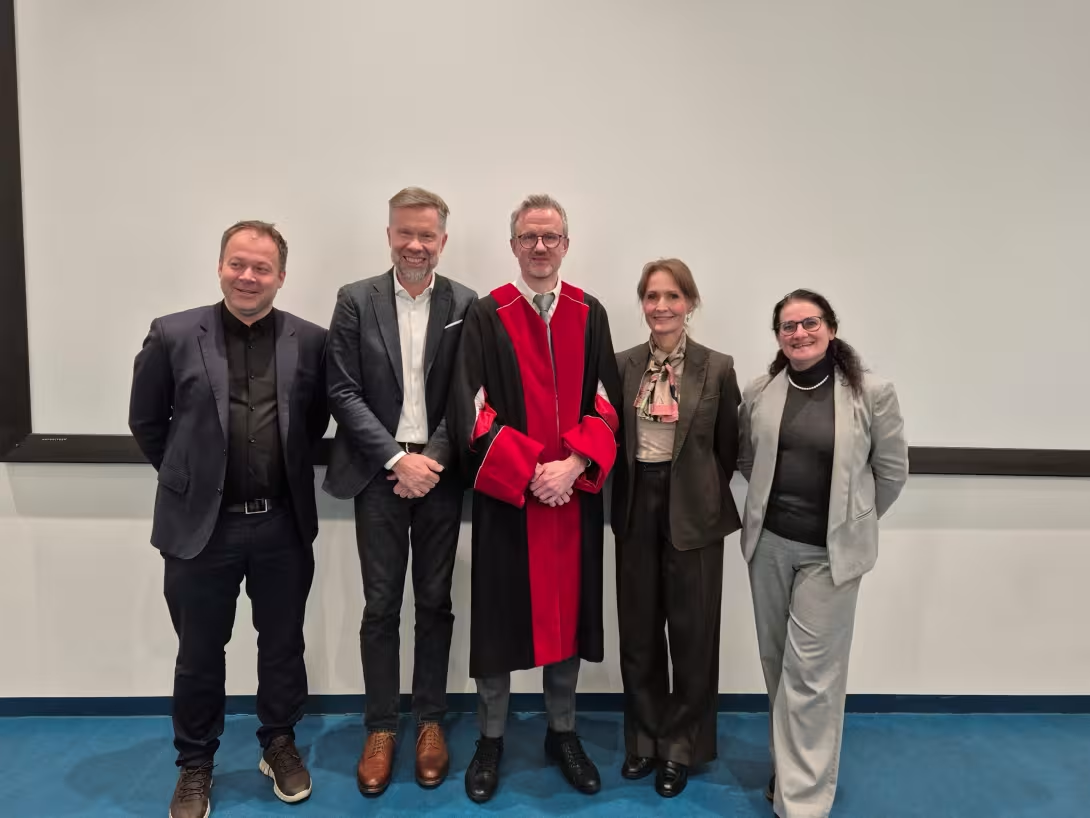
Cardiologist Annabel E. Ohldieck defended her thesis: "Sex-specific associations of blood pressure and body mass index with cardiovascular complications: Insights from the Hordaland Health Study" for the PhD degree 23.01.26. The work originated from the Centre for Research on Heart Disease in Women, where Annabel was awarded a PhD scholarship funded by the Bergen Public Health Association/Norwegian Women's Public Health Association. First opponent was Professor Isabella Sudano from the University Heart Center Zürich in Switzerland, second opponent Professor Krzysztof Narkiewicz, Gdansk Medical University in Poland. The committee was chaired by Professor Lasse Melvær Giil from the University of Bergen. The session was expertly led by Professor Bård Reiakvam Kittang as custos. The main supervisor for the work was Professor Eva Gerdts, co-supervisors Grieg Foundation Associate Professor Helga Midtbø and postdoctoral fellow Ester Kringeland, all affiliated with the Centre for Research on Heart Disease in Women at the University of Bergen.
Published:
The conclusion of the thesis is that women in their 40s are more vulnerable to increasing blood pressure and body weight than men of the same age,
says the doctoral student.
The thesis shows that women in midlife are more vulnerable to the heart effects of blood pressure and weight than men. The thesis is based on data from the Hordaland Health Study. The results show that women should be followed up more closely already from their forties. We see that the same blood pressure level or body weight causes greater damage in women, both in the blood vessels and the heart.
More powerful blood pressure response in women
Women with "high normal" blood pressure (130-139/85-89 mmHg) in their early 40s had more than twice the risk of developing high blood pressure later in life compared to men. The risk of developing stiff arteries over the course of 26 years was 3-4 times greater in these women compared to men.
"Knowledge about these differences can help us understand why women more often get high blood pressure later in life, and at the same time why women are hit harder when the disease first occurs," says Ohldieck.
Obesity affects the heart differently
Also, overweight and obesity seem to affect female hearts more strongly. After 26 years of follow-up, women with a high body mass index (>25 kg/m2) in their 40s had their left atrium dilated more often – a change that predisposes them to heart failure, arrhythmias, stroke and cardiac death.
"This is a clear signal that women are more vulnerable to weight gain in midlife than men, and that the risk in women starts at a lower degree of overweight, and long before you develop obesity," says Ohldieck.
Need for early and targeted prevention
The doctoral student believes that the findings should have consequences for how to prevent heart disease. Early follow-up of blood pressure and weight in women can help reduce the risk of serious cardiovascular disease later in life. Annual monitoring of blood pressure and weight is recommended from the age of 40.
"Women's risk is often underestimated, partly because traditional risk models are based on male data, and overweight/obesity is not emphasized. Our findings underline the need for gender-specific prevention and treatment," says Ohldieck.