

Arctic cruise discovers a potential source of abiotic methane in the Fram Straight.
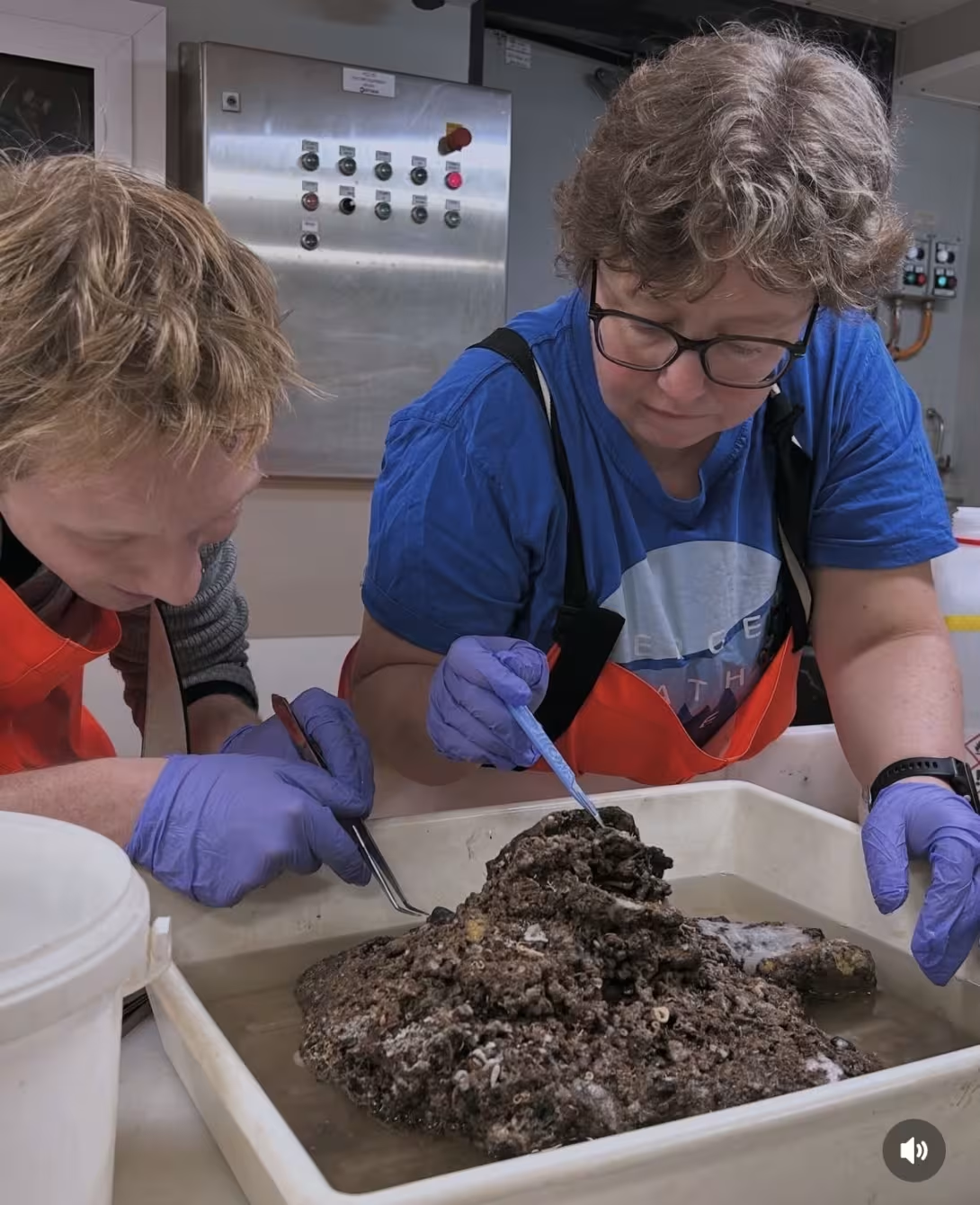
Researcher and CBE Arctic team leader Mari Heggernes Eilertsen and PhD fellow Christian Nilsson joined the research vessel FF Kronprins Haakon in November as part of the EXTREME25 expedition, whose mission was to explore some of the Arctic’s most extreme and least understood ecosystems. During the cruise, the international team - led by the Arctic University of Norway - reported a remarkable discovery: a previously unknown venting system at 2,700 metres depth.
Published:
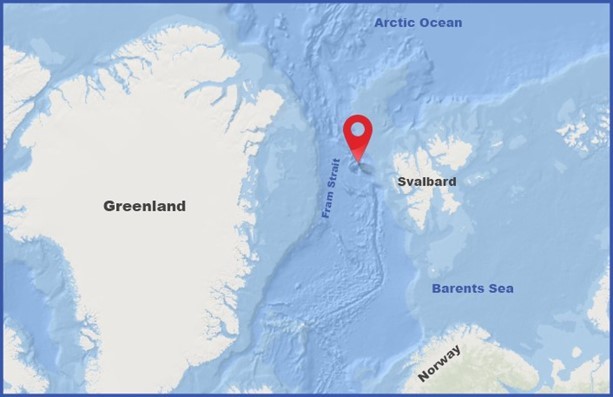
Using the ROV Ægir 6000, the researchers surveyed the Fram Strait between Greenland and Svalbard. It was here, along the fault scarp of an oceanic core complex, that they identified a diffuse venting field unlike any observed in the region before. An in-situ methane sensor confirmed the presence of methane in the emitted fluids. The geological context suggests the possibility of abiotic methane - methane generated through water–rock reactions rather than biological processes. The team has proposed naming the system the Frigg Vent Field, after the Norse goddess of foresight and wisdom.
Mari Heggernes Eilertsen explains, “The Frigg vent field is in a unique position on the Arctic ridge, making it an important site for studying connectivity among vent fauna. By analyzing the samples we’ve collected, we hope to learn how species move between vents and adapt to the extreme conditions of these environments.”
What also sets this site apart is the nature of its emissions: fluids seep from small cracks in the bedrock, rather than venting through the larger chimney structures typically associated with hydrothermal systems. The shimmering fluids observed by the ROV point to active subsurface reactions, offering clues to processes that may shape habitability in extreme environments.
The Frigg Vent Field also supports a community of deep-sea organisms similar to those found at other Arctic vent sites, including snails, crustaceans, tubeworms and fish. Fluids emerging from tiny openings across the outcrops sustain species adapted to cold, methane-rich conditions. Samples collected during the cruise will help researchers identify the fauna present and assess how this newly discovered system connects with other Arctic vent ecosystems.
The discovery of the Frigg Vent Field stands out as one of the expedition’s most exciting findings, opening new research avenues into methane formation, deep-sea ecosystems, and Arctic geological processes.
More information can be found here: https://uit.no/nyheter/artikkel?p_document_id=914922 (external link)