

Women’s Health Research Award 2025 to Bettina Husebø
Professor Bettina S. Husebø, Head of the Centre for Elderly and Nursing Home Medicine (SEFAS) at the Faculty of Medicine, University of Bergen, has been awarded the Women’s Health Research Award 2025. The award was presented by the Norwegian Women’s Public Health Association during its national board meeting and recognizes Husebø’s groundbreaking work on pain relief for people with dementia and quality care at the end of life.
Published:
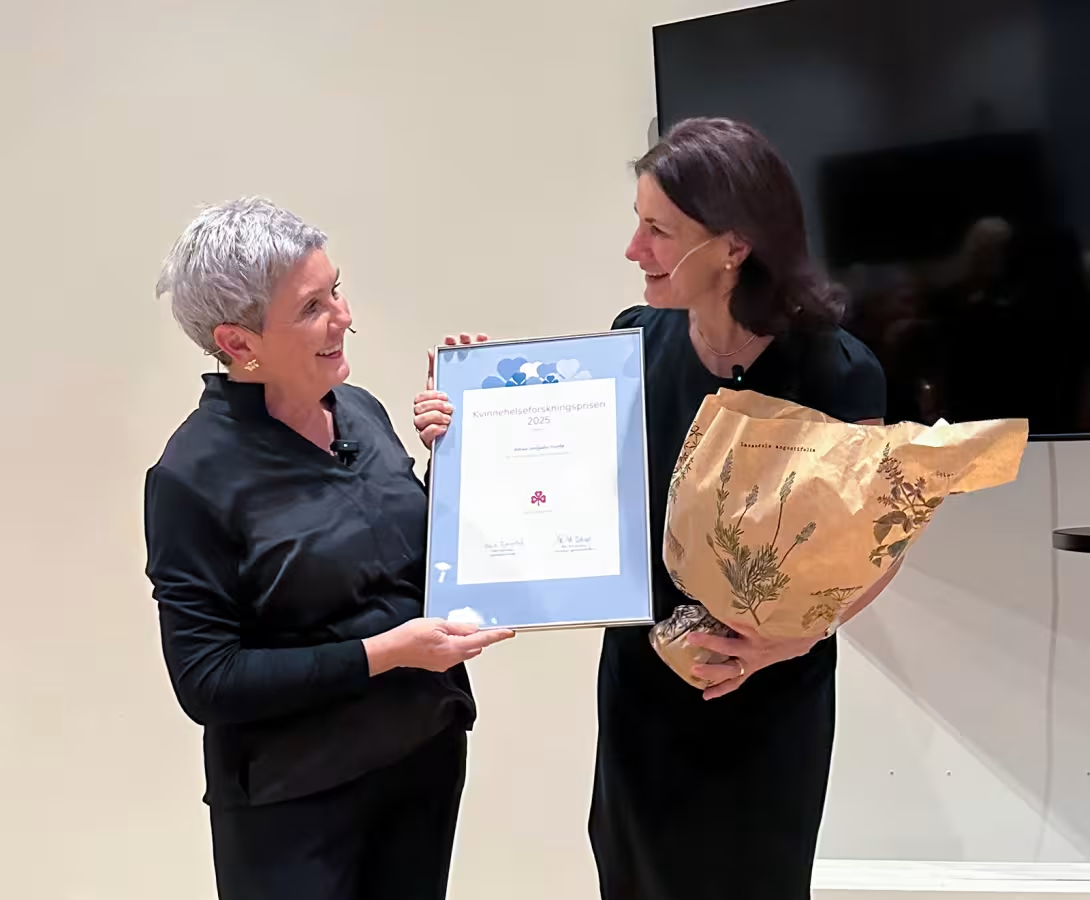
Since 1916, the Norwegian Women’s Public Health Association has funded research on women’s health and is one of the country’s largest contributors in this field. The Women’s Health Research Award was established in 2016 to mark the association’s 100 years as a research actor. Each year, the award goes to a researcher who has led the way in closing knowledge gaps about women’s health.
Women’s Health at Life’s End
Husebø is delighted to receive the award.
“This is an important recognition of research that strengthens women’s health even in life’s final phase,” she says enthusiastically.
“Old age is a woman’s issue,” she continues, repeating a phrase she has become known for. “It’s the women who make up the majority of the elderly. Eighty percent of nursing home residents are women, and dementia affects mostly women. First, we provide care for children, parents, and other family members, and later we receive care ourselves, from daughters, daughters-in-law, and finally from the home care services and skilled female staff in nursing homes. Of course, there are many competent men, but caregiving has remained primarily the women’s responsibility. If sons and men were the ones who provided the care, status, pay, and prestige would look very different,” Husebø states firmly.
Research with Significant Societal Impact
Through SEFAS, Husebø has long been a driving force in developing knowledge and practices that ensure a better quality of life for older people, both those living at home and in nursing homes.
SEFAS aim to contribute to better health and end-of-life care for older adults living at home or in institutions by promoting research-based knowledge about age-related diseases, care services, and the living situation for all people involved. The center has developed pioneering projects that combine clinical studies with technology, including tools to assess pain and distressing symptoms in people with dementia. One example is the ERC-supported 5-D project, which utilizes sensor technology to detect the final phase of life in individuals with dementia. The goal is to provide more precise treatment and care and to alert relatives in time so that the end can be as dignified and comfortable as possible.
Innovative Solutions for the Future of Elderly Care
Norway is facing a paradigm shift in elderly care. More people want to stay at home longer, and there will very soon be a huge shortage of healthcare workers. This requires new solutions. Through several projects, the center explores how technology, architecture, and social communities can contribute to safety and independence. The pilot project Helgetun together with the GC Rieber Foundations in Bergen demonstrates how shared housing with common activities and smart buildings can reduce loneliness and promote physical and mental health. Experiences from this project are now being used in planning new senior housing in Bergen and partner municipalities. Through CC.AGE (Centre for Complex Conditions and Ageing), with support from the Trond Mohn Foundation, SEFAS is also developing digital platforms and care technology to enable older adults with complex conditions to live safely and independently at home. The project is based on groundbreaking technology and interdisciplinary collaboration to address the challenges of future care.
Congratulations to Bettina on this well-deserved award!
You can also read about the award on the Association's web pages (external link) (in Norwegian only).