

First Biosphere Day in Nordhordland UNESCO BR
On June 1st Nordhordland UNESCO Biosphere Reserve arranged their first ever Biosphere Day together with the UNESCO Chair Group at UiB. There was a programme from noon to evening, full of content about ongoing and concluded research in the area, in addition to interesting themes on sustainability relevant to the region.
By: Silje Andrea Salhus
Published: (Updated: )
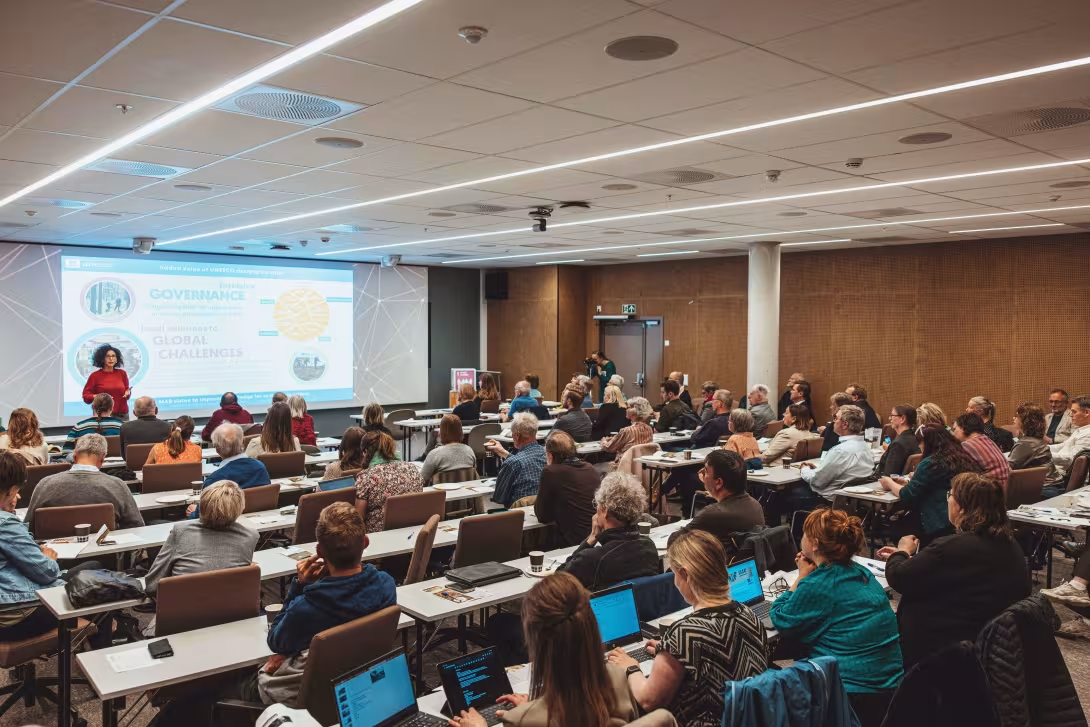
In 2019, the region of Nordhordland achieved the status of UNESCO Biosphere Reserve, and UiB with UNESCO Chair Inger Måren, and professor emeritus Peter Emil Kaland was a great contributor to this work. Four years later, the BR organisation has grown from one to four employees, and in collaboration with the UNECO Chair-team at UiB, they have now hosted Norway’s very first Biosphere Day.
During the event, members of the UNESCO Chair Group had the opportunity to present some of their research related to sustainable land-use and areas under pressure. Amy Eycott (Nord University) (external link) and Morgane Kerdoncuff presented results from the TradMod project about how different grazing animals affect the ecology and landscapes (or is it the other way around?), and Jarrod Cusens presenting parts of his newly defended PhD thesis about nature’s benefit to people in Nordhordland. The group’s MSc candidate Susanne Zazzera presented results from her thesis – which she submitted the day before the event! – about differences in species composition of bumblebees between managed and unmanaged coastal heathlands, and Inger Måren talked about interviews from the CULTIVATE project, made with inhabitants of the region regarding their thoughts on how cultural heritage, landscapes and sustainable development are connected. Further Katja Malmborg talked about participatory methods and collaborations in the BIOSPHERE project, in which UiB works directly with the BR organisation and Alver municipality.
The BR organisation was also proud to host professor emeritus Peter Emil Kaland, without whom Nordhordland UNESCO Biosphere Reserve would not exist, and Meriem Bouamrane, the chief of section Ecology and Biodiversity within the Man and the Biosphere Programme at the UNESCO HQ in Paris. Together they reminded the audience both about the backstory of how Nordhordland UNESCO Biosphere Reserve came to be, and the background of why the region makes a good model area for sustainable development. Despite its current dependence on the petroleum industry, Nordhordland has the opportunity to set a good example of how to liquidate this industry, and turn it into more sustainable businesses – which is relevant not only nationally, but also globally. “All eyes are on Norway, and Nordhordland, during this transition,” as Meriem said.
It took a lot of work to have Nordhordland designated with the status of UNESCO Biosphere Reserve, and since then the Biosphere Organisation at Region Nordhordland has worked just as hard to implement the status in the municipalities, and conveying the meaning of the status to the inhabitants. During the Biosphere Day, it was clear that the Biosphere Programme engages people: 160 participants visited the event, and it seemed to invite to discussions, ideas and connections between people from different backgrounds, sectors and municipalities.
Hopefully, the Biosphere Day will be an annual event!
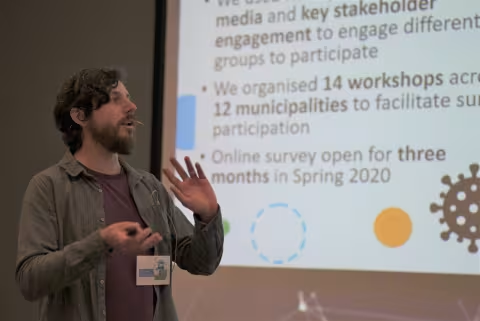
Jarrod Cusens presenting part of his PhD work, mapping nature's contribution to people in Nordhordland.
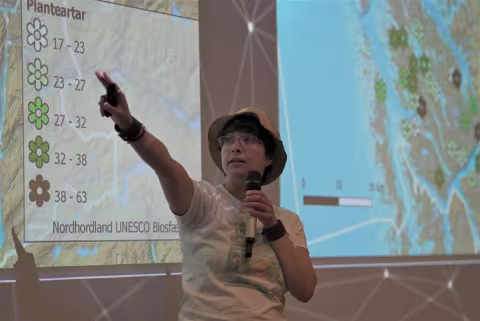
Morgane Kerdoncuff presenting results from her soon-to-be completed PhD.
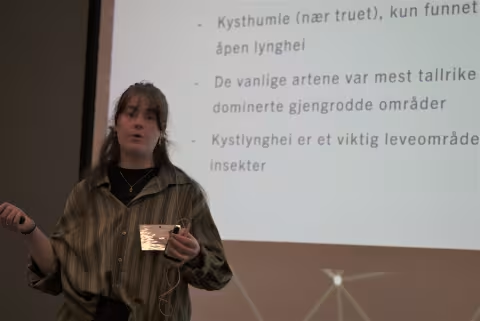
Susanne Zazzera presenting main results from her recently submitted master's thesis.
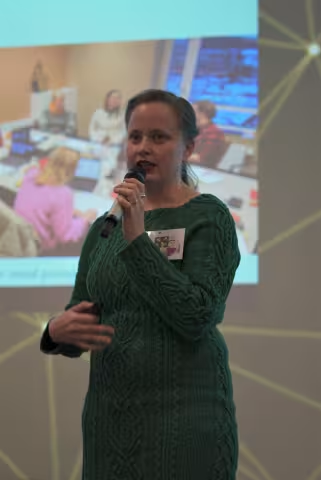
Katja Malmborg presenting ideas and methods of the BIOSPHERE project.
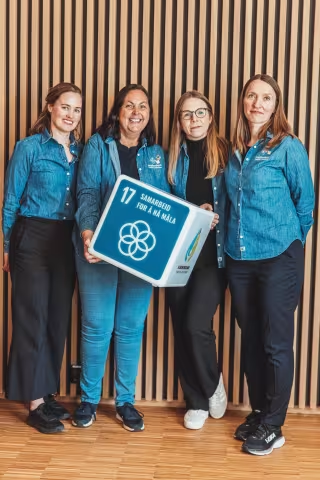
The Biosphere Team (from the left: Torbjørg G. Gjerstad, Kari E. Natland, Hildegunn Opdal, and Kjersti Isdal).
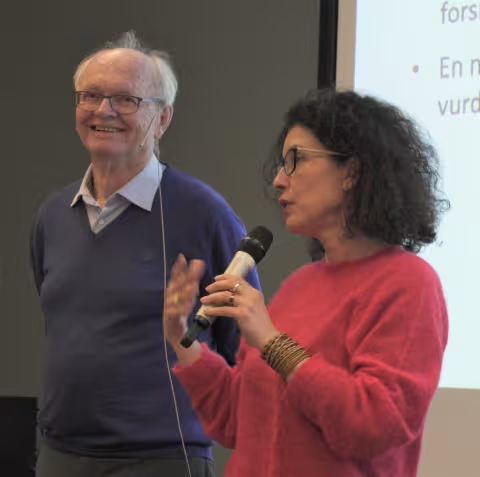
Peter Emil Kaland (left) and Meriem Bouamrane (right) presenting the backstory for how Nordhordland UNESCO BR came to be.