How Can Family Caregivers and Volunteers Improve Elderly Care? New Collaboration Between TVEPS and the Elderly Council in Øygarden
This Spring, TVEPS initiated a new and exciting collaboration with the Elderly Council in Øygarden. Two interprofessional student teams worked on topics that the Council wished to explore through a broad, interprofessional deep dive: What role can volunteers and family caregivers play in elderly care, and how can we ensure they receive the support and competence needed to manage this role?
By: Ane Johannessen
Published: (Updated: )
The collaboration marks an important step toward potentially strengthening elderly care in Øygarden, while also giving students practical experience with complex challenges in the municipal health and care sector.
“With this collaboration, we do not only achieve collaboration across academic disciplines,” says head of TVEPS Ane Johannessen, “but collaboration across disciplines, generations, and sectors.”
In other practice placements during their studies, students typically encounter older adults as patients or service users. In this new collaboration with the Elderly Council in Øygarden, however, students meet older adults as active partners and key contributors, adding a new and valuable dimension to the students’ learning.
The Elderly Council in Øygarden – A Key Political Actor
The Elderly Council is one of three statutory advisory bodies in the municipality and ensures that the voices of elderly citizens are heard in political decision-making processes. The Council acts as an advisor in all matters concerning elderly – from health and care services to transport, culture, urban planning, and budgeting.
The Council consists of nine members, six nominated by organizations representing elderly adults and three politically elected members. It works continuously to promote an age-friendly municipality with high-quality services, safe living conditions, and a high quality of life for the elderly.
Interprofessional Practice with the Elderly Council in Øygarden
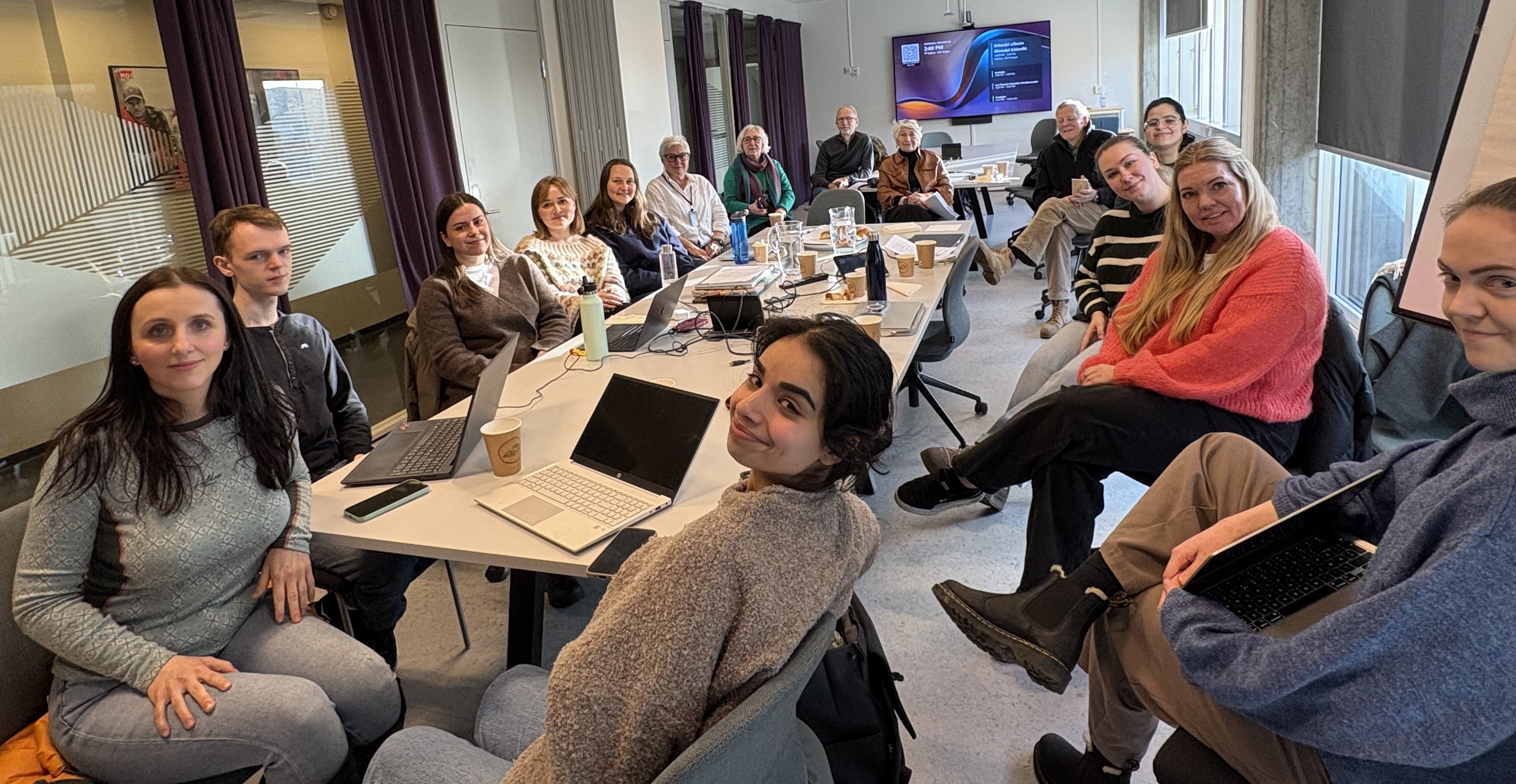
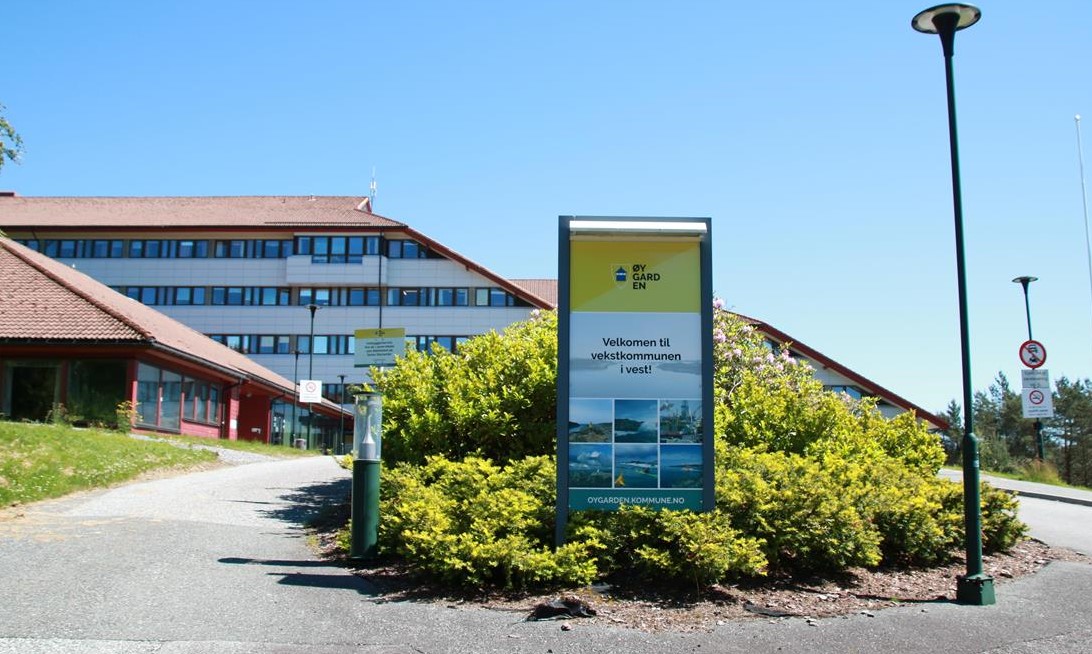
The student teams met with the Elderly Council for a joint assessment day at Øygarden Town Hall, where they gained insight into local challenges and needs. The students then examined issues related to the involvement of family caregivers and volunteers in elderly care and developed interprofessional action plans to strengthen their roles, competence, and capacity for action.
The project concluded with a joint dialogue meeting, where both student teams presented their action plans to the Elderly Council and TVEPS.
Action Plans to Strengthen the Role of Family Caregivers and Volunteers
Using an evidence-based approach, the students identified a range of promising action points, leading to engaging discussions during the dialogue meeting.
The action plan for family caregivers placed strong emphasis on user involvement, improved information flow, and ensuring that caregivers feel acknowledged, included, and supported in their role.
Proposed action points included:
- A broad information campaign through general practitioners, pharmacies, waiting rooms, health services, and digital channels. The aim is to increase awareness of municipal services and strengthen the understanding of the caregiver role.
- Expansion of the patient coordinator role, so that existing arrangements for patients also include family caregivers, with extended responsibilities for the patient coordinator.
- Establishment of a “Family Caregiver School” – a regular meeting place offering support groups, discussion forums, professional lectures, and peer experience sharing.
The action plan for volunteers focused on clarifying roles, ensuring predictability, and facilitating strong volunteer communities. The plan is closely linked to the national reforms “Leve hele livet” (Live Your Whole Life) and “Bo trygt hjemme” (Live Safe at Home), emphasizing prevention, activity, and participation for elderly – while also enhancing volunteers’ own sense of mastery and belonging.
Proposed action points included:
- Establishing volunteer coordinators, ideally both at the municipal level and at each nursing home. Coordinators would follow up volunteers, ensure quality of tasks, and serve as contact points.
- Developing a volunteer app where volunteers can sign up for tasks, receive information, and communicate easily with coordinators. The student team suggested that IT students could develop the app as part of study projects in collaboration with TVEPS.
- Marketing and recruitment initiatives, such as information stands at Sartor Shopping Centre, advertisements in local media Vestnytt, collaboration with the social services, and outreach to residents in the year they turn 67. The goal is to reach both retirees and young people on disability benefits who wish to contribute.
Joint Dialogue Meeting – Engaged Discussions
During the concluding dialogue meeting, the students presented their action plans to the Elderly Council. Council members, students, and TVEPS facilitators all took part in engaged discussions about the proposed action points. The Elderly Council expressed enthusiasm for the students’ hard work and for the practical and feasible initiatives presented.
Head of TVEPS Ane Johannessen highlights that the results of this year’s TVEPS placement in Øygarden demonstrate how interprofessional collaboration can lead to concrete solution proposals to complex societal challenges. The action plans from both teams may form the basis for further developments in the municipality – and hopefully contribute to improved elderly care in the future.
“This is the great advantage of TVEPS practice – a circular educational model that benefits everyone involved. Students learn to collaborate across disciplines while contributing to improved health and social care services in municipalities – a win-win situation for all.”
Øygarden Town Hall. Photo from the Øygarden Municipality website.
Students present their work to the Elderly Council and TVEPS at a dialogue meeting at Øygarden Town Hall.
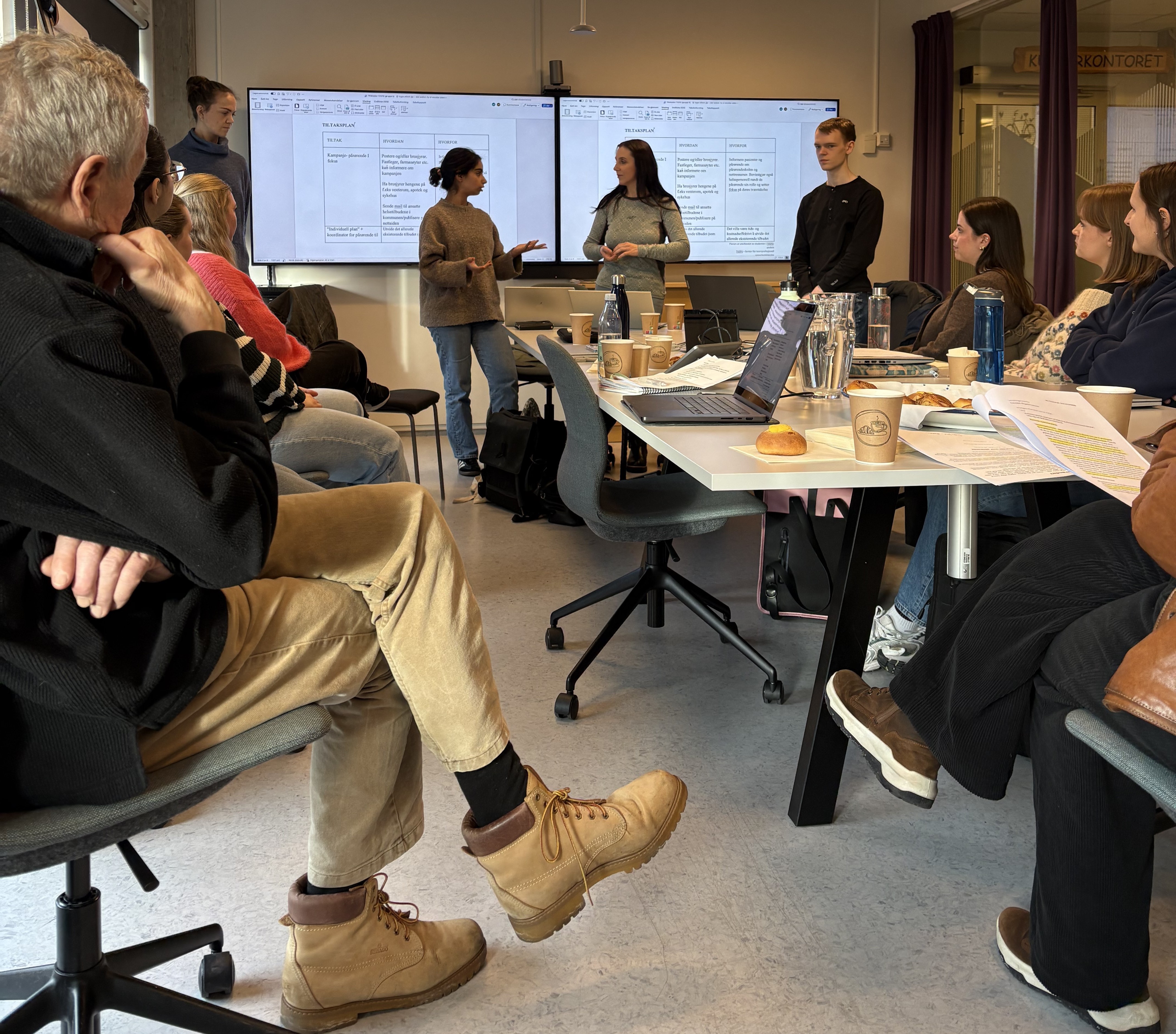
Joint dialogue meeting and engaged discussions with two TVEPS student teams and the Elderly Council in Øygarden.