

How Childhood Experiences Leave Lasting Marks on the Developing Brain
A large longitudinal brain‑imaging study shows that early life adversity and supportive caregiving are associated with distinct patterns of brain development during late childhood.
Published: (Updated: )
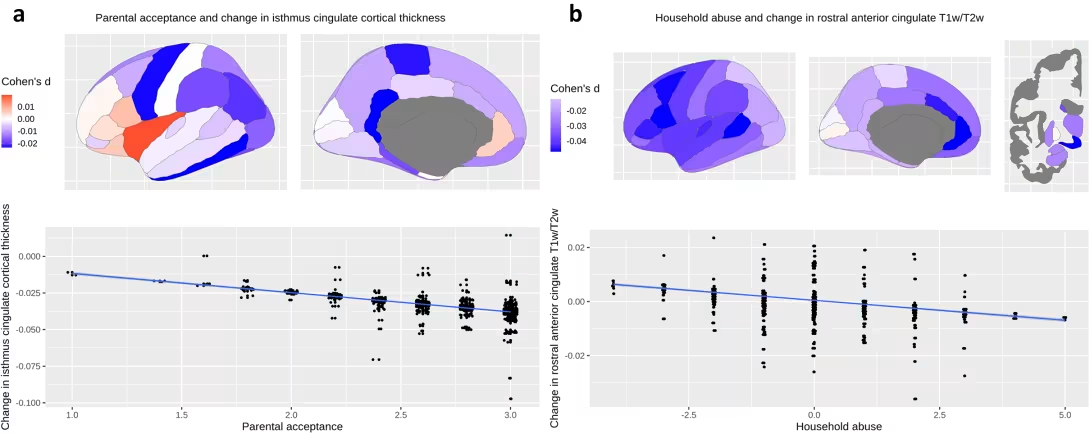
In a new study published in Psychological Medicine (external link), we investigate how both adversity and supportive caregiving are associated with brain development during late childhood and early adolescence. Using longitudinal brain‑imaging data from more than 6,000 children from the ABCD study (external link), our research shows that early environments are linked not only to differences in brain structure, but also to how the brain changes over time.
We find that experiences such as parental acceptance, trauma exposure, and resilience are associated with distinct patterns of cortical development between ages 9 and 13. While greater parental acceptance is linked to a faster pace of typical cortical thinning, household abuse is associated with slower microstructural brain development. These findings suggest that different forms of early life experience may influence brain maturation through separate developmental pathways.
Together, our results highlight the importance of considering both risk and resilience when studying brain development and mental health, and show how early environments may shape developmental trajectories during a critical period of childhood.