

Bergen Palaeoecology Lab
The Bergen Palaeoecology Laboratory (BPL) is jointly run by the Department of Biological Sciences and the University Museum of Bergen.
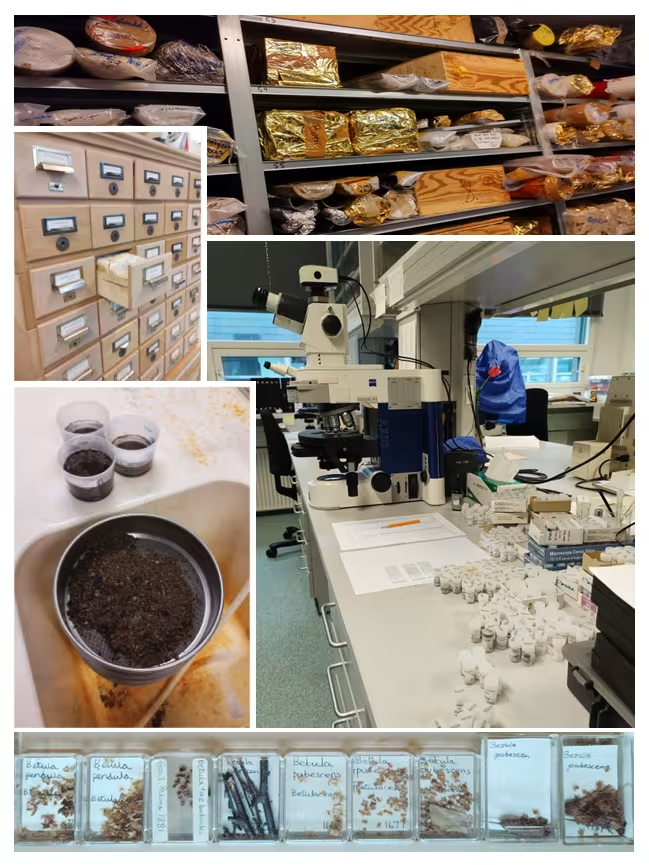
Facilities
The BPL provides equipment and infrastructure for palaeoecologists to generate reconstructions of past ecosystems based on proxy remains as well as doing pollen chemistry. Pollen analysis is one of the main methods for reconstructing past biosphere and ecosystem change and is complemented by plant macrofossil analysis. Other proxies, such as testate ameoba, can also be prepared in the BPL. The sediment-coring facilities within BPL allow for sample collection from lakes and bogs, modern samples, and traps.
Our lab facilities and services include:
- light microscopes, inverted microscopes, and stereo microscopes, with potential for cameras
- a light microscopy classification library of key pollen types for Northern Europe
- a sediment lab for sub-sampling
- a sample-processing lab
- gas chromatrography
- a large seed reference collection focusing on taxa from Northern Europe (mostly fresh, dried material, but also modern charred material)
We have the capacity to accept guest researchers and exchange students.
Contacts
Anne E. Bjune, Professor, BIO
Linn Cecilie Krüger, Head Engineer, BIO
Lene Synnøve Halvorsen, Head Engineer, UM