

Archaeological Laboratories
The Department of Archaeology, History, Cultural Studies and Religion (AHKR) hosts three dedicated laboratory spaces that form a central part of its research infrastructure. The laboratories support teaching, student-active learning, and research-based analytical work, and provide facilities for handling, documenting and analysing archaeological material.
About
The laboratories and dedicated workspaces at AHKR are an integral part of the department’s commitment to providing infrastructure crucial for research-based teaching and practice-oriented learning. Students at all levels are thus offered access to essential equipment and facilities for independent work and collaboration with academic staff.
Through active use of the laborator spaces, the connection between archaeological theory and practice is strengthened, and students gain hands-on experience by applying relevant methods and workflows. At the same time, the laboratories constitute an important infrastructure for research projects at the department.
Archaeological Dry Lab
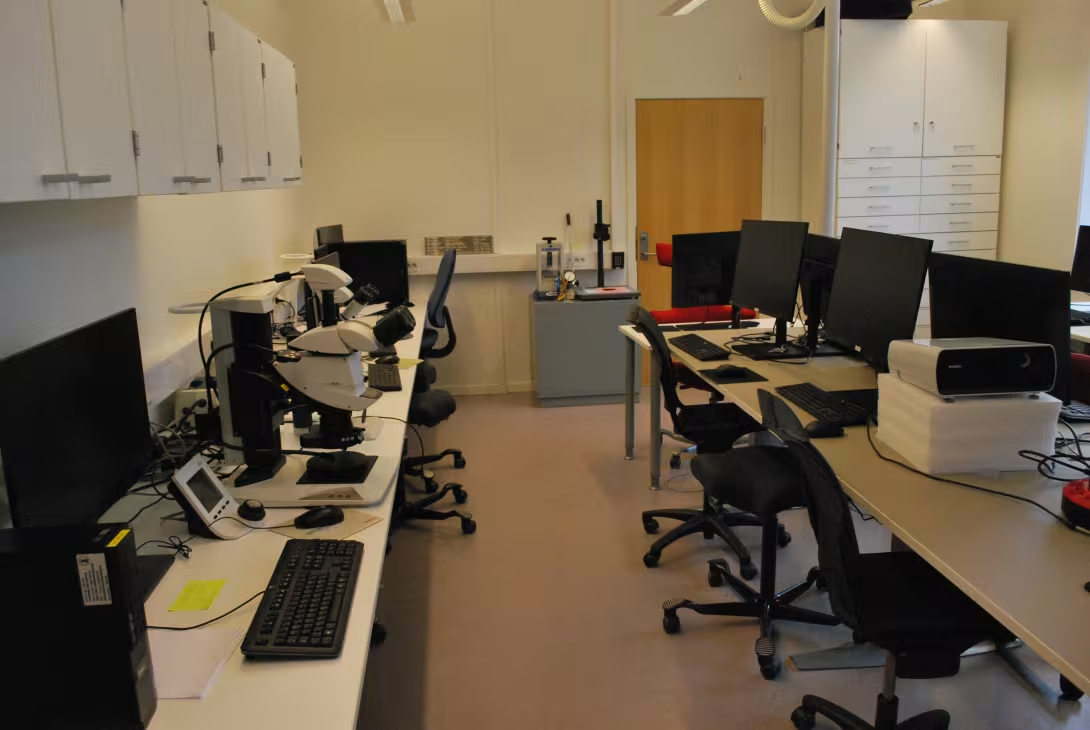
The Archaeological Dry Lab is designed for digital documentation and analysis of archaeological material, and serves as an important arena for methodological training and the development of analytical skills
This dedicated workspace, equipped with computers featuring relevant specialist software, as well as high magnification microscopes used in both teaching and research, providing students and researchers with tools for documenting, processing and analysis of archaeological materials.
Wet Facility (Basement Laboratory)
This workspace is specially adapted for the cleaning, treatment and analysis of archaeological material that requires either washing or controlled environmental conditions. It is also used for the safe and appropriate temporary storage of finds.
This facility provides a safe workspace for a wide range of materials and plays a key role in the initial processing and stabilizing of archaeological material following initial excavation.
Zooarchaeology Workshop
This work facility is primarily dedicated to the analysis of animal bones from archaeological contexts. The lab is equipped for identification, quantification, and comparative study of archaeofaunal remains.
It supports both research and teaching in zooarchaeology and related fields, contributing to our knowledge of past diets, resource use,environmental conditions, and human-landscape interactions.
Rules and guidelines
- Do not consume food or drink in the lab
- The lab is a working area only
- Be respectful to other people working in the lab
- Personal conversations and phone calls need to take place outside the lab
- Bachelor students need to contact the program coordinator for access
- Master students will have designated hours of access
- Student access gives access to general equipment only!
- General equipment is any equipment that is located in the lab room, and not otherwise labelled.
- Computers with relevant software
- Basic camera and scanning equipment
- Basic microscope (Define)
- Weights and scales - Specialized equipment is stored in storage room or otherwise labelled “Specialized equipment”
- Inquiries about available items located in storage can be sent to post@ahkr.uib.no
- Clean all tools, other equipment and the work area after you finish your work
- Equipment has to be returned to the same place from where it was taken
- Equipment settings have to be reverted to default setting after use (NB! This is especially important for camera and microscope settings)
- Make sure you only use equipment for designated uses
- If a piece of equipment is missing, broken, or does not work, report it to Ramona or Karen
- In case of computer problems, please contact: https://it.uib.no/IKT_for_studenter (external link)
- Make sure to enter all information required into the lab logbook. Specify which equipment you used, name, date and time
People
Academic contact
Administrative contact
Marit Matthiessen Senior executive officer
Zarko Tankosic Project manager