

CISM Hosts CryptoT&T Project Meeting in Preparation for the Implementation Phase
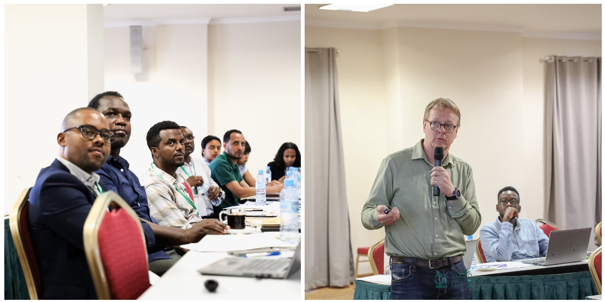
The Manhiça Health Research Centre (CISM) hosted from 5 to 7 November, 2025 the second in-person meeting of the Crypto T&T (Cryptosporidiosis Test & Treat) project. The initiative aims to assess the effectiveness of a low-cost point-of-care test, followed by targeted treatment for cryptosporidiosis with nitazoxanide (an antiparasitic medicine), in reducing the duration of diarrhea among children presenting with diarrhea at health facilities. The multicenter study, coordinated by the University of Bergen, Norway, has a four-year duration (2025–2028) and will be implemented in Ethiopia by the Armauer Hansen Research Institute (AHRI) and in Mozambique by CISM.
By: Manhiça Health Research Centre (CISM)
Published: (Updated: )

Over the three days of meetings, technical teams from Mozambique, Ethiopia and Norway engaged in in-depth discussions on the study’s technical, operational and strategic aspects, with particular emphasis on protocol review, definition of impact indicators, methodology and the responsibilities of each partner institution. The discussions also covered the cost-effectiveness component, qualitative studies and data management using the REDCap platform, as well as the assessment of data collection instruments, laboratory and clinical logistics frameworks and human resource needs—key elements in a project of this level of complexity.
The visit also enabled international partners to become familiar with the infrastructures of CISM and the Manhiça District Hospital, providing a realistic view of the environment in which the trial will be conducted.
According to Kurt Hanevik, project coordinator and researcher at the University of Bergen, the visit left a strong impression: “We were impressed by the team’s commitment and motivation. The laboratory technicians demonstrated experience in the use of the techniques and methods (auramine–phenol) applied in the study for the detection of Cryptosporidium in stool samples,” he stated. He also highlighted CISM’s robust data preservation and management infrastructure, including its server systems, which are considered fundamental for a study of this scale.
For Delfino Vubil, principal investigator of the study in Mozambique, the meeting was extremely productive, as it involved more members of the local team than the first meeting, held in Addis Ababa. “Now, with everyone gathered in Mozambique, there was greater interaction, technical alignment and clarity regarding the challenges ahead,” he noted. Among the challenges, the need for a coordinated strategy for participant recruitment, follow-up and retention up to 60 days after enrolment was highlighted, requiring continuous and efficient communication at all stages of the study.
The project is currently undergoing ethical review of the protocol in both Mozambique and Ethiopia. In parallel, preparatory activities are underway, including the integration of new staff, procurement of materials, reagents and equipment, as well as the strengthening of data and logistics systems. The coming months will be dedicated to developing training programs for clinical and laboratory staff, drafting standard operating procedures (SOPs), defining recruitment pathways and aligning clinical care routines with national guidelines. Following ethical approvals, pilot studies will begin—an essential step to refine operational procedures before the full study launch.
Funded by the European & Developing Countries Clinical Trials Partnership (EDCTP3) (external link), Crypto T&T is aligned with the United Nations Sustainable Development Goal 3 (external link)and with World Health Organization recommendations to reduce the burden of diarrheal diseases. By enabling the diagnosis and treatment of cryptosporidiosis directly at the point of care, the project has the potential to improve surveillance of this critical pathogen, accelerate diarrhea relief in children, and prevent long-term complications, thereby strengthening the public health response in the region.