

New paper: Multiple sclerosis-associated EBNA2 variants influence the response to peginterferon beta-1a therapy
A recent study in the Journal of Autoimmunity suggests that a medication called pegylated interferon beta-1a (peg-IFN) may help the immune system better control the Epstein–Barr virus (EBV) in people with multiple sclerosis (MS).
Published:
The study was carried out through a collaboration between the EBV‑MS and BEHIND‑MS research consortia, combining complementary expertise to investigate how Epstein–Barr virus biology interacts with immune responses in multiple sclerosis.
Background
MS is a condition that affects the brain and spinal cord. It causes inflammation that can damage nerves and lead to symptoms like fatigue, mobility issues, and problems with vision. Increasing evidence shows that EBV, a very common virus that can cause glandular fever, may play a role in triggering MS in some people. Almost everyone with MS has previously been infected with EBV, but exactly how the virus contributes to MS is still not fully understood.
What the Study Investigated
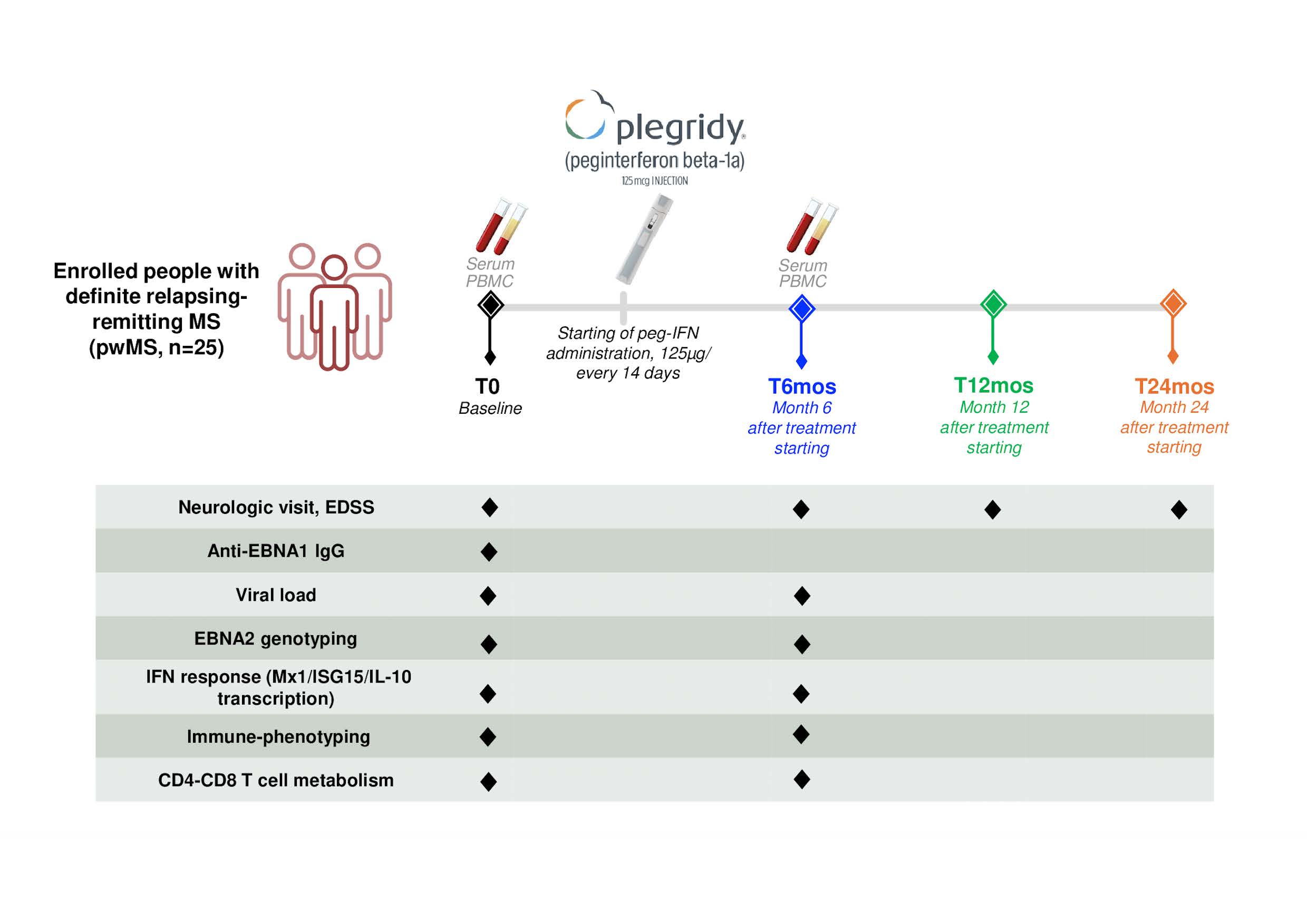
Researchers followed 25 people with relapsing-remitting MS who were treated with peg-IFN (Plegridy) over six months. They looked at:
- How strongly the body responded to interferon (a natural antiviral signal)
- Changes in immune cells in the blood
- Changes in the metabolism of certain immune cells (T cells)
- Levels of EBV in the body
- Differences in EBV genotype frequency (as determined by analysis of the EBNA2 gene)
The aim was to understand how this treatment affects both the immune system and the virus, and whether these changes could help predict who benefits most from the therapy.
Key Findings
1. Early immune response may predict long-term benefit
People who showed a stronger response to interferon after six months were more likely to remain stable after two years.
2. Healthier balance of immune cells
Treatment reduced more “experienced” immune cells that can drive inflammation, while increasing “naïve” cells that are less likely to cause damage.
3. Improved energy use in immune cells
Peg-IFN helped certain immune cells function more efficiently, which may support better immune control.
4. Lower EBV levels
EBV viral load showed a downward trend after six months of therapy.
5. Viral genetics matter
Patients carrying the EBNA2 1.3B variant had stronger interferon responses and were more likely to benefit from treatment.
Why This Matters
This study suggests that peg-IFN may do more than just reduce inflammation—it may also help the body better control EBV. By looking at a combination of viral features, immune responses, and cell function, researchers were able to identify patterns that may predict treatment success.
What This Could Mean for People with MS
These findings are an early step toward more personalised MS care. In the future, doctors may be able to use information about a person’s immune system and EBV profile to help choose the treatment that is most likely to work for them.
- More targeted treatment choices, rather than trial and error
- Better outcomes, by matching patients to therapies they are more likely to respond to
- A deeper understanding of MS, especially the role viruses like EBV may play