

Strengthening national and international collaboration
With participants from four continents, IP-future brought together researchers, educators, students and representatives from the practice fields for two days of inspiring discussions on interprofessional education, collaboration and sustainable health and welfare services.
Published: (Updated: )
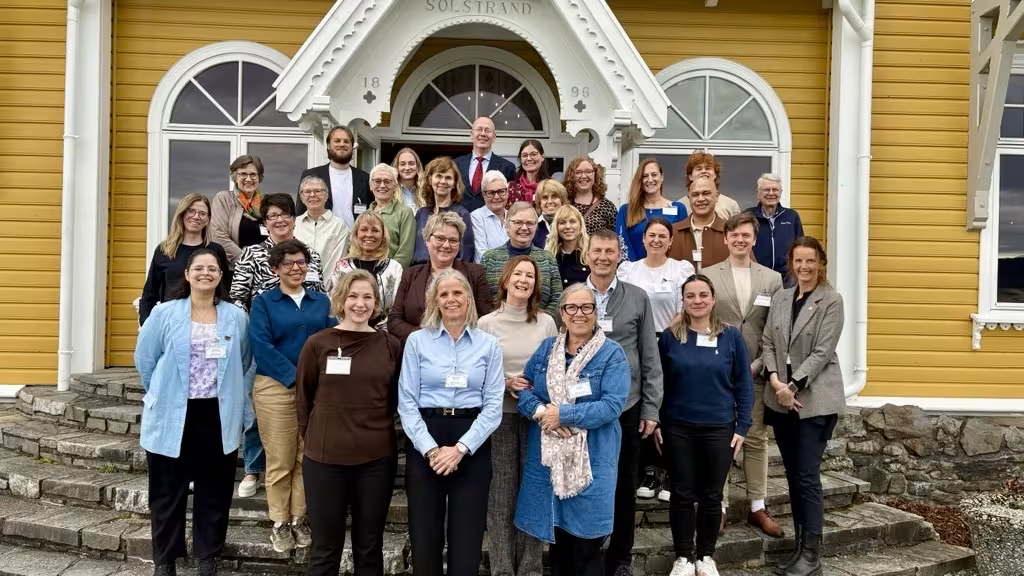
The second annual meeting in the IP-future project was held at Solstrand on 16th-17th of April, hosted by TVEPS - Centre for Interprofessional Workplace Learning.
The meeting has developed into a key international meeting place for researchers, educational institutions, student- and user representatives, professionals from health and social care services, participating municipalities, and the project’s national and international partners.
Confirming the ambitions
Interprofessional education and collaborative learning were central themes during the two‑day meeting, which built upon experiences from the first gathering in 2025. Already then, the project emerged as a platform for ambitious and inclusive collaboration between researchers, the practice fields, students and user representatives. This year’s conference confirmed that impression, with a clear emphasis on co‑creation, perspectives of equity and research closely linked to interprofessional practice learning.
“If we are to succeed in developing sustainable health and social care services for the future, we must educate professionals who can collaborate across disciplines, communicate effectively, and understand and respect each other’s roles,” says Merethe Hustoft, deputy head of TVEPS.
She highlights that IP‑future is all about developing a circular model for interprofessional collaborative learning that integrates education and health services more closely together.
Ane Johannessen, head of TVEPS and project leader of IP‑future, underscores the importance of a shared meeting arena:
“It is about connecting research, education and practice in ways that will actually make a difference. Gatherings like this act as a catalyst for both new research and the further development of education programmes and services.”
Interprofessional competence in the face of complex challenges
IP‑future is a four‑year research project (2025–2028) funded by the Research Council of Norway. The aim is to develop a circular education model that strengthens interprofessional collaboration competence in response to complex health- and societal challenges.
The project builds on experiences from the TVEPS model and has a broad core partnership consisting of the University of Bergen, Western Norway University of Applied Sciences, UiT The Arctic University of Norway, and Hanze University of Applied Sciences in the Netherlands. In addition, the project collaborates with the University of Oslo and educational institutions in Australia, South Africa, the United Kingdom and Canada.
(Text continuous)
A growing international meeting arena
This year’s meeting brought together participants not only from across Norway, but from four continents. The two‑day programme combined research presentations, plenary discussions, café dialogues and panel debates.
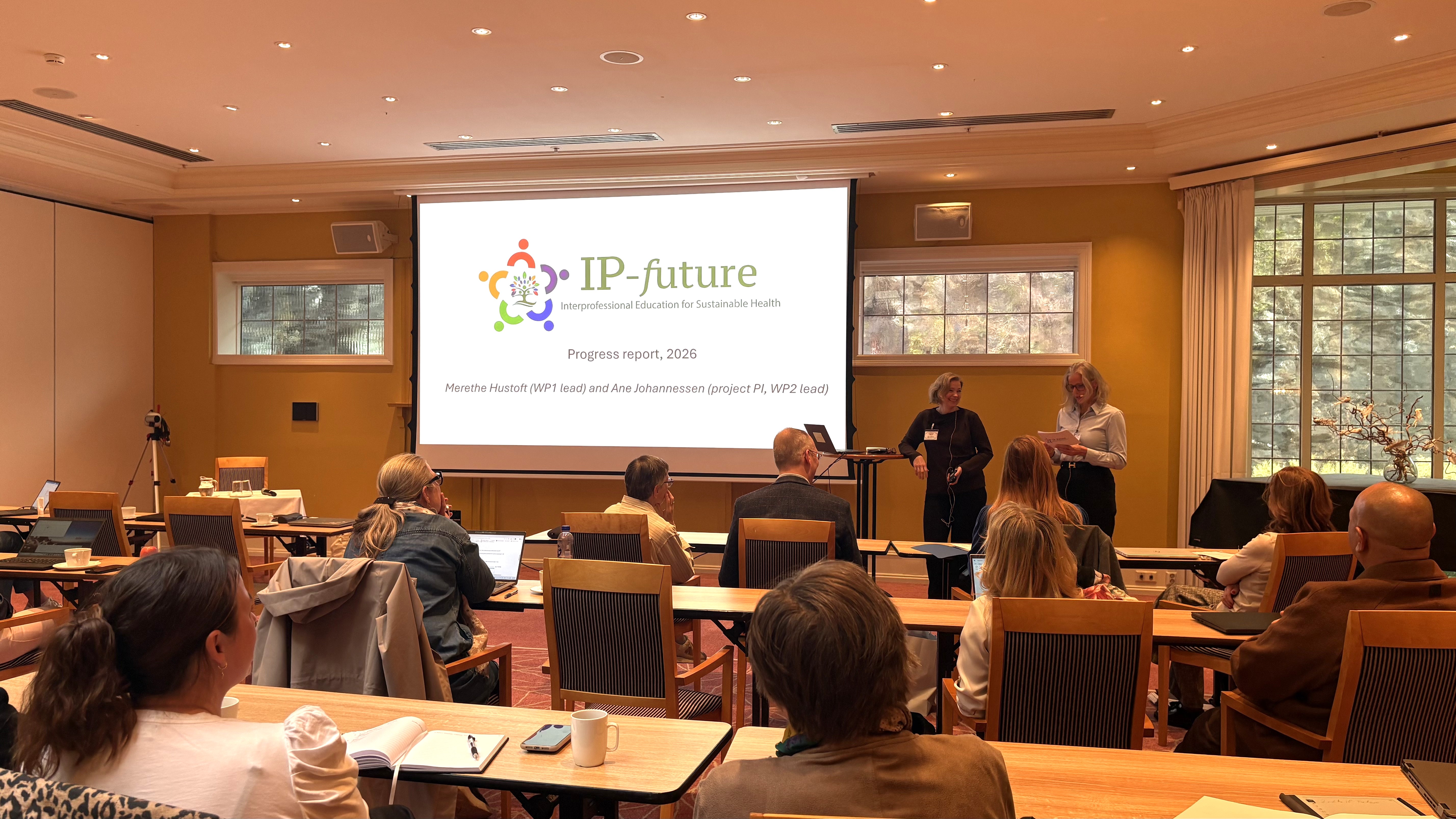
The conference opened with a status and progress report, where Ane Johannessen and Merethe Hustoft shared preliminary experiences from the project’s first phase and demonstrated how research and practice are closely connected in the work to develop better and more sustainable health and social services.
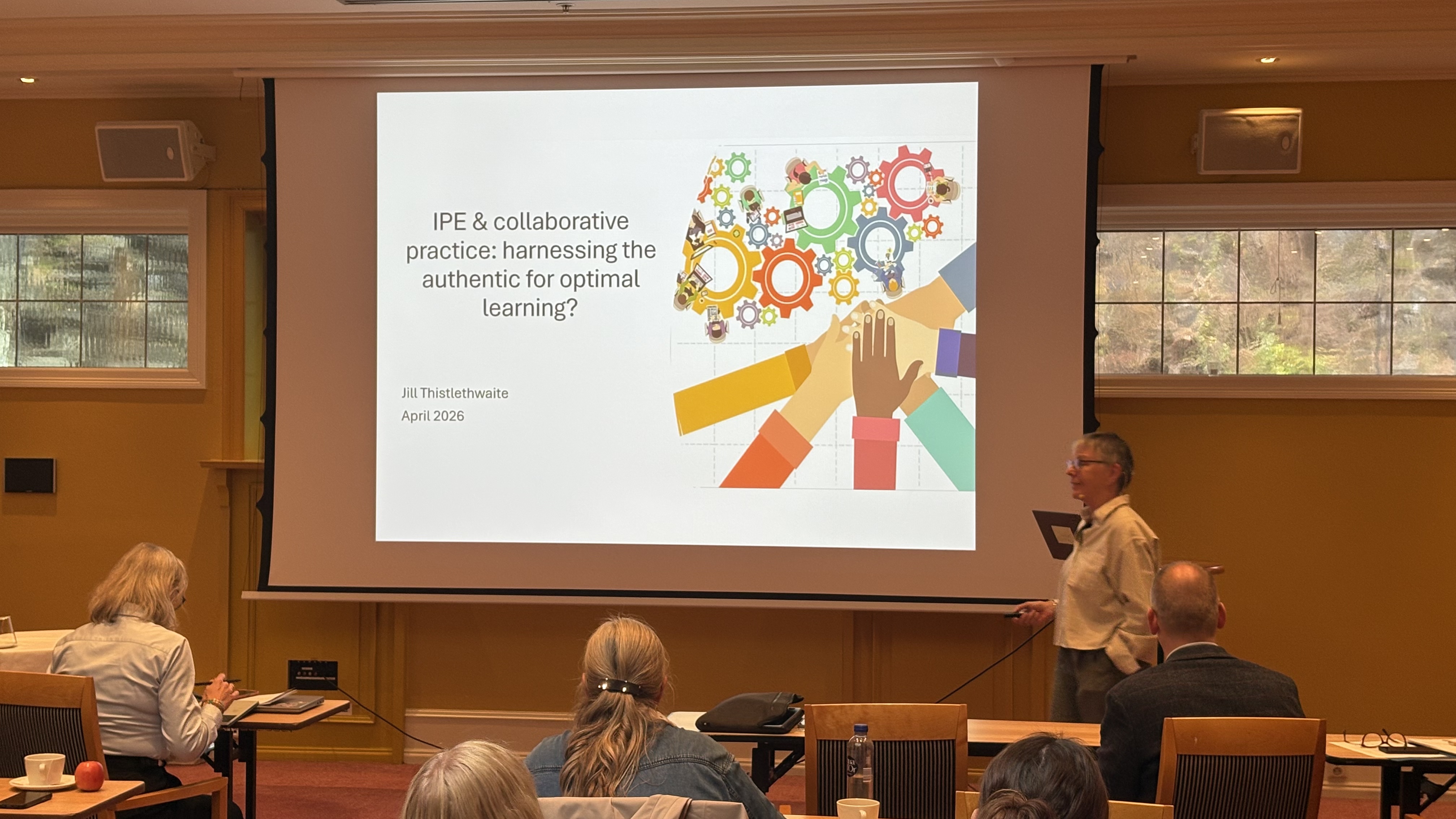
International experts in interprofessional education also featured prominently in the programme. Jill Thistlethwaite gave a presentation on the importance of authentic learning situations as a driving force for interprofessional learning. Liz Anderson addressed how regulations, standards and frameworks can help embed interprofessional education as an integral part of both educational pathways and professional practice.
(Text continuous)
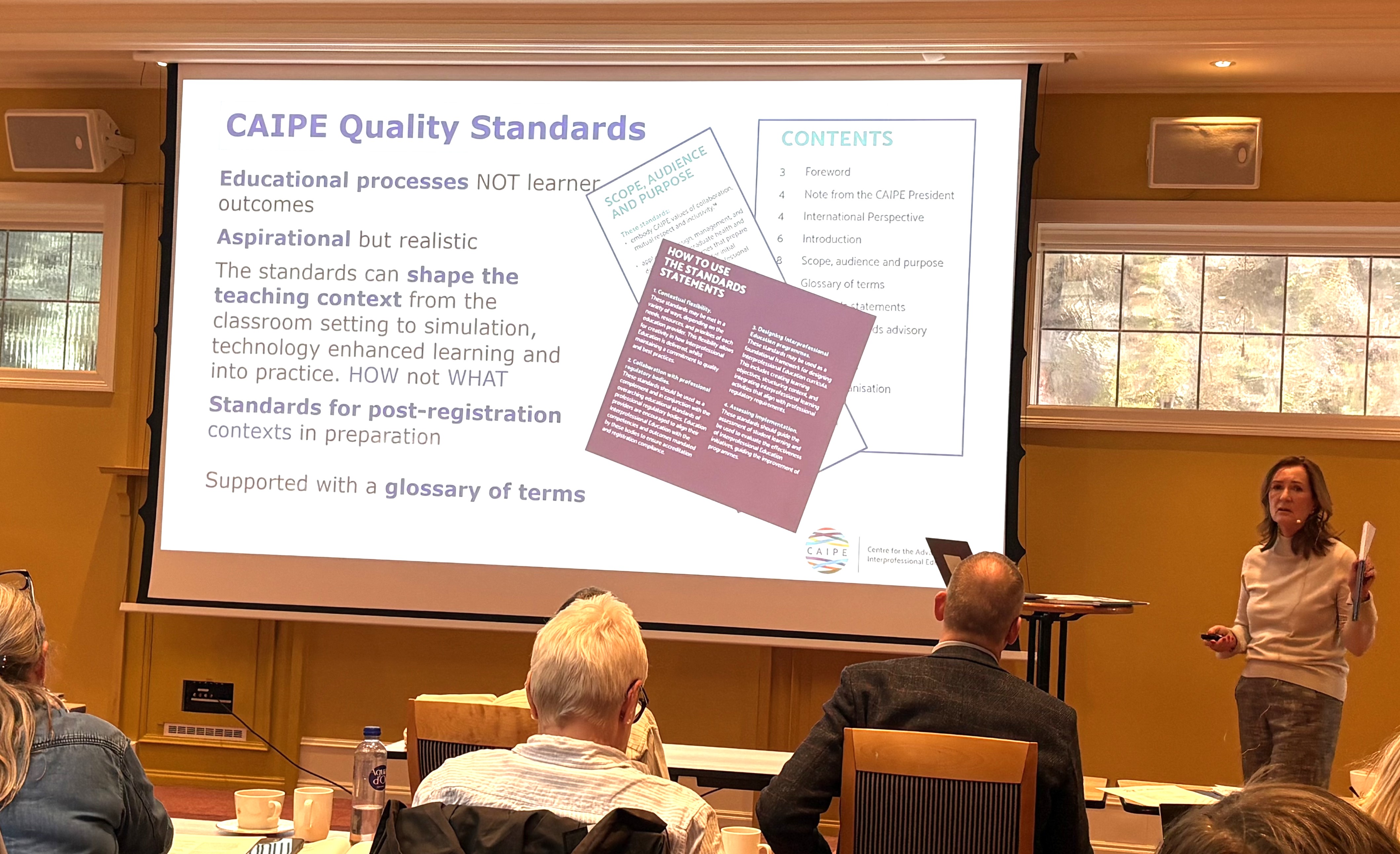
Link to: Quality Standards - CAIPE (external link)
Research close to practice
PhD candidates Håvard Stensletten Eik and Miral Alabbasi presented ongoing research within IP‑future. Their presentations provided insights into studies of students’ collaboration competence development, the formation of interprofessional identity, and learning experiences from TVEPS‑based practice in primary health care.
Anita Iversen presented preliminary results from another ongoing research project, ALLin4IPE, which incorporates TVEPS practice in Bergen as one of the study sites. She highlighted how collaboration across professions can be understood and further developed as a core competence when facing future challenges.
Dialogue and reflection
The second day of the conference was dedicated to dialogue and shared reflection. Through «café dialogues», participants discussed issues related to cultural frameworks for interprofessional collaboration and how students’ collaborative learning in primary health care can influence the organisation, quality and development of health services.
The concluding panel discussions brought together national and international voices to summarise the discussions and point the way forward. Lynne Sinclair emphasised the unique position of TVEPS through large‑scale interprofessional practice learning in primary health care, and the transfer value this has for international education contexts. Anita Iversen highlighted the importance of strengthening narratives and language of interprofessional collaboration, while Susanne Lindqvist and Gerard Filies stressed the importance of equal perspectives between education, research and the practice fields.
With the Solstrand gathering, IP‑future and TVEPS mark another important step towards a more integrated and future‑oriented approach to education and collaboration in the health and welfare sector – locally rooted, but with clear international relevance.