

Lifting Midlife Female Workforce
"Oh don't worry, you're still young," the doctors said. "You're fertile, after all!" So it couldn’t possibly be menopause setting in, Kjersti Kvamme recalls.
Published:

It was 2017 when Kvamme, a nurse and advisor employed by the Bergen municipality, first noticed irregularities in her menstrual cycle – she naturally thought menopause was on the horizon. But when she left the doctor’s office without any help, she began to wonder if something else was wrong with her instead. After all, as the doctors said, she was “too young” for menopause, despite being in her mid-forties.
Over time, Kjersti began experiencing sleep problems, severe headaches, and her pre-existing muscle pain steadily grew worse. The pain in her body became so intense that she sometimes had to “wrench herself out of bed” in the mornings.
“I actually started seeing life through dark lenses. I became less social, had no energy. I always assumed the worst and I lost confidence in the tasks I used to be good at, at work – like leading people, giving presentations, teaching. I would forget what I was supposed to say. It was so unlike me. I started dreading being asked questions, things I used to handle with ease. I laughed it off in the moment, but afterward, I felt like a complete failure.”
This went on for two years, until Kjersti had to ask for a 40 percent sick leave. It felt like a defeat. But she had no other choice.
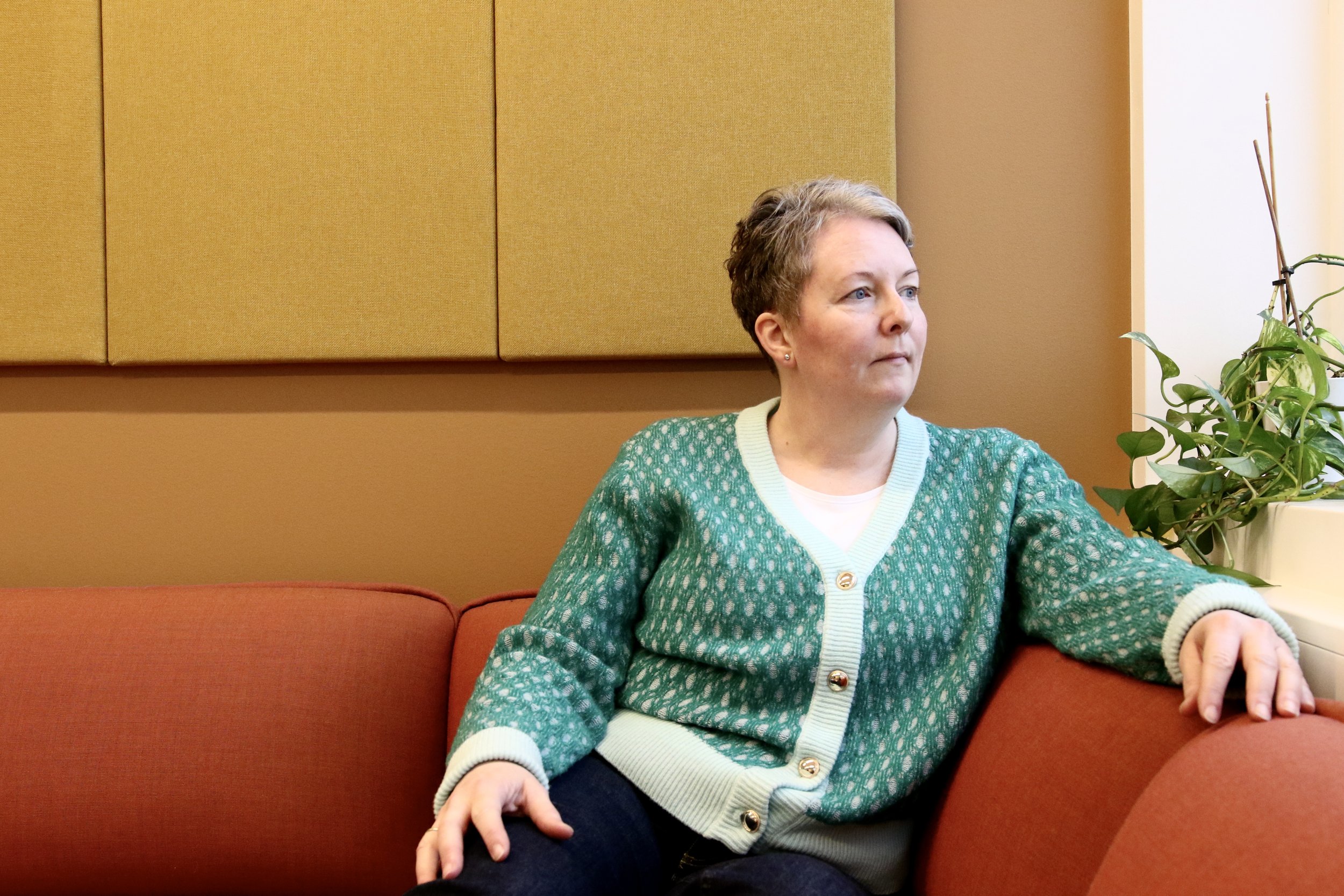
Armed with new knowledge
The Norwegian business sector loses far too many experienced women aged 45-55 every year – highly skilled women who could and want to continue working. If only they had known.
Every single year, 27,500 Norwegian women enter menopause, and one-third of them experience significant health issues that reduce both their quality of life and their ability to work. Norwegian workplaces rarely recognize the substantial loss of resourceful women who either leave the workforce or reduce their working hours.
Or – wait a minute. There is one large Norwegian workplace, where 75 percent of the employees are women, that has recently taken action: Kjersti’s workplace.
Bergen Municipality recently launched Norway’s very first workplace guide on menopause. But before we get to that – what happened next with Kjersti?
Well, one day in 2022, she felt the first hints of hot flashes.
That’s when she thought, “Now!”
“Now menopause had arrived! But the truth was, it had been going on for a long time. I just didn’t know that hot flashes are a late-stage symptom,” Kjersti says.
You’d think she went back to the doctors office, right? Actually, no. Instead, she thought, “Oh well, I guess that explains all my symptoms.” She assumed she just had to endure it – until she started wondering: “Do I really have to live like this?”
So, she turned to Google. She tried to figure out what she could do to manage her symptoms. But the thing was, she already exercised regularly and ate a healthy diet.
In 2023, she finally asked her doctor directly, “Could menopause be causing some of my symptoms?”
– And what did they say?
– “But are you really that bothered?”
So, once again, she didn’t get any real help – just advice to “try to sleep better.” And this was after listing her every struggling symptom.
Determined to find answers, she dug even deeper and eventually discovered the new research being shared by the KLAR project. Research that showed how menopause symptoms vary widely from woman to woman.
– What did you do then, armed with this new knowledge?
– I marched straight into the doctor’s office and demanded a hormone patch.
She got a prescription, and 24 hours later, both the headaches and hot flashes were gone, her sleep improved significantly. The bodily pain gradually subsided, and the same went for the dark thoughts.
– If only you had known?
– Oh, it would have saved me years of poor quality of life, and I probably could have returned to full-time work much earlier. Instead, I was partially out of the workforce for five whole years. It might not have had to be that way."
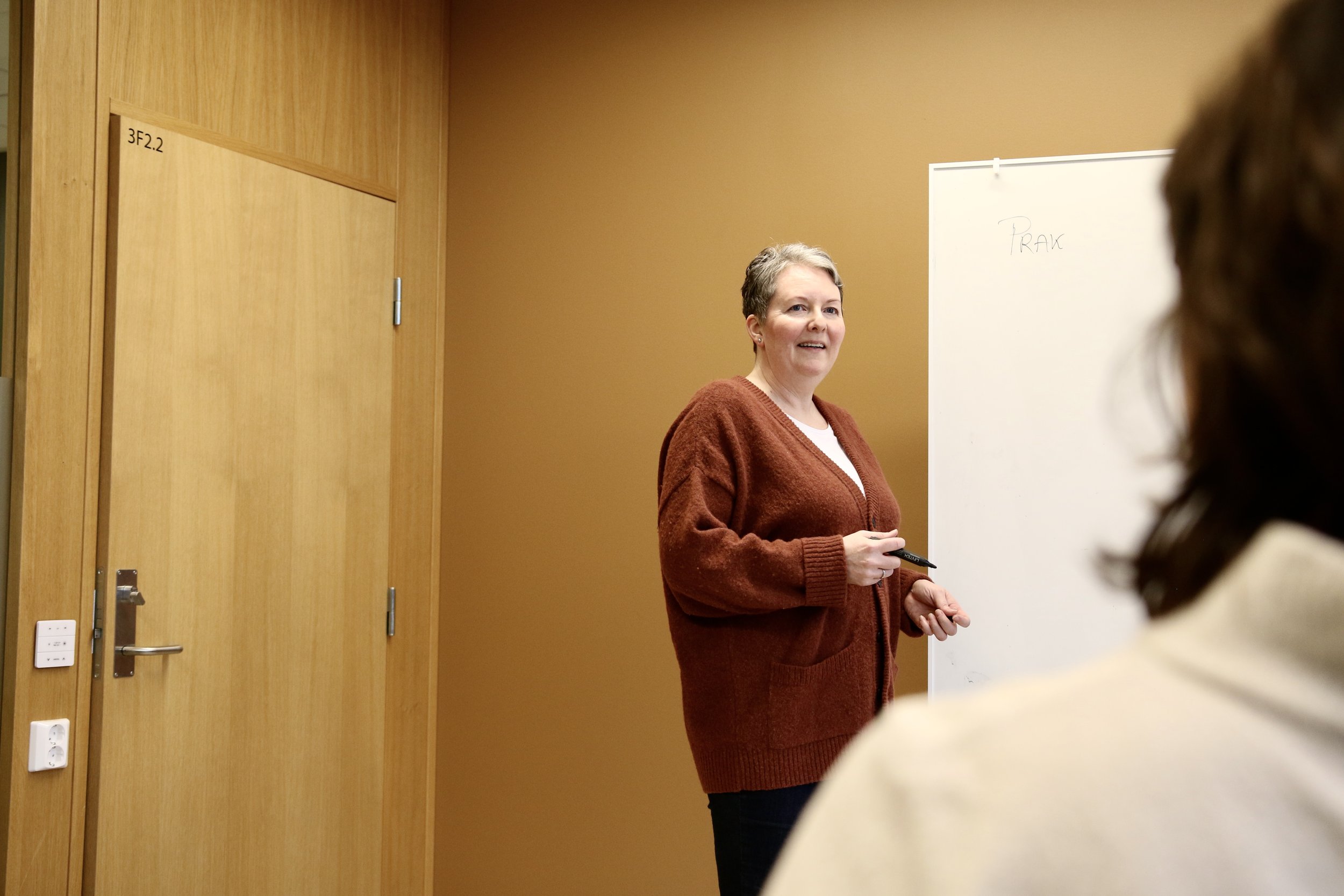
One guide, to help them all
With more knowledge and more guidance, society can prevent super experienced, capable women in midlife from being lost to long-term sick leave. Many women who experience moderate to severe symptoms due to hormonal changes could receive relatively simple support – before they might feel they have no choice but to leave the workforce.
For many, restoring estrogen – a crucial hormone that every woman gradually and naturally loses during perimenopause and menopause in their 50s, 40s, and even 30s—can be highly beneficial. However, for various reasons, not all women can or should use hormone replacement therapy (HRT) in the form of patches, creams, or sprays.
But one thing that can help absolutely everyone is a more open culture and better communication about menopause in the workplace. That’s precisely why Bergen Municipality’s new menopause guide is so incredibly important.
"The support, curiosity, and interest from my colleagues have helped me tremendously. Being back at work as an advisor for home care nurses in the municipality has been easy, like a dream. The guide was launched exactly one week after I returned to working full time, and I hope it will be widely used in our departments and throughout the municipality," says Kjersti Kvamme.
"I think it’s brilliant that the guide is written for both leaders and employees. Everyone gets the same information. This can lower the threshold for speaking openly with one’s manager about how they’re really feeling – knowing that everyone has read the same material. It’s reassuring to be able to refer to an official guide; it becomes a tool that can be used in daily work," Kjersti explains.
The guide can give leaders the confidence to ask.
And employees the courage to speak up.
The hairy goal: To heavily reduce sick-leave
The guide was developed by the Women’s Health Working Group within Bergen Municipality’s new “Project Nærvær.” Silje Mæland, one of the researchers behind the KLAR project, supported by the Grieg Foundation, is a member of the working group.
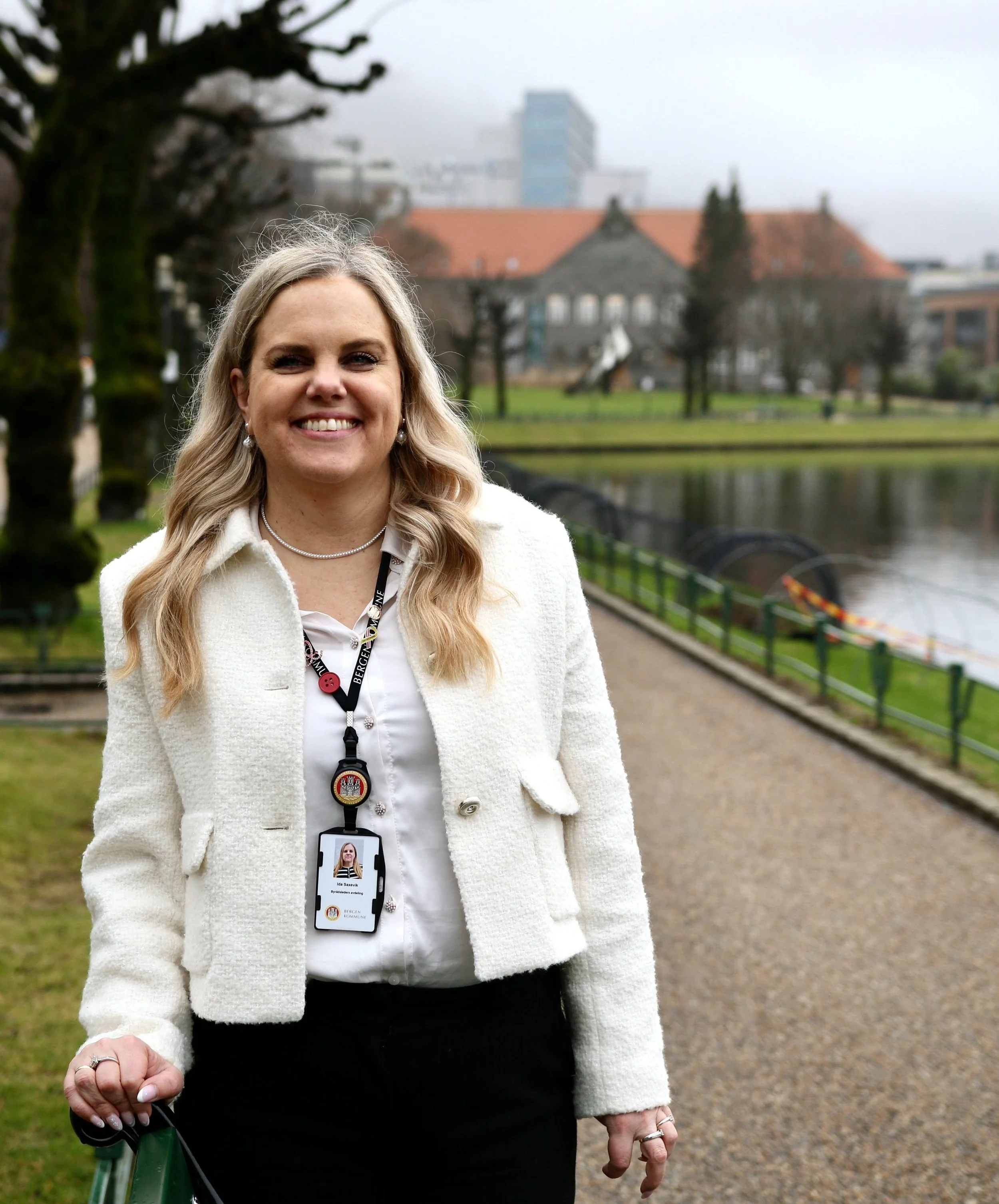
“There’s a high level of sick leave in Bergen Municipality, which is why we wanted to focus on attendance (nærvær) rather than absence. New knowledge about women’s health—and our new guide on menopause in working life—are parts of the puzzle to get the statistics back on track,” says project manager Ida Saxevik.
She hopes that as many people as possible will hear about and read the guide. A big task for everyone involved—after all, over 20,000 people work for Bergen Municipality; a large number of them are women.
“The guide was launched on January 8, 2025, with a webinar hosted by Silje Mæland and myself. It’s available on our external website so that anyone who wants to read and use it can access it. The goal is to increase knowledge about menopause among both managers and employees, and to create openness about menopause in the workplace, thereby helping to remove the stigma,” says Ida. The end goal of the project is to reduce sick leave. But how does Ida believe a guide can help achieve that?
“We believe it can help increase awareness of what menopause actually is and open up communication about how it affects different women in different ways. Many experience symptoms, but neither they nor the healthcare system necessarily connect them to menopause. The guide can also help make it easier for employees to bring up the topic with their manager,” says Ida Saxevik, before adding: “So that we can provide better support.”
The sudden, surprising symptoms
In a cozy, yellow-painted wooden house just outside Bergen – surrounded by sandcastles, slides, and a small forest – lies the municipal kindergarten Petedalsheia. It’s «Taco Thursday», and tiny children with huge eyes sit on Tripp Trapp chairs, eagerly waiting for their chopped vegetables.
Down the hallway, in an office, sits the kindergarten director, Hege Larsen Sundal. On her desk lies a brand-new pink notebook with a sticker labeled “To-Do List.”
“I’ve been using this a lot lately,” Hege says with a laugh.
She manages administrative tasks at the kindergarten and shares that the new menopause guide has had a major impact on her daily life recently. Until reading through it not long ago—at the age of 51—she hadn’t realized that her sudden lack of energy, brain fog, and more frequent colds could be linked to menopause.
“The guide isn’t as overwhelming as a Google search can be. It’s clear and structured, with helpful explanations and tips on what I can do myself. So, I’ve started going to bed an hour earlier and bought this pink notebook. I also feel like the guide gives me a sense of security – it’s something concrete I can bring to my manager and say, ‘Look, this is what I’m experiencing.’ It creates more openness and helps put the topic on the agenda,” says Hege.
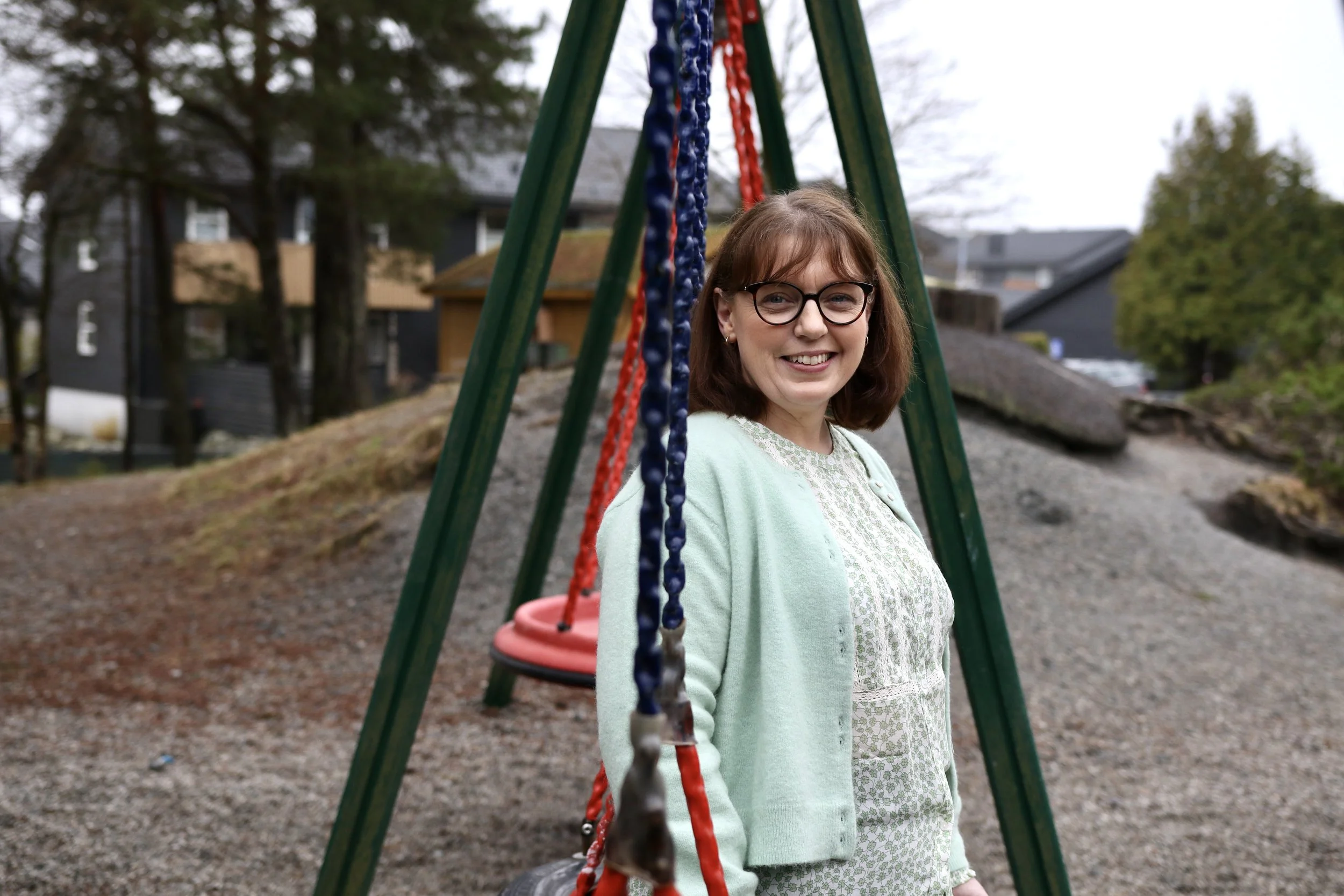
Most important of all: Understanding
In Norway, kindergarten employees, are particularly vulnerable to sick-leave. In this sector, the statistics are sky-high.
Ida Saxevik spoke about the importance of “better support”, but outlining concrete, general workplace adjustments for menopause in a guide for the Norwegian workforce has been challenging, as Bergen Municipality is a workplace where every task vary greatly. However, what many employees may have in common is the need for flexibility– when and how they work, breathable uniforms, access to proper restroom facilities, cold water, open windows, break rooms. And perhaps most importantly: understanding.
Hege Larsen Sundal is a leader herself and wanted to ensure that all 13 employees at the kindergarten could easily access the guide. She has presented it during staff meetings, and a small but meaningful adjustment put in place years ago, is allowing an extra 10-minute break for those who need a moment of quiet to regain their energy. In other words, flexibility.
“We just need to understand what some of us are going through, what the symptoms can be, and what we can do to accommodate each person as best as possible. In short, go to your manager before you go to your doctor. It can have a huge impact – both on individuals and on the society as a whole.”