

Straight from Medical School to a PhD in Cancer Research
The UiB invests in research track students through earmarked PhD fellowships, offering the opportunity to transition directly from medical school to a doctoral degree. Ulrikke Hugaas is among those who have been offered this opportunity, starting as a PhD candidate on September 1 at CCBIO and the Department of Clinical Medicine after completing her medical degree.
Published:
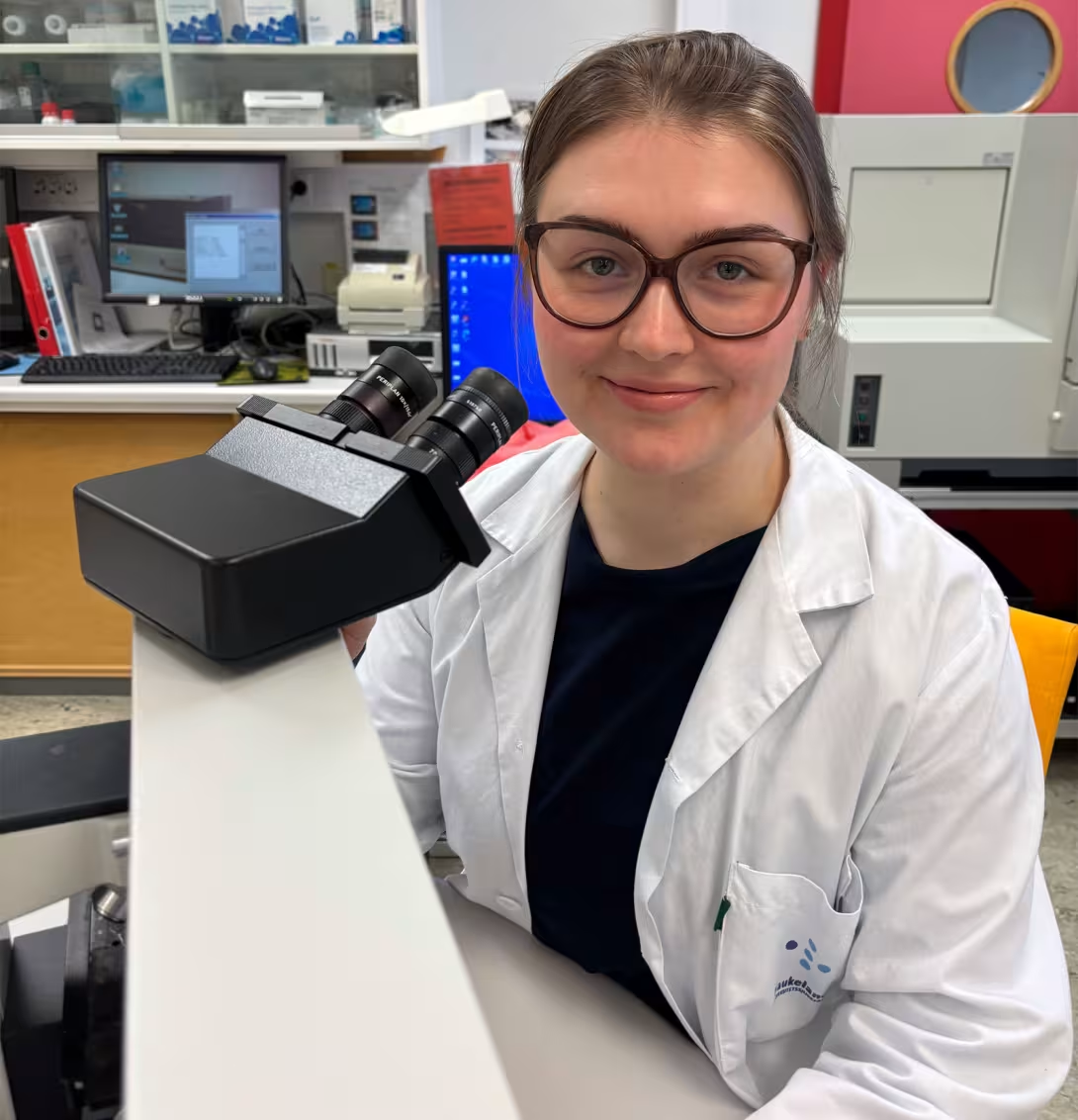
The Medical Student Research Program at UiB allows medical students to combine their studies with research. Students gain research experience and build a solid foundation for an academic career. The research training is to such an extent that by completing the program, the students have fulfilled the requirements for research training at a PhD-level.
UiB offers earmarked PhD fellowships for Medical Student Research Program students who wish to continue directly to a doctoral degree. This provides a unique opportunity to maintain momentum and pursue research full-time.
Motivation from childhood
Ulrikke has never doubted that she wanted to become a doctor and later, a researcher.
“I have aimed for medical school since I was very young,” she says. “My interest in medicine started early and grew over the years. I remember a book in kindergarten about a girl who had appendicitis. I found it fascinating and had them read it to me over and over. Later, my dad brought home a book about immune cells and blood cells, which also made a big impression.
I enjoyed science and later chemistry and physics in high school, and when I discovered there was something called the Medical Student Research Program at the UiB, I knew it was for me. My grades were good enough, and I was admitted straight into the program. During my first year, I contacted Elisabeth Wik, who is now my main supervisor, and things progressed from there. Initially, for me, it was mostly about wanting to do full-time research and explore more of the patient material we were working on. Over time, I became more aware of the career advantages of going directly from the student research program to a PhD, and with such a fantastic supervisory team, the choice was easy,” she explains.
Aiming to help young breast cancer patients
Her project focuses on young breast cancer patients, who often have more aggressive disease and poorer prognosis compared to older patients.
“We don’t fully understand why,” Ulrikke explains. “They have more metastases, worse prognosis, and experience a greater disease-related reduction in quality of life compared to older patients with the same diagnosis. In my research program project, I studied biomarker expression in metastases among young patients, focusing on clinically relevant biomarkers. Now, we will expand to investigate factors with potential clinical relevance, such as glucocorticoid receptors and immune cells in primary tumors and metastases. My goal is to contribute a piece of the puzzle that can help explain this aggressive disease presentation,” she says.
A reward after medical school
After several years of medical studies and the Medical Student Research Program, Ulrikke is excited to take the next step.
“For me, this PhD fellowship is a fantastic opportunity to deepen my knowledge in a field I already know and love. It has served as a reward to look forward to after completing medical school, and it will provide a solid foundation for my future career and medical specialization. It also means we don’t have to relocate for the first stage of residency (LIS1), which I think both my partner and our dog highly appreciate!”
Her advice to other Medical Student Research Program students:
“Never hesitate to apply for a PhD directly after – it will give you unique experiences that strengthen your academic development and will also be highly useful in clinical practice.”
Support under the CCBIO umbrella
Ulrikke also emphasizes the importance of being part of a strong academic environment, such as under the CCBIO umbrella, with excellent supervisors and support structures.
“Being part of CCBIO and the BCY-B group has been a great source of support, not least thanks to my supervisors Elisabeth Wik, Erling A. Høivik, and Lars A. Akslen. The strong academic environment and good infrastructure have meant a lot as a young researcher. There are always people ahead of you in the process to ask for advice, and that has been invaluable,” she concludes.
A strong start to the PhD journey
Students from the Medical Student Research Program have been part of the BCY-B group since 2016, and group leader Elisabeth Wik is very pleased with the program.
“They always bring new perspectives to the projects,” she says.
However, not all students choose to continue directly to a doctoral degree.
“When students begin research so early in their studies, it’s natural that some prioritize their internship period, move to other parts of the country, or want to consider research later, perhaps within their future specialty,” Wik explains.
“That’s why it’s especially pleasing that Ulrikke has decided to move forward with a PhD now. She has delivered solid work both in her Medical Student Research Program project and through data collection and lab work, which formed the basis for a strong PhD fellowship application. She is now well prepared to embark on her PhD journey!”
We look forward to seeing more exciting research from Ulrikke!