

Plant succession and landscape changes
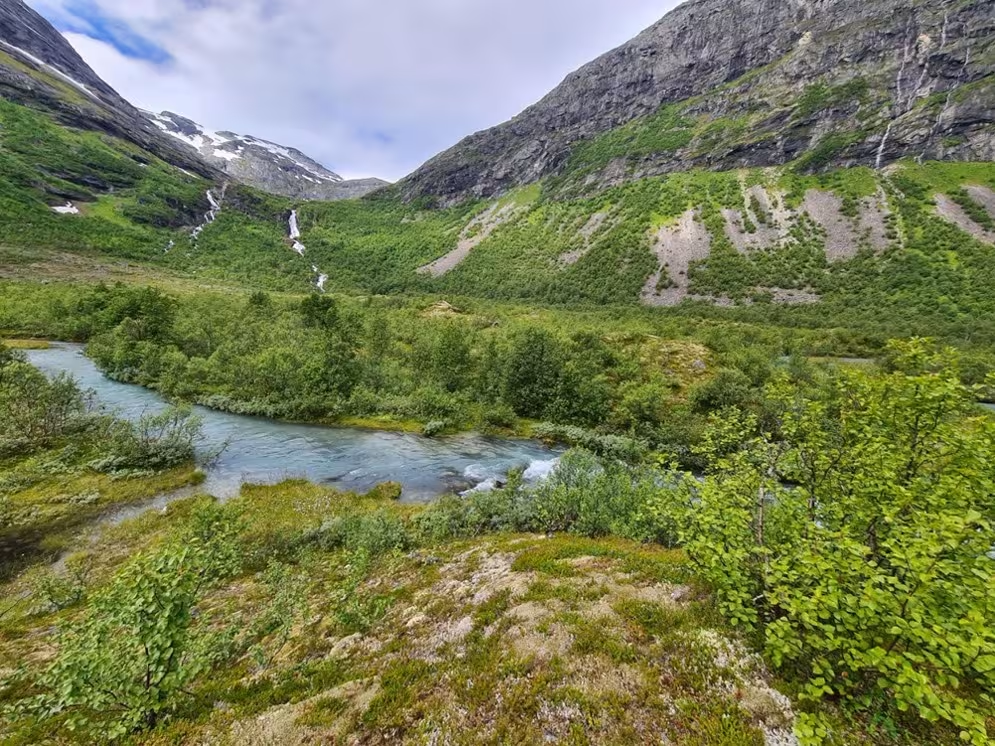
When the last ice sheet retreated at the end of the last ice age, a large-scale primary succession started in the open Norwegian landscape. A similar landscape with related vegetation changes on a smaller scale can be studied where glaciers have retreated after advancing globally during the «Little Ice Age» ca. AD 1300-1950.
About the topic
In many of the valleys around large Norwegian ice caps like Folgefonna, Hardangerjøkulen Jostedalsbreen and Svartisen, there are distinct terminal moraines that have been historically dated. This enables us to study landscape and vegetation development as if in a laboratory, where new areas are exposed as the glacier retreats, and increasing distance from the glacier indicates how long an area has been ice-free (time and space coincide). In natural and environmental geography, there is a long tradition of studying the «Little Ice Age» and the primary succession as the glaciers have retreated. These areas are poor in nitrogen, but rich in calcium and magnesium, and the flora can therefore be very special. Here, one can analyse rare species such as alpine herbs and trees like alder, birch, and pine, and map the colonization process in the glacier foreland. Some species that can take up («fixate») atmospheric nitrogen are common and can have a beneficial effect on succession. This allows for the analysis of how some species improve («facilitate») the ground for other species.
