

Caves and landscape development
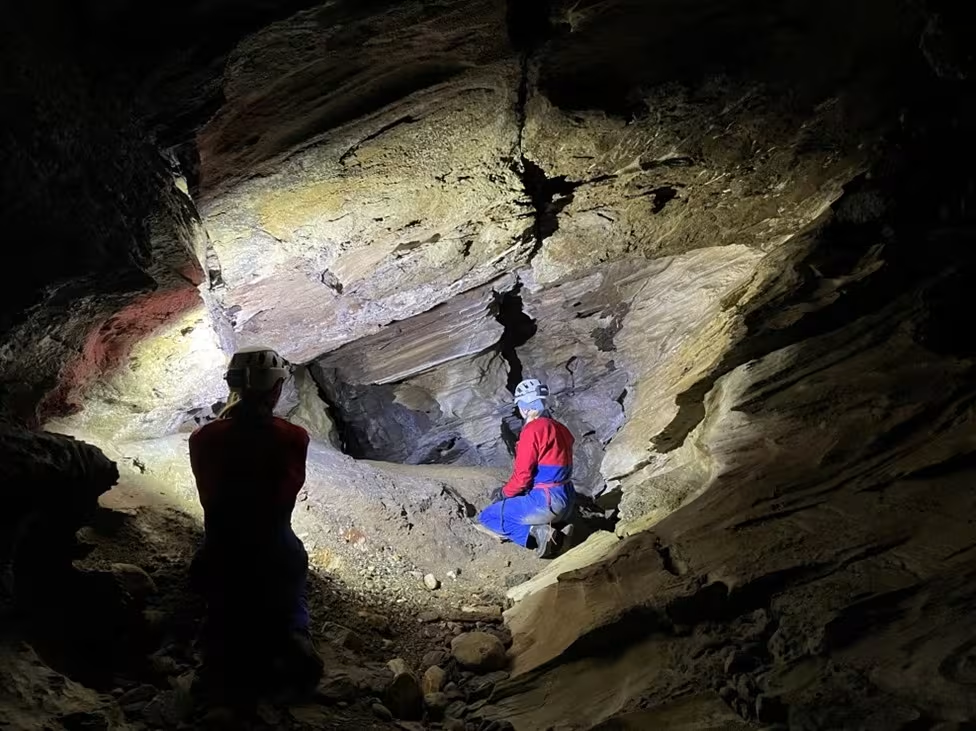
Karst caves are natural openings in bedrock formed by water flowing through cracks and cavities in soluble rocks such as limestone and marble. Over time, as water dissolves the rock walls, passages form that are large enough for humans to enter.
About the topic
Relict caves, which lack current water flow, form natural cavities shielded from surface degradation, allowing for the preservation of speleothems, deposits, bones, plant remains, pollen, and more.
In cave research (speleology), our objective is to determine when and how the caves and their surrounding landscapes developed. We use cave archives to reconstruct past climate and environmental changes. In Norway, the water flow responsible for cave formation is closely tied to surface runoff and hydrological conditions, while relict caves often formed from meltwater drainage during the ice ages. The shape and pattern of the cave passages, along with solutional features in the walls and cave deposits, provide insights into the hydraulic conditions during their formation and past changes in the drainage system. Evidence of drainage beneath different ice sheets during the ice ages exists in many locations, emphasizing the great potential of caves for studying how landscapes develop.

Persons
Publications
Pennos, C., Skoglund, R.Ø., 2025: Cave-PY a QGIS plugin to identify cave levels from geospatially referenced cave surveys (external link). Acta Carsologica, 54(1).
Skoglund, R.Ø., Lauritzen, S.-E., Hestangen, H., Skutlaberg, S., Pennos, C., 2024: Influence of the last (de)glaciation on a complex cave system: Grønli-Seter cave system, Northern Norway. (external link) Geomorphology 455
Lauritzen, S.E. & Skoglund, R. Ø., 2013. Glacier Ice-Contact Speleogenesis in Marble Stripe Karst. In: Shroder (Ed. In Chief), Frumkin (ed.) Treatise on Geomorphology. Academic Press, San Diego, CA, vol. 6, Karst Geomorphology, 363-396.