

Diverse ways of sensing, knowing and valuing the ocean
This transdisciplinary course at the marine science-society-policy nexus examines and addresses diverse ways of sensing, knowing and valuing the ocean.
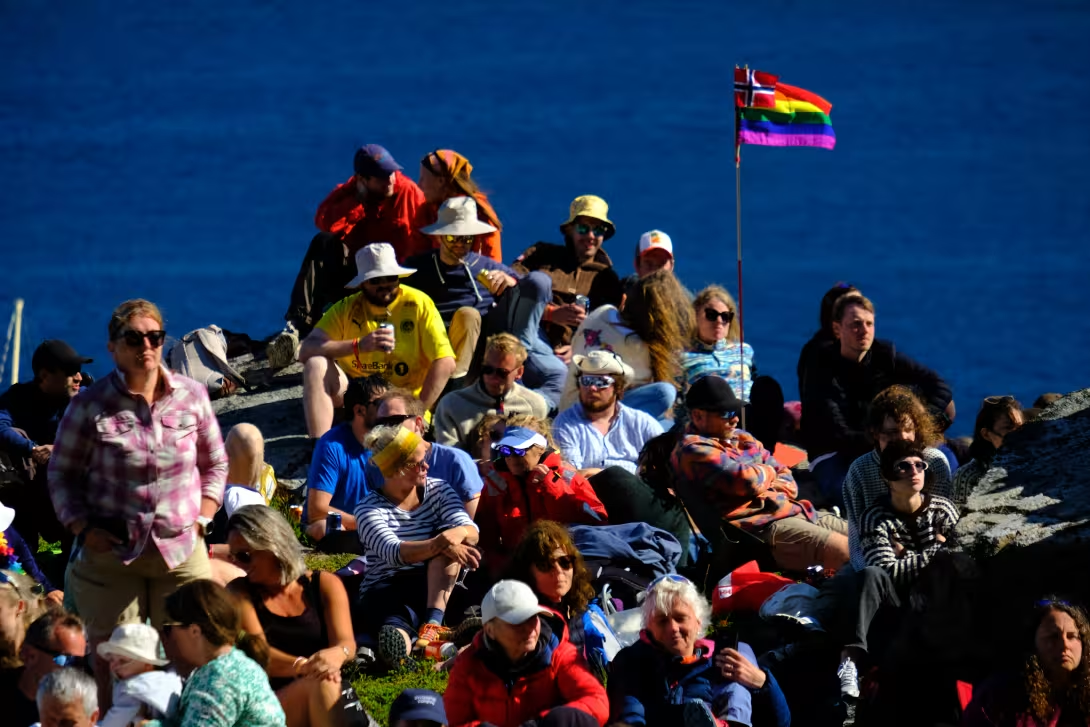
The Intergovernmental Science-Policy Platform on Biodiversity and Ecosystem Services (external link) (IPBES) promotes an integrative approach that embraces the diversity of values and knowledge systems among different cultures and societal groups in human-nature relationships in decision-making and policy development.
Here, we explore the diversity inherent in pluralistic human societies and specifically among the international students in this course through readings and activities, interactive exercises, and facilitated discussions.
We highlight sources of diversity, such as different ways of sensing, knowing, and valuing the ocean, and their consequences in human-ocean relationships and in ocean decision-making and governance.
Like biodiversity, cultural and epistemological diversity can lead to innovation and resilience, but if poorly understood and valued, can lead to misunderstanding and conflict. We examine ethical deliberative and decision-support tools that can help reconcile this diversity.
Learning outcomes
- Recognize that there exist diverse ways of sensing, knowing, and valuing the oceans.
- Understand differences in Western, Asian, and Indigenous epistemologies or worldviews, as reflected in different ways of relating with and valuing nature.
- Contrast different value typologies, including Schwartz, Moral Foundations Theory, and the Inter-governmental Panel for Biodiversity and Ecosystem Services (IPBES).
- Ocean management involves many trade-offs of who, how, what, where, and why?
- Ethical governance uses deliberative and decision-support tools to reconcile diversity.
Literature list
TBA
Credits
Participation at the BSRS is credited under the European Credit Transfer System (ECTS). Participants submitting an essay, in a form of a publishable manuscript of 10-20 pages, after the end of the summer school will receive 10 ECTS. Deadline for submission will be decided by your course leader.
It is also possible to participate without producing an essay. This will give you 5 ECTS. In order to receive credits, we expect full participation in the course-specific modules, plenary events and roundtables.
Course leader
Dr Mimi E. Lam is a researcher at UiB's Centre for the Study of the Sciences and the Humanities, and Affiliate Assistant Professor, University of British Columbia Institute for the Oceans and Fisheries. She is a transdisciplinary scholar with expertise at the marine science-society-policy nexus, where she merges theoretical insights with innovative methodologies to study complex and dynamic human-nature relationships.
Dr. Lam is PI of the Managing Ethical Norwegian Seascape Activities (MENSA) project, which is developing an ethical approach to sustainable ocean and coastal management by making explicit Norwegians´ sea-related values and identities and ensuing policy trade-offs.