

Ocean productivity and seafood in a changing climate
This PhD course will explore the dynamic interplay between climate change, ocean productivity, and the evolving role of seafood in the global food system.
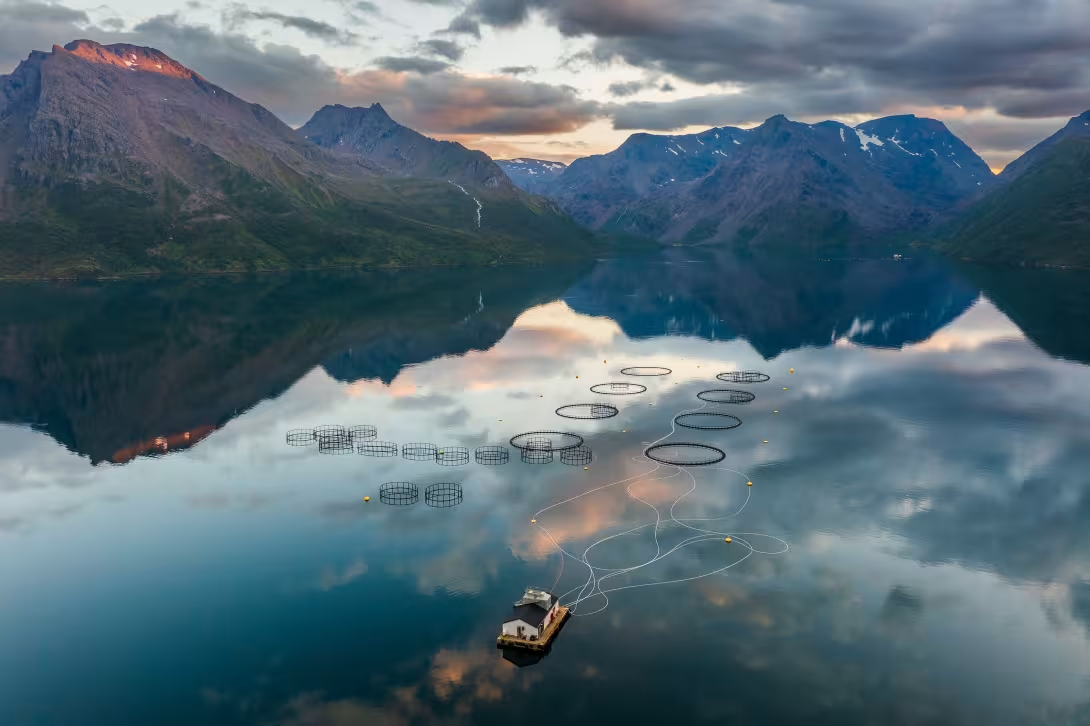
From primary production to fisheries and aquaculture, we will investigate the scientific, technological, and societal expectations shaping the future of ocean-based food.
The ocean is an important source of food for billions of people all over the world, even though only a few percent of our total proteins and calories have a marine origin. Food supply from fisheries remains stable while aquaculture increases its importance in the global food system, year by year. Are our expectations for future seafood production sustainable and attainable? And what role will climate change play for our chance to reach our expectations?
We have seen record high sea-surface temperatures in the last few years. If this persists, it may impact ocean stratification, wind- and current patterns, primary production, fisheries and mariculture. What are the drivers and mechanisms that links climate, oceanography and food production in the ocean? How are food from the ocean linked to agriculture and land use, and where will innovation change our expectations for the food system in the future? The course explores how innovation and resource-use strategies influence seafood systems and value chains within broader environmental and societal contexts.
In this course we will scrutinise expectations for seafood futures, from climate and oceanography to fisheries, aquaculture and consumer behaviour. Students will draw on the primary literature and expert teachers to look into the future of food from the ocean.
This course is designed for PhD students with interests in oceanography, marine science, climate change, fisheries, aquaculture, sustainability, and food systems, but have no specific requirements for background knowledge.
The course is a collaboration with the UTFORSK project Ocean Knowledge Exchange: Bridging Norway and Canada.
Learning outcomes
- Deepened understanding of climate impacts on ocean productivity and seafood systems
- Broader perspective on aquaculture and fisheries role in global food security and sustainability
- Experience in research-based dialogue and peer-to-peer knowledge exchange
- Ability to summarise and present the ocean-climate-food nexus in teams with peers
- Ability to critically assess how innovation and resource-use strategies in fisheries and aquaculture influence seafood systems within changing environmental and societal contexts.
Literature list
TBA
Credits
Participation at the BSRS is credited under the European Credit Transfer System (ECTS). Participants submitting an essay, in a form of a publishable manuscript of 10-20 pages, after the end of the summer school will receive 10 ECTS. Deadline for submission will be decided by your course leader.
It is also possible to participate without producing an essay. This will give you 5 ECTS. In order to receive credits, we expect full participation in the course-specific modules, plenary events and roundtables.
Course leader
Øyvind Fiksen
Professor in biological oceanography
University of Bergen
Fiksen has studied marine ecosystems, fish, plankton and microbes, and is meritted status as Excellent Teaching Practitioner. Until recently he acted as the Marine Dean at UiB, a full-time leadership position within the Marine Strategic Area at UiB. This position included UiB's international SDG14 responsibilities, representations in boards and steering groups, the One Ocean City Bergen initiative and events - particularly during the One Ocean Week in Bergen.
Course lecturers
Eva H. Falch
Professor
Norwegian University of Science and Technology (NTNU)
Falch works at the intersection of innovation, industry, and food systems. She brings experience from both industry and research institutes, with a focus on the utilisation of marine resources and side streams, and on biotechnology and value-chain innovation in seafood systems.
Ida-Johanne Jensen
Associate professor
Norwegian University of Science and Technology (NTNU)
Jensen works at the intersection of food science and nutrition. She brings experience from research, with a focus on utilisation of marine resources and side streams, on biotechnology and nutrition.
Anya Waite
CEO and scientific director
Ocean Frontier Institute
Waite is a biological oceanographer with expertise in nutrient cycles, plankton, mesoscale eddies, upwelling and much more - drivers of productivity in the ocean. She has contributed significantly to the development of large research and training programs such as the Safe and Sustainable Development of the Ocean Frontier initiative and the Transforming Climate Action program.
Waite is a highly decorated scientist, most recently with the King Charles III Coronation Medal for “exceptional contributions to Canada” and the Chevalier de l’Ordre des Palmes Acaémiques for her work in ocean research, and "for embodying the very spirit of international cooperation: visionary, inclusive, and grounded in excellence."